

City · Grand Est · Altitude 202 m
Nancy
An eighteenth-century square gilded by a Polish king, a medieval ducal town, and the French capital of Art Nouveau.
Why go
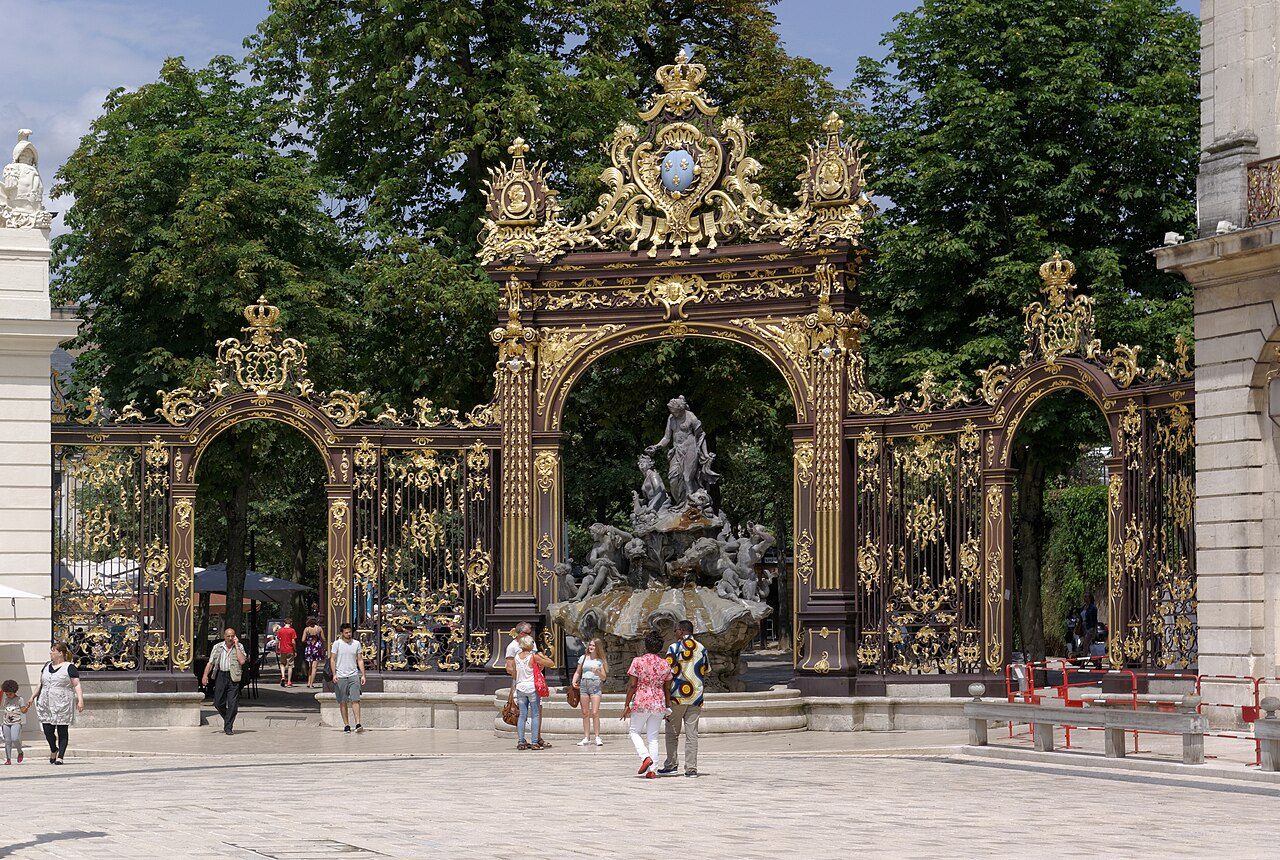
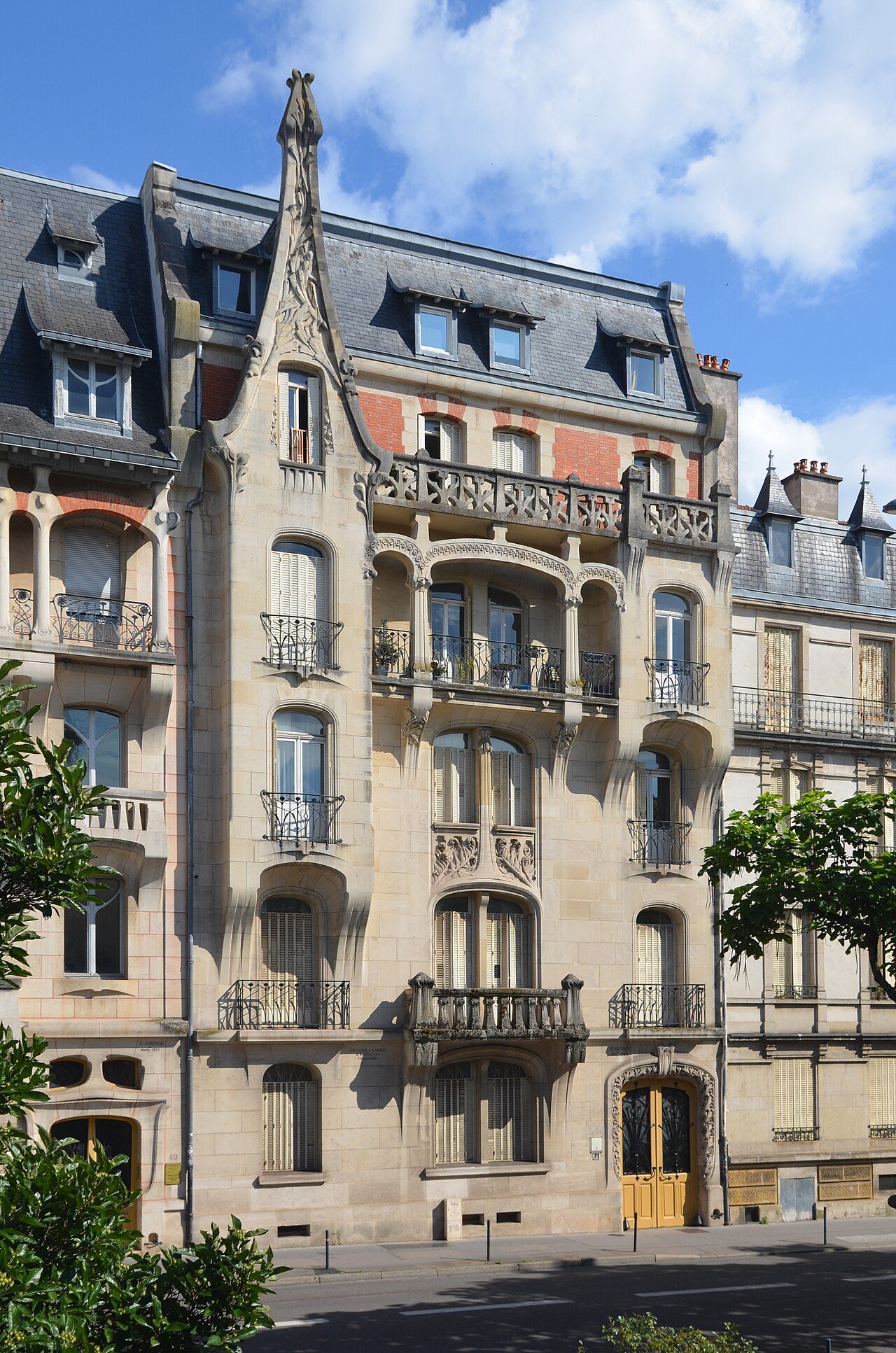
Nancy has a grand square to rival anything in Paris, without Paris’s crowds. Place Stanislas, with its wrought-iron gates picked out in gold, opens through a triumphal arch onto a long tree-lined square and the old ducal town of Lorraine. Then there is the other Nancy: around 1900 its glassmakers, cabinetmakers and architects made it a capital of Art Nouveau, and you can still walk past villas and shopfronts where every line curls like a plant.
History
Nancy began in the eleventh century as a fortified settlement around a castle of the dukes of Lorraine, and grew into the capital of their duchy, an independent state between France and the Holy Roman Empire. In January 1477 Duke Charles the Bold of Burgundy, who had besieged the town since the autumn, was defeated and killed outside its walls by René II of Lorraine. The thistle that became the town’s emblem dates from this era.
Between the sixteenth and eighteenth centuries the dukes laid out a planned new town south of the medieval one, with straight streets and its own fortified gates. In the 1730s, as part of a European settlement, Duke Francis of Lorraine exchanged his ancestral lands for Tuscany, and the duchy was given for life to Stanislas Leszczyński, the exiled king of Poland and father-in-law of Louis XV, on the understanding that it would pass to France after his death.
Stanislas used his years in Nancy to join the old and new towns with a magnificent ensemble: a royal square designed by his architect Emmanuel Héré, built in the 1750s, with gilded gates and fountains by the ironworker Jean Lamour, a triumphal arch and the long Place de la Carrière. When he died in February 1766, Lorraine became French. In 1983 Place Stanislas, Place de la Carrière and Place d’Alliance were inscribed by UNESCO.
After 1871, when part of Lorraine was annexed by Germany, Nancy took in many people who chose to remain French, and grew rich and inventive. Artists and industrialists such as Émile Gallé, the Daum glassworks, Louis Majorelle and Victor Prouvé formed the movement known as the École de Nancy, formally organised in 1901, which made the city one of the birthplaces of Art Nouveau in Europe.
UNESCO World Heritage: Place Stanislas, Place de la Carrière and Place d’Alliance in Nancy (1983)
What to see
Place Stanislas
Stand in the middle and turn slowly: the town hall, the pavilions, the gilded wrought-iron gates and lanterns by Jean Lamour, and the Neptune fountain framed by gilded ironwork in one corner. Come back after dark, when the square is lit and the gold glows.
Arc Héré and Place de la Carrière
Walk through the triumphal arch into the long, tree-lined Place de la Carrière, closed at its far end by the curved colonnade of the Palais du Gouvernement. It is the quietest of the three UNESCO squares and the best for a slow stroll.
Musée de l’École de Nancy
Housed in the 1909 villa of the businessman and patron Eugène Corbin, a supporter of the movement, this museum gathers furniture, glass and decorative art by Gallé, Majorelle, Daum and their circle. It is the best place to understand what Art Nouveau meant here: nature turned into everyday objects.
The old town and the Porte de la Craffe
North of the arch lies the medieval town, with the Palace of the Dukes of Lorraine, home of the Musée Lorrain, the neo-Gothic basilica of Saint-Epvre and, at the end of the Grande-Rue, the fourteenth-century Porte de la Craffe, a survivor of the medieval walls.
Art Nouveau walk
Art Nouveau is scattered across the city: shopfronts, banks, apartment buildings and villas with curling ironwork and stained glass. The tourist office suggests walking routes; buildings such as the France-Lanord building and the Maison Bergeret are good starting points. Walk slowly and look up: the details are in the doorways, balconies and window glass.
Climate
Météo-France normals 1991-2020, station Nancy-Essey (212 m, 2.8 km away). Sunshine: Nancy-Essey station (2.8 km).
| Jan | Feb | Mar | Apr | May | Jun | Jul | Aug | Sep | Oct | Nov | Dec | |
|---|---|---|---|---|---|---|---|---|---|---|---|---|
| High °C | 5.4 | 7.1 | 11.6 | 15.8 | 19.8 | 23.5 | 25.8 | 25.4 | 20.9 | 15.5 | 9.4 | 6.0 |
| Low °C | -0.2 | 0.0 | 2.1 | 4.5 | 8.7 | 12.2 | 14.2 | 13.9 | 10.2 | 7.1 | 3.4 | 1.0 |
| Rain (mm) | 64 | 55 | 54 | 44 | 68 | 56 | 63 | 67 | 61 | 66 | 69 | 78 |
| Rain days | 11 | 10 | 9 | 8 | 10 | 9 | 10 | 9 | 9 | 11 | 11 | 13 |
| Sunshine (h) | 52 | 80 | 140 | 181 | 206 | 224 | 235 | 219 | 172 | 105 | 52 | 43 |
Timeline
- 11th c. A fortified settlement grows around the dukes’ castle
- 1477 Charles the Bold killed at the Battle of Nancy
- 1730s Lorraine is given for life to Stanislas Leszczyński
- 1752 Work begins on the royal square, now Place Stanislas
- 1766 Stanislas dies; Lorraine becomes French
- 1901 The École de Nancy is formally constituted
- 1983 The three squares are inscribed by UNESCO
Uncertain or disputed
- The completion of Place Stanislas is given as 1755 or 1756 depending on the source.
- The École de Nancy grew out of an earlier society of Lorraine decorative arts founded in 1894; 1901 is the date of its formal constitution.
Crowds: Busy at peaks. Place Stanislas is busiest on summer evenings and in the run-up to Christmas; the museums and the Art Nouveau streets stay pleasantly quiet most of the year. (editorial judgement)
Protected food & drink from here
AOP and IGP products whose official area includes this commune (INAO). Regional food: AOP & IGP →
Fruit, vegetables & nuts
- Mirabelles de Lorraine IGP · stone fruit
Butter, oil, honey & more
- Bergamotes de Nancy IGP · confectionery
Cider & spirits
- Mirabelle de Lorraine IG · fruit brandy
Festivals within 15 km
From the Ministry of Culture’s national list; it gives a season, not dates.
| Festival | Discipline | Season |
|---|---|---|
| 12000 Signes Nancy | Books & comics | 6 Sep – 31 Dec |
| 6 Week-Ends d'Art Contemporain Nancy | Visual & digital arts | 1 Jan – 20 Jun |
| Aux Actes Citoyens Tomblaine | Theatre, dance & street arts | 1 Jan – 20 Jun |
| Biennale International de l'Image Nancy | Visual & digital arts | 1 Jan – 20 Jun |
| Bon Moment Nancy | Music | 1 Jan – 20 Jun |
| Celt'in Lor Frouard | Music | 6 Sep – 31 Dec |
| Chaud les Marrons Nancy | Theatre, dance & street arts | 21 Jun – 5 Sep |
| Donké festival Nancy | Music | 21 Jun – 5 Sep |
| En Dehors des Sentiers Battus Laxou | Music | 6 Sep – 31 Dec |
| Festival d'Impro Théâtrale Nancy | Theatre, dance & street arts | 6 Sep – 31 Dec |
| Festival International du Film de Nancy Nancy | Film | 21 Jun – 5 Sep |
| Festival Klap Klap Nancy | Film | 1 Jan – 20 Jun |
| Festival Michtô Nancy | Mixed | 6 Sep – 31 Dec |
| Festival Off Kultur (FOK) Nancy | Music | 1 Jan – 20 Jun |
| Festival Universitaire du Film Underground Nancy | Film | 1 Jan – 20 Jun |
| Flex Week Nancy | Theatre, dance & street arts | 1 Jan – 20 Jun |
+ 19 — Festivals →
Also in this part of France
 2h20
Town · Grand Est
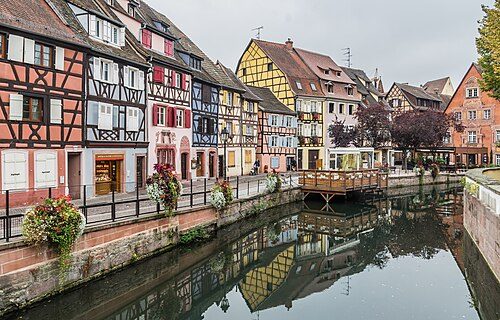
Colmar
Painted timber houses over the canals of Little Venice, one of Europe’s most overwhelming altarpieces, and the Alsace wine route at the door.
 2h39
Town · Grand Est
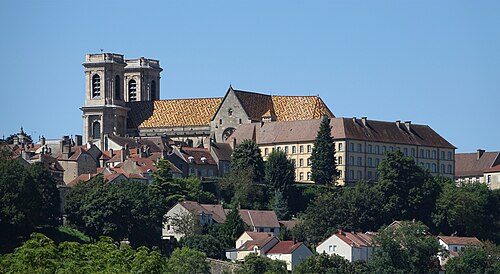
Langres
A walled hilltop town near the source of the Marne: Diderot’s birthplace, with 3.6 km of ramparts to walk all the way round.
 2h38
Village · Burgundy–Franche-Comté
Arbois
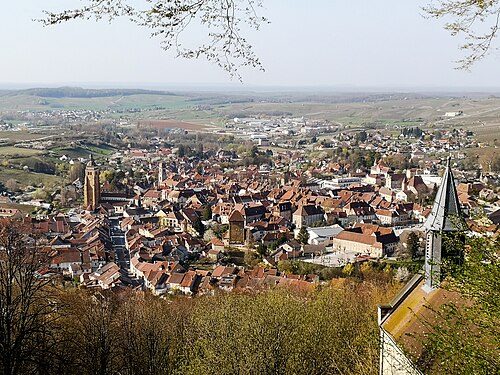
Pasteur’s home town, capital of Jura wine: vin jaune, a river running under houses, and a limestone gorge just beyond the last street.
 1h32
Town · Hauts-de-France
Laon
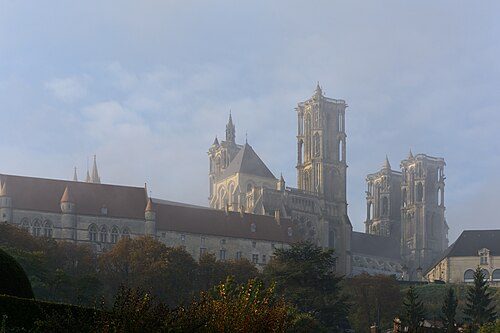
A medieval town on a ridge above the Picardy plain, with a Gothic cathedral whose towers are guarded by sixteen stone oxen.
Sources
Original text. Train times computed from SNCF timetables (ODbL); climate Météo-France; products INAO; festivals Ministry of Culture. Methodology.