

Town · Grand Est · Altitude 194 m
Colmar
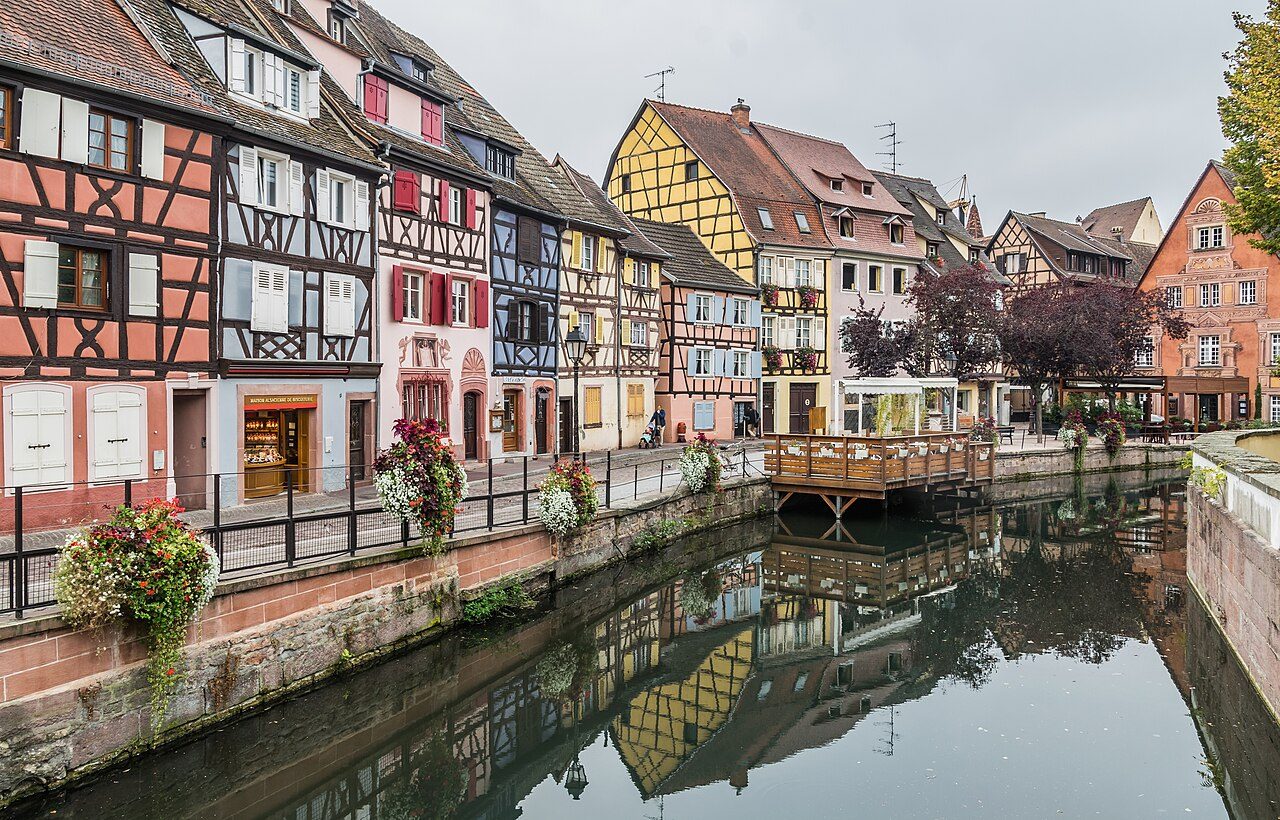
Painted timber houses over the canals of Little Venice, one of Europe’s most overwhelming altarpieces, and the Alsace wine route at the door.
Why go
Colmar is France with a German accent, and that is exactly why it rewards a visit. For centuries a free city of the Holy Roman Empire, it changed hands between France and Germany again and again between 1673 and 1945, and its streets of gabled, colour-washed houses show both. Come for the Isenheim Altarpiece, a painting that stops people in their tracks, then walk out among the vineyards of the Alsace wine route, a few kilometres away.
History
Colmar first appears in the ninth century; in 884 the Carolingian emperor Charles the Fat held an assembly here. The town grew in the Rhine plain where small rivers come down from the Vosges, and in 1226 it is named as a city under Emperor Frederick II. In 1354 it joined the Décapole, the league of ten free imperial cities of Alsace, and its merchants grew rich on wine and trade.
The late Middle Ages and the Renaissance gave Colmar its finest buildings: the collegiate church of Saint-Martin, begun in 1234; the Koïfhus, the customs house completed in 1480; and merchants’ houses such as the Maison Pfister of 1537 and the Maison des Têtes of 1609, named after the grotesque masks on its front. The painter and engraver Martin Schongauer was born here in the mid-fifteenth century. The town adopted the Lutheran Reformation in 1575, half a century after Strasbourg.
After the Thirty Years’ War, French troops took Colmar in 1673, and the Treaty of Nijmegen of 1679 made it French. In 1834 Auguste Bartholdi, future sculptor of the Statue of Liberty, was born here; several of the town’s fountains are his work. With the rest of Alsace, Colmar was annexed by the German Empire in 1871 and returned to France in 1918.
Annexed again by Nazi Germany in 1940, it was liberated in 1945 after the battle of the Colmar Pocket; French tanks entered a town that was still intact on 2 February. Spared by the wars of 1870, 1914 and 1939, the old town is remarkably homogeneous. Today the town calls itself the capital of Alsace wine, and its Unterlinden Museum, opened in 1853 in a former convent of Dominican nuns, holds the Isenheim Altarpiece.
What to see
Unterlinden Museum and the Isenheim Altarpiece
Painted by Matthias Grünewald between 1512 and 1516, with sculpture by Nicolas of Haguenau, for the Antonine monks of Issenheim who nursed the victims of ‘Saint Anthony’s fire', the altarpiece shows a Christ covered in sores, then a radiant Resurrection. Take your time: it is one of the great experiences of European art.
Little Venice
The old quarter of butchers, tanners and fishmongers along the Lauch is now a ribbon of colour-washed, flower-hung houses reflected in the water. See it from the bridges early in the morning, before the crowds, and again in the evening light, when the canal turns gold and the old town empties.
Maison Pfister, Koïfhus and Maison des Têtes
Three buildings that sum up the town’s wealth: the timber-framed Maison Pfister of 1537 with its corner oriel and wall paintings, the Koïfhus of 1480, one of the oldest public buildings in town, which served as customs house, and the Renaissance Maison des Têtes, whose facade bristles with carved grotesque faces.
Dominican church and Saint-Martin
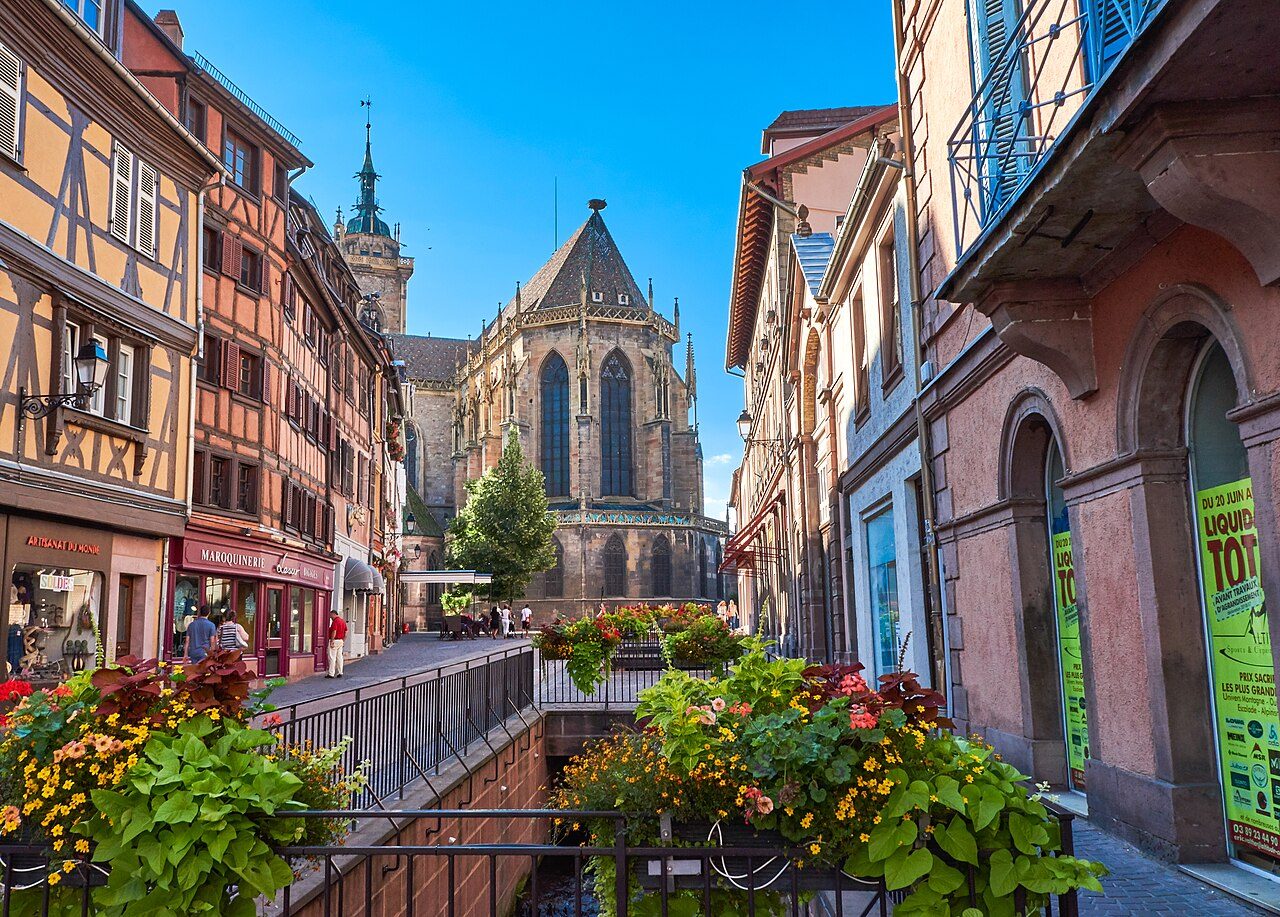
The Dominican church, built between 1289 and 1364 and no longer used for worship, displays Martin Schongauer’s masterpiece, the Madonna of the Rose Bower, beneath fourteenth-century stained glass. Nearby, Saint-Martin is the largest church in Colmar, with an ambulatory of Gothic chapels unusual in Alsace.
Musée Bartholdi
The house where the sculptor was born in 1834 tells the story of his life and work through drawings, models and sculptures, including the long making of the Statue of Liberty. Afterwards, look for his fountains around town, among them the Roeselmann and Schwendi fountains.
Climate
Météo-France normals 1991-2020, station Colmar-Inrae (202 m, 2.8 km away). Sunshine: Colmar-Meyenheim station (17.1 km).
| Jan | Feb | Mar | Apr | May | Jun | Jul | Aug | Sep | Oct | Nov | Dec | |
|---|---|---|---|---|---|---|---|---|---|---|---|---|
| High °C | 5.6 | 7.5 | 12.3 | 16.9 | 20.8 | 24.5 | 26.6 | 26.3 | 21.9 | 16.3 | 9.8 | 6.2 |
| Low °C | -0.6 | -0.4 | 2.3 | 5.5 | 9.8 | 13.0 | 14.1 | 13.7 | 9.9 | 6.3 | 2.5 | 0.3 |
| Rain (mm) | 33 | 29 | 32 | 37 | 64 | 61 | 60 | 57 | 46 | 55 | 42 | 42 |
| Rain days | 8 | 7 | 8 | 8 | 11 | 9 | 9 | 9 | 8 | 9 | 8 | 9 |
| Sunshine (h) | 71 | 99 | 156 | 189 | 210 | 234 | 251 | 233 | 181 | 122 | 72 | 63 |
Timeline
- 884 Emperor Charles the Fat holds an assembly at Colmar
- 1354 Colmar joins the Décapole
- 1480 The Koïfhus customs house completed
- 1512–1516 Grünewald paints the Isenheim Altarpiece
- 1679 Treaty of Nijmegen: Colmar becomes French
- 1834 Birth of Auguste Bartholdi
- 1871 Annexed to the German Empire (until 1918)
- 1945 Liberated after the battle of the Colmar Pocket
Uncertain or disputed
- Martin Schongauer’s birth year is usually given as about 1450; the exact date is unknown.
- Saint-Martin is called a collegiate church locally; its building dates are given as 1234 to 1365 in one source.
Crowds: Very busy in season. The Christmas markets from late November, summer and sunny weekends bring dense crowds to Little Venice; come on a weekday in spring or after the grape harvest, and see the canals at breakfast time. (editorial judgement)
Protected food & drink from here
AOP and IGP products whose official area includes this commune (INAO). Regional food: AOP & IGP →
Cheese
- Munster ou Munster Géromé AOP · soft washed-rind cheese
Meat & charcuterie
- Volailles d’Alsace IGP · poultry
Butter, oil, honey & more
- Choucroute d'Alsace IGP · sauerkraut
- Crème fraîche fluide d'Alsace IGP · cream
- Miel d'Alsace IGP · honey
- Pâtes d'Alsace IGP · dried pasta
Cider & spirits
- Framboise d’Alsace IG · fruit brandy
- Kirsch d’Alsace IG · fruit brandy
- Marc d'Alsace IG
- Mirabelle d'Alsace IG · fruit brandy
- Quetsch d’Alsace IG · fruit brandy
- Whisky d'Alsace ou Whisky alsacien IG
Wine
- Alsace ou Vin d'Alsace AOP
- Crémant d'Alsace AOP
Festivals within 15 km
From the Ministry of Culture’s national list; it gives a season, not dates.
| Festival | Discipline | Season |
|---|---|---|
| Arkédi'Art Turckheim | Theatre, dance & street arts | 1 Jan – 20 Jun |
| Colmar jazz festival Colmar | Music | 21 Jun – 5 Sep |
| D'ailleurs et Dici Colmar | Theatre, dance & street arts | 21 Jun – 5 Sep |
| Festival BD de Colmar Colmar | Books & comics | 6 Sep – 31 Dec |
| Festival d'Humour de Colmar Colmar | Theatre, dance & street arts | 6 Sep – 31 Dec |
| Festival du film de Colmar Colmar | Film | 1 Jan – 20 Jun |
| Festival du Florimont Ingersheim | Visual & digital arts | 6 Sep – 31 Dec |
| Festival du livre de Colmar Colmar | Books & comics | 1 Jan – 20 Jun |
| Festival International de Colmar Colmar | Music | 1 Jan – 20 Jun |
| Festival International de Musique Mécanique de Wintzenheim Wintzenheim | Music | 21 Jun – 5 Sep |
| Foire aux Vins d'Alsace Colmar | Music | 6 Sep – 31 Dec |
| Jazz off colmar Colmar | Music | 21 Jun – 5 Sep |
| Le Mangeur de Lune - Festival des musiques du monde Rouffach | Music | 21 Jun – 5 Sep |
| Musicalta Rouffach | Music | 21 Jun – 5 Sep |
| Musique et Culture Colmar | Music | 1 Jan – 20 Jun |
| Musiques Métisses Colmar | Music | 21 Jun – 5 Sep |
+ 5 — Festivals →
Also in this part of France
 1h31
City · Grand Est
Nancy
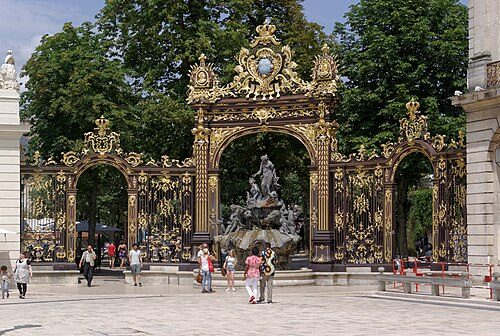
An eighteenth-century square gilded by a Polish king, a medieval ducal town, and the French capital of Art Nouveau.
 2h39
Town · Grand Est
Langres
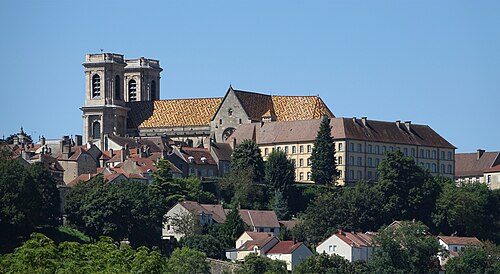
A walled hilltop town near the source of the Marne: Diderot’s birthplace, with 3.6 km of ramparts to walk all the way round.
 2h38
Village · Burgundy–Franche-Comté
Arbois
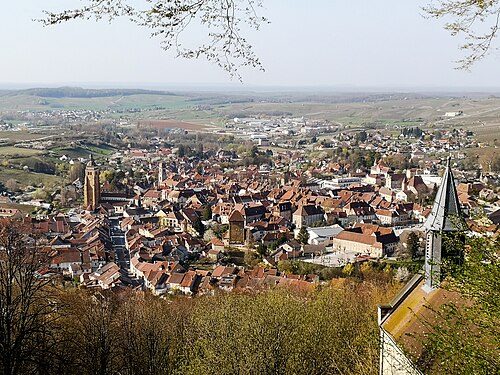
Pasteur’s home town, capital of Jura wine: vin jaune, a river running under houses, and a limestone gorge just beyond the last street.
 2h05
Town · Burgundy–Franche-Comté
Beaune
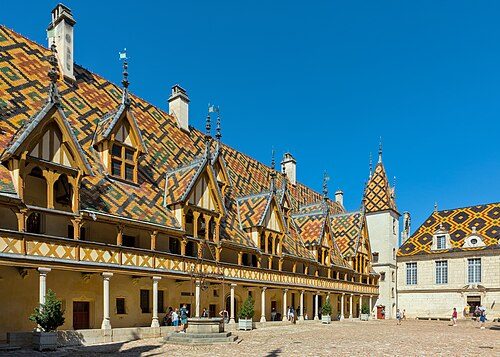
A walled wine town with the most famous roof in Burgundy, a medieval hospital for the poor, and the Côte’s great vineyards at the edge of town.
Sources
- Wikipedia (fr) – Colmar
- Wikipedia (en) – Colmar
- Wikipedia (fr) – Retable d’Issenheim
- Wikipedia (en) – Isenheim Altarpiece
Original text. Train times computed from SNCF timetables (ODbL); climate Météo-France; products INAO; festivals Ministry of Culture. Methodology.