

Village · Hauts-de-France · Altitude 28 m
Montreuil-sur-Mer
A walled hilltop town that lost its sea, where Victor Hugo set the opening of Les Misérables and Haig ran the British army in the First World War.
Why go
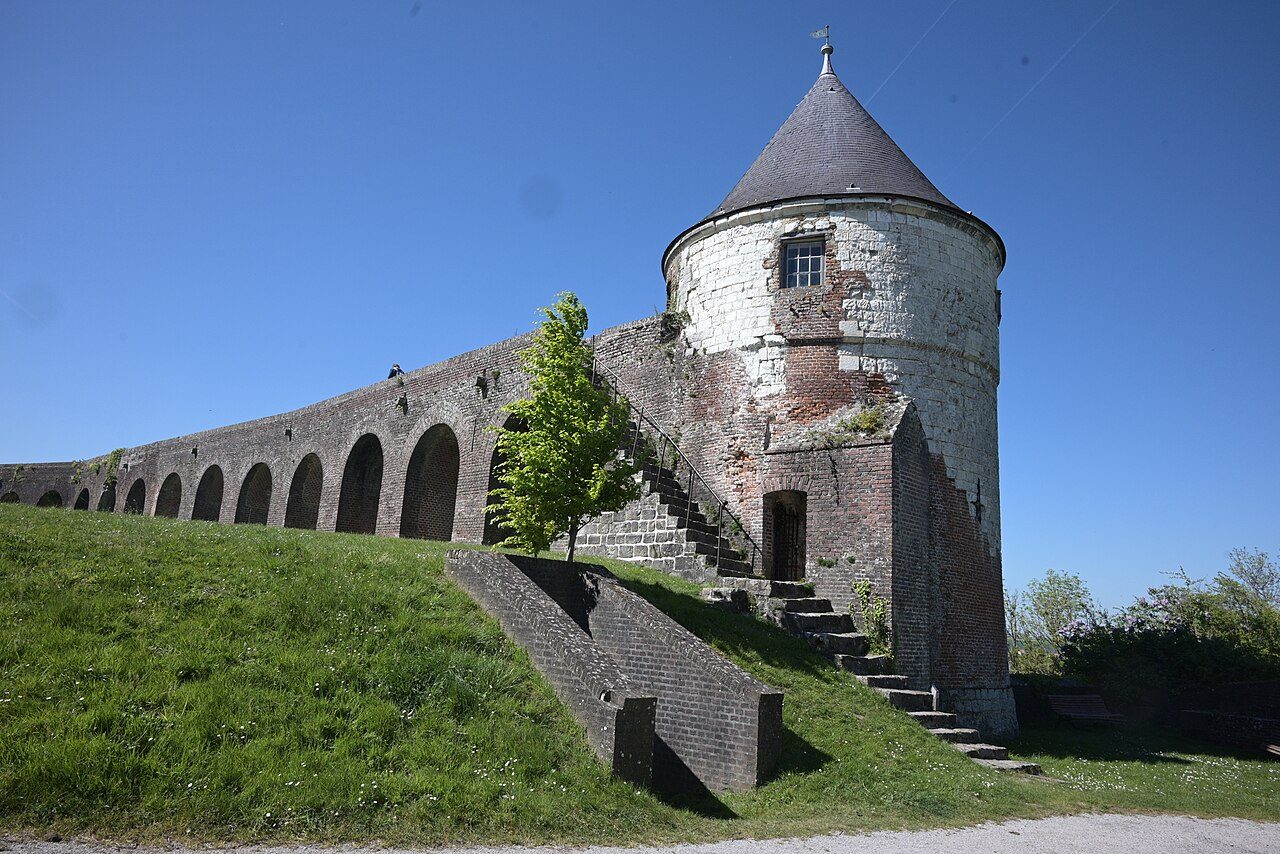
Montreuil-sur-Mer is a small, quiet, cobbled town on a hill above the Canche valley, a world away from Paris. Its ramparts of the thirteenth and sixteenth centuries still ring the town, and a path leads around them through trees and past a citadel. It has had more than its share of literary and military history, from Victor Hugo’s Jean Valjean to Douglas Haig’s general headquarters, and it wears it lightly. The beaches of the Opal Coast are a short drive away.
History
In the tenth and eleventh centuries the town grew around two abbeys, one of them later called Saint-Saulve, and two castle mounds, above an estuary where boats could come up from the sea. Between Hugh Capet’s accession in 987 and 1204, Montreuil was the only seaport in the royal domain of the Capetian kings, which explains a name that now seems strange: the Canche silted up long ago and the sea is some kilometres away.
Its walls date largely from the thirteenth and sixteenth centuries. In June 1537 troops of the Emperor Charles V besieged and took the town and largely destroyed it; in 1567 Charles IX ordered a citadel built on the site of the old thirteenth-century castle, and around 1670 Vauban remodelled it. Montreuil remained a fortress town on a frontier that moved north only slowly.
Writers found it early. Laurence Sterne passed through in 1765 and put the town into A Sentimental Journey. On 4 September 1837 Victor Hugo stopped here during a journey in the north, and later made Montreuil-sur-Mer the setting for much of the first part of Les Misérables, where Jean Valjean, under the name of Monsieur Madeleine, becomes the town’s mayor.
From March 1916 to April 1919 the British Army’s general headquarters in France was based in the town under Field Marshal Douglas Haig; an equestrian statue of him by Paul Landowski stands in front of the theatre. Painters from Britain and Scandinavia also lived here around 1900. Each summer the townspeople stage a sound-and-light show based on Les Misérables.
What to see
The ramparts walk
A path follows the walls, largely of the thirteenth and sixteenth centuries, around the whole town, with views over the Canche valley towards the estuary that once made Montreuil a seaport. Take it slowly, in the evening if you can: it is the best introduction to the town.
The citadel
Built from 1567 on the site of the medieval royal castle and remodelled around 1670 under Vauban, the citadel shows how the town’s defences changed from the Middle Ages to the age of artillery. In summer it is also the stage for the Misérables show.
Saint-Saulve and the Hôtel-Dieu chapel
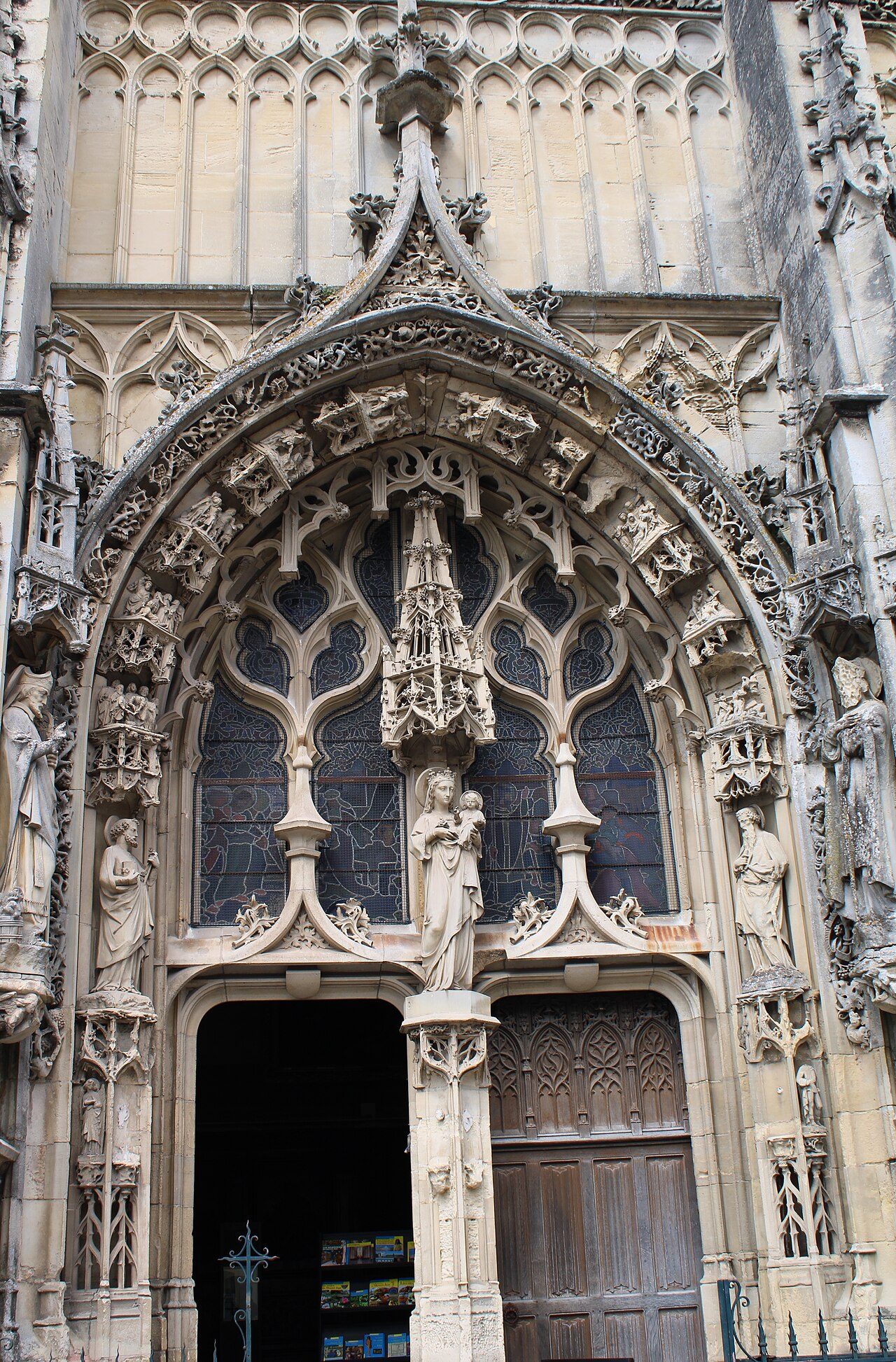
The abbey church of Saint-Saulve, with its massive tower and a carved portal made after 1467, recalls the town’s monastic beginnings, and its treasury is among the finest in the region. Nearby, the chapel of the old Hôtel-Dieu, a hospital founded around 1200, has a richly carved Flamboyant Gothic doorway.
In the footsteps of Les Misérables
Walk down the steep, cobbled Cavée Saint-Firmin, which links the upper town to the old working quarters along the walls: it is probably where Hugo set the scene of Fauchelevent’s overturned cart, lifted by Monsieur Madeleine. In summer some three hundred volunteers stage the novel at the citadel.
Climate
Météo-France normals 1991-2020, station Le-Touquet (5 m, 11.5 km away). Sunshine: Le-Touquet station (11.5 km).
| Jan | Feb | Mar | Apr | May | Jun | Jul | Aug | Sep | Oct | Nov | Dec | |
|---|---|---|---|---|---|---|---|---|---|---|---|---|
| High °C | 7.6 | 8.2 | 10.9 | 14.1 | 17.2 | 19.7 | 21.4 | 21.9 | 19.5 | 15.8 | 11.3 | 8.2 |
| Low °C | 2.6 | 2.4 | 4.0 | 5.6 | 8.7 | 11.6 | 13.8 | 14.0 | 11.6 | 9.0 | 5.6 | 3.1 |
| Rain (mm) | 77 | 62 | 54 | 50 | 59 | 56 | 59 | 73 | 77 | 101 | 114 | 107 |
| Rain days | 13 | 11 | 10 | 9 | 10 | 9 | 8 | 10 | 10 | 13 | 14 | 15 |
| Sunshine (h) | 62 | 78 | 133 | 190 | 210 | 220 | 225 | 205 | 161 | 111 | 63 | 52 |
Timeline
- 987–1204 Montreuil is the only seaport of the Capetian royal domain
- 1537 Charles V’s troops take and largely destroy the town
- 1567 Charles IX orders the citadel
- 1765 Laurence Sterne visits
- 1837 Victor Hugo passes through (4 September)
- 1916 British GHQ settles in Montreuil (until 1919)
Uncertain or disputed
- The Haig statue: one source says the original was taken down during the Second World War and recast in the 1950s from the original mould; another simply dates it to 1931.
- The link between the Cavée Saint-Firmin and the cart scene in the novel is an inference, given as ‘probably’ by our source.
- Although commonly called Montreuil-sur-Mer for centuries, the commune’s official name was Montreuil until the end of 2022.
Crowds: Rarely crowded. Summer weekends, especially during the Misérables show, bring visitors from the coast and from Britain; outside July and August the town is calm, even sleepy. (editorial judgement)
Protected food & drink from here
AOP and IGP products whose official area includes this commune (INAO). Regional food: AOP & IGP →
Meat & charcuterie
- Prés-salés de la baie de Somme AOP · lamb
- Volailles de Licques IGP · poultry
Cider & spirits
- Genièvre ou Jenever ou Genever IG
Festivals within 15 km
From the Ministry of Culture’s national list; it gives a season, not dates.
| Festival | Discipline | Season |
|---|---|---|
| Bluesin'(A)Out Groffliers | Music | 21 Jun – 5 Sep |
| Cinémondes Berck-sur-Mer | Film | 6 Sep – 31 Dec |
| Les malins plaisirs Montreuil-sur-Mer | Theatre, dance & street arts | 21 Jun – 5 Sep |
| Les nuits baroques du Touquet Le Touquet | Music | 1 Jan – 20 Jun |
| Les pianos folies Le Touquet | Music | 1 Jan – 20 Jun |
| Musica Nigella Tigny-Noyelle | Music | 1 Jan – 20 Jun |
| Quartiers Libres Etaples-sur-mer | Theatre, dance & street arts | 21 Jun – 5 Sep |
| Rock en Stock Etaples-sur-mer | Music | 21 Jun – 5 Sep |
| Salon du livre Le Touquet Le Touquet | Books & comics | 6 Sep – 31 Dec |
| Salon je lis jeun'esse Etaples | Books & comics | 6 Sep – 31 Dec |
| Touquet Music Beach Le Touquet-Paris-Plage | Music | 21 Jun – 5 Sep |
Also in this part of France
 1h06
City · Hauts-de-France
Amiens
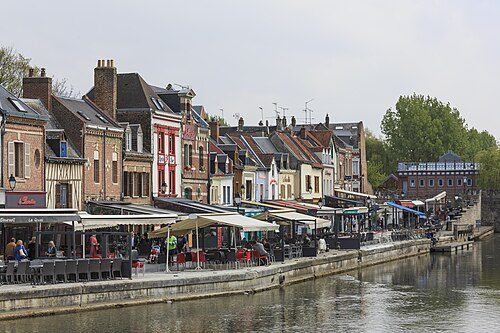
France’s largest Gothic cathedral, floating market gardens reached by flat-bottomed boat, and the town where Jules Verne spent his last thirty years.
 1h49
Coast · Normandy
Étretat
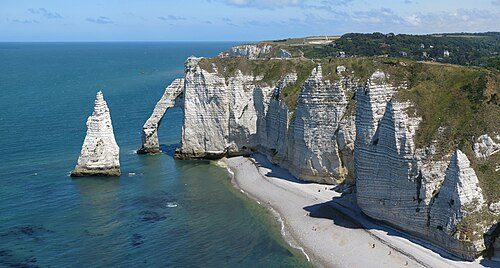
White chalk cliffs carved into arches and a needle, a shingle beach between them, and a village that painters and writers made famous.
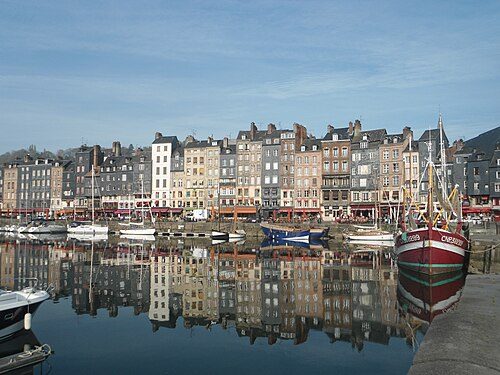 2h12
Coast · Normandy
Honfleur
A slate-hung harbour town at the mouth of the Seine, where explorers sailed for Canada and painters learned to paint the sky.
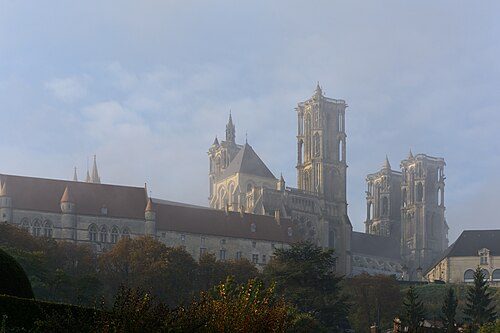 1h32
Town · Hauts-de-France
Laon
A medieval town on a ridge above the Picardy plain, with a Gothic cathedral whose towers are guarded by sixteen stone oxen.
Sources
Original text. Train times computed from SNCF timetables (ODbL); climate Météo-France; products INAO; festivals Ministry of Culture. Methodology.