

Town · Centre–Val de Loire · Altitude 64 m
Amboise
A royal château over the Loire, the manor where Leonardo da Vinci spent his last three years, and a chapel that holds what may be his bones.
Why go
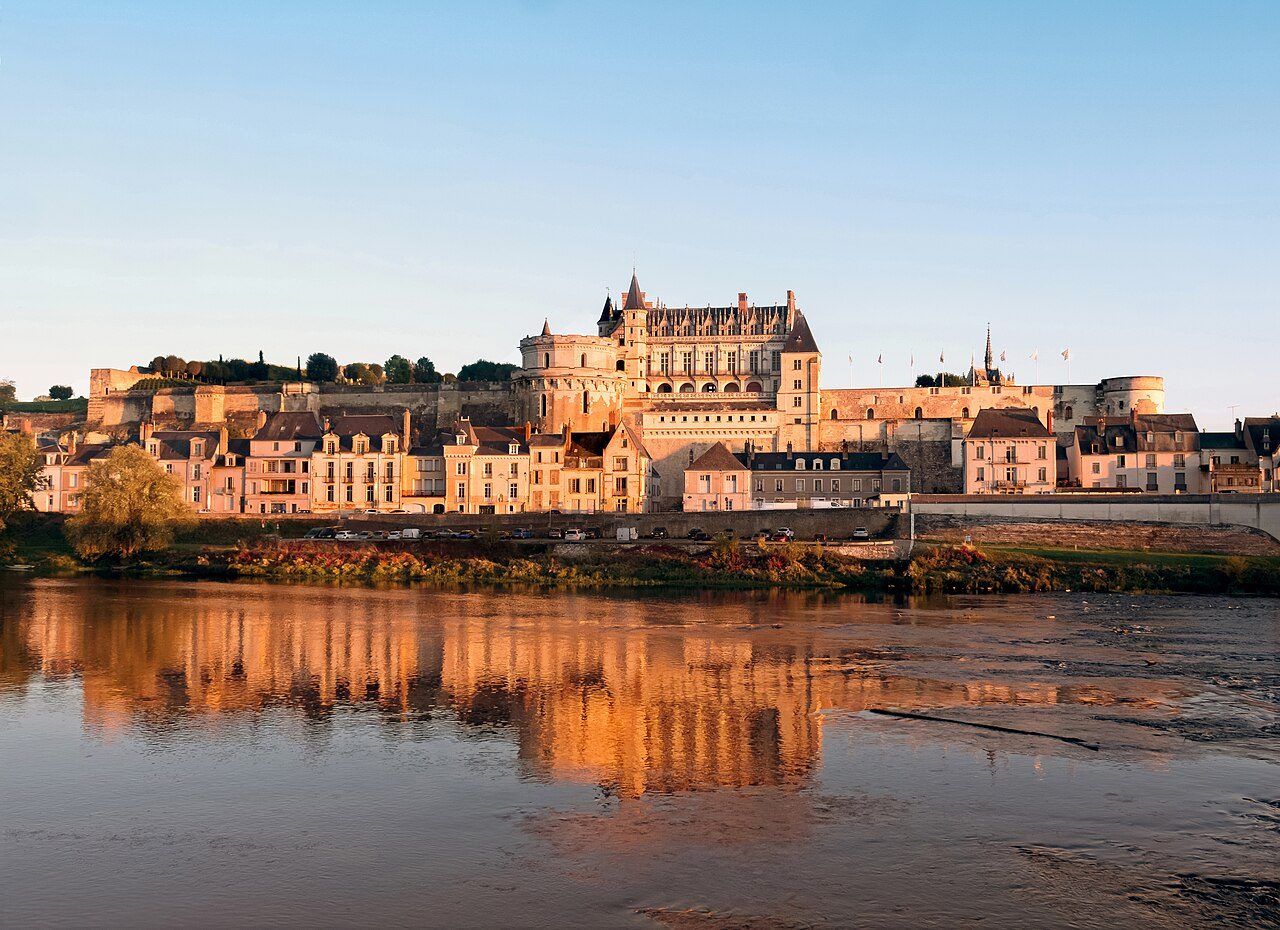
This is where the French Renaissance came ashore. Kings brought Italian builders, gardeners and finally Leonardo himself to this small town on the Loire, and you can still walk from the royal château to the red-brick manor where he lived and died. Unlike the grand château stops, Amboise is a real town, with a market, riverside walks and vineyards close by. Stay overnight and you will see the château lit gold over the water when the day-trippers have gone.
History
A spur above the Loire, where an island made the river easier to cross, was fortified long before the kings came. The fortress was confiscated by Charles VII in 1434 and passed to the crown, and Amboise became one of its favourite residences. Charles VIII was born here in 1470 and, from 1492, turned the old castle into a palace, first in flamboyant Gothic style, then with the help of Italian craftsmen he brought back after his Italian campaign of 1494–1495. Their work at Amboise counts among the very first Renaissance decoration in France.
Charles did not enjoy it for long. On 7 April 1498 he struck his head on the stone lintel of a low doorway in the château and died of the injury. Francis I was raised here, and in 1516 he invited Leonardo da Vinci to live at the manor of Clos Lucé, a short walk from the château. Leonardo stayed there until his death in 1519 and was buried, as he had asked, in the collegiate church of Saint-Florentin inside the château walls.
Amboise also saw the start of France’s religious wars. In March 1560 a Protestant plot to seize the young Francis II and break the power of the Guise family was discovered; the reprisals were savage, and conspirators were hanged from the château’s walls and balcony. Three years later, on 19 March 1563, the Peace of Amboise granted Protestants a limited freedom of worship.
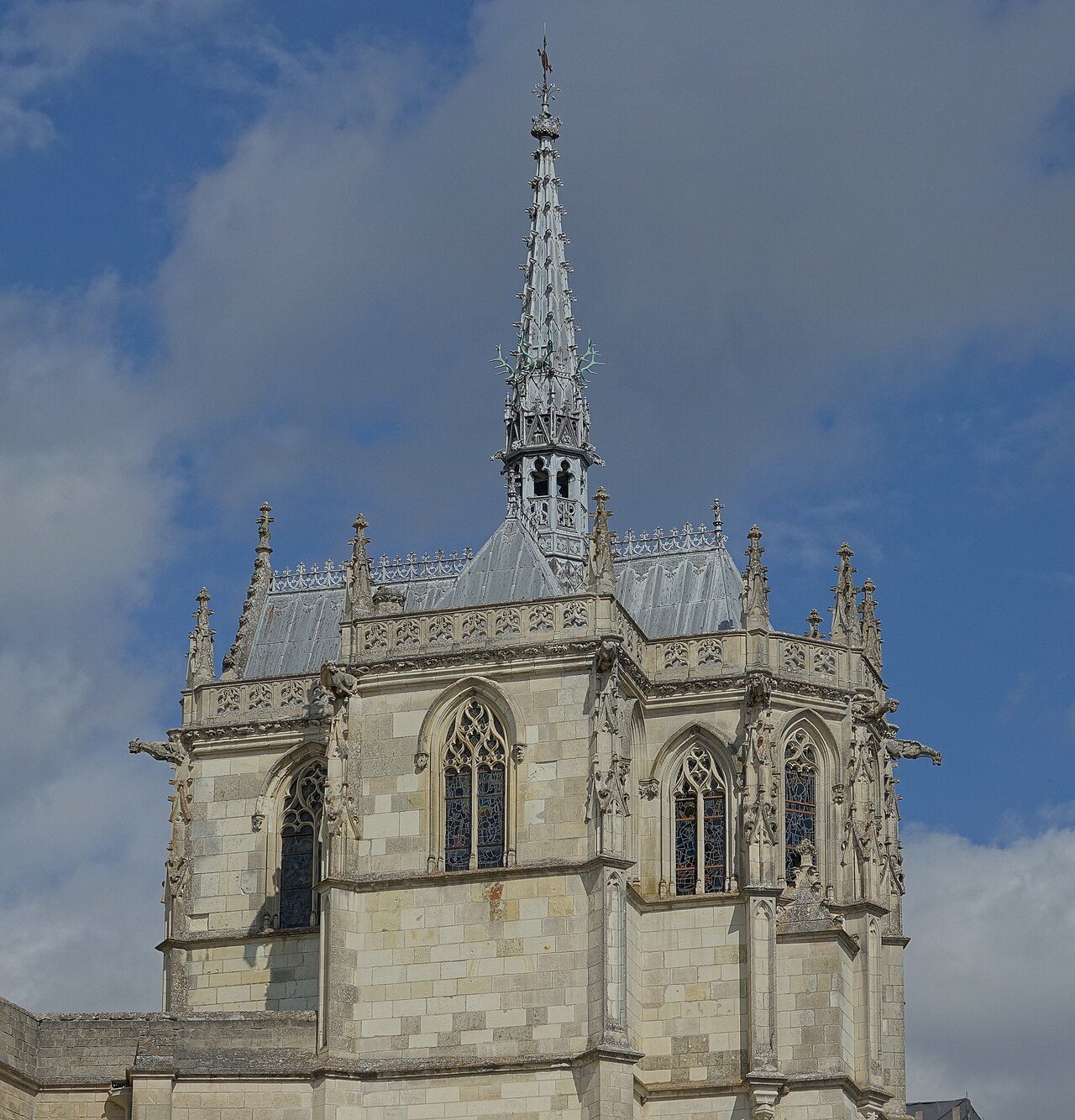
After the court moved away the château declined, and much of it was demolished after the Revolution, leaving the royal lodging, the Saint-Hubert chapel and the great towers. Saint-Florentin was demolished in 1807; in 1863 the writer Arsène Houssaye excavated the site, and the bones believed to be Leonardo’s now lie in the Saint-Hubert chapel. In 2000 the Loire Valley, Amboise included, was inscribed by UNESCO.
UNESCO World Heritage: The Loire Valley between Sully-sur-Loire and Chalonnes (2000)
What to see
Château royal d’Amboise
Climb up through one of the huge cavalry towers, whose spiral ramps were built wide enough for horsemen, to the terraces and the royal lodging. The view along the Loire from the gardens is the reason most painters came here.
Saint-Hubert chapel
A jewel of flamboyant Gothic perched on the ramparts, built as part of Charles VIII’s works of the 1490s, with the hunting legend of Saint Hubert carved over the door. Inside, a simple slab with a bronze medallion portrait marks the presumed tomb of Leonardo da Vinci.
Clos Lucé
The brick and stone manor that Francis I put at Leonardo’s disposal in 1516, a short walk from the château, is now a museum: the rooms where he lived and worked for his last three years, and models of the machines and inventions sketched in his notebooks.
The Loire banks and the island
Cross the bridge to the Île d’Or in the middle of the river for the classic view back to the château, especially at sunset. Then follow the riverside paths: the Loire here is wide, braided with sandbanks and still largely wild.
Pagoda of Chanteloup
Just outside town, a 44-metre Chinese-style pagoda built in 1775 for the Duke of Choiseul is the most striking survivor of his estate. Its seven storeys, each slightly smaller than the one below, can be climbed for a view over the forest of Amboise and the Loire valley.
Climate
Météo-France normals 1991-2020, station Tours (108 m, 19.6 km away). Sunshine: Tours station (19.6 km).
| Jan | Feb | Mar | Apr | May | Jun | Jul | Aug | Sep | Oct | Nov | Dec | |
|---|---|---|---|---|---|---|---|---|---|---|---|---|
| High °C | 7.7 | 9.0 | 12.9 | 16.0 | 19.6 | 23.4 | 25.9 | 26.0 | 22.1 | 17.0 | 11.4 | 8.1 |
| Low °C | 2.5 | 2.3 | 4.3 | 6.0 | 9.4 | 12.6 | 14.4 | 14.3 | 11.4 | 9.0 | 5.3 | 2.9 |
| Rain (mm) | 63 | 52 | 49 | 53 | 58 | 53 | 47 | 44 | 52 | 66 | 69 | 72 |
| Rain days | 11 | 10 | 9 | 9 | 9 | 8 | 7 | 7 | 8 | 10 | 11 | 12 |
| Sunshine (h) | 68 | 95 | 149 | 187 | 214 | 228 | 247 | 238 | 191 | 123 | 79 | 65 |
Timeline
- 1434 Charles VII confiscates the château; it becomes royal
- 1470 Birth of Charles VIII at Amboise
- 1498 Charles VIII dies after striking his head on a lintel
- 1516 Leonardo da Vinci settles at Clos Lucé
- 1519 Death of Leonardo at Amboise
- 1560 The Amboise conspiracy and its bloody repression
- 1563 Peace of Amboise grants Protestants limited freedom of worship
- 2000 The Loire Valley is inscribed by UNESCO
Uncertain or disputed
- The remains in the Saint-Hubert chapel are only presumed to be Leonardo’s; they were identified in the nineteenth century from bones found on the site of the destroyed chapel of Saint-Florentin.
- Some accounts say Leonardo finished the Mona Lisa at Amboise; this is not established, and we do not repeat it.
- Figures for the number of Protestants executed in 1560 vary widely between sources.
Crowds: Very busy in season. From late spring to early autumn the château and Clos Lucé are busiest from late morning; go at opening time, stay the night, and enjoy the town in the evening when the tour coaches have left. (editorial judgement)
Protected food & drink from here
AOP and IGP products whose official area includes this commune (INAO). Regional food: AOP & IGP →
Cheese
- Sainte-Maure de Touraine AOP · goat's cheese
Meat & charcuterie
- Bœuf du Maine IGP · beef
- Rillettes de Tours IGP · charcuterie
Wine
- Crémant de Loire AOP
- Rosé de Loire AOP
- Touraine AOP
- Val de Loire IGP
Festivals within 15 km
From the Ministry of Culture’s national list; it gives a season, not dates.
| Festival | Discipline | Season |
|---|---|---|
| Brass Band Amboise | Music | 1 Jan – 20 Jun |
| Dansez maintenant Véretz | Theatre, dance & street arts | 21 Jun – 5 Sep |
| Estival d'Amboise Amboise | Music | 21 Jun – 5 Sep |
| Festival européen de musique renaissance Amboise | Music | 6 Sep – 31 Dec |
| Jazz en Touraine Montlouis-sur-Loire | Music | 6 Sep – 31 Dec |
| L'art prend l'air Reugny | Theatre, dance & street arts | 6 Sep – 31 Dec |
| La preuve par 3 Pocé-sur-Cisse | Theatre, dance & street arts | 6 Sep – 31 Dec |
| Les Courants Saint-Ouen-les-Vignes | Books & comics | 21 Jun – 5 Sep |
| Les pieds dans la sauce Civray-de-Touraine | Music | 21 Jun – 5 Sep |
| Musica uyn audacia Amboise | Music | 21 Jun – 5 Sep |
| Quinte et Sens, De Bach a Bacchus Amboise | Music | 21 Jun – 5 Sep |
| Rock'In Charge Chargé | Music | 1 Jan – 20 Jun |
Also in this part of France
 2h29
Town · Centre–Val de Loire
Chinon
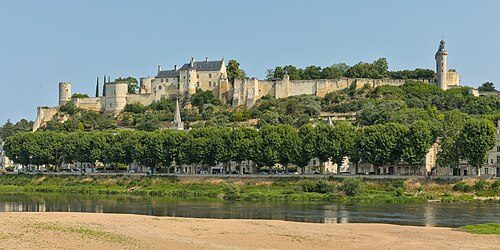
A long royal fortress above the Vienne where Henry II died and Joan of Arc met her king, a slate-roofed old town and red wine from cabernet franc.
 1h40
Town · Pays de la Loire
Saumur
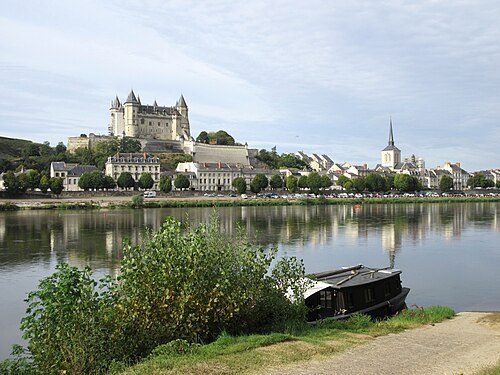
A white-stone town on the Loire, crowned by a fairy-tale château, home of the Cadre Noir riders and sparkling wine aged in caves.
 1h56
City · Centre–Val de Loire
Bourges
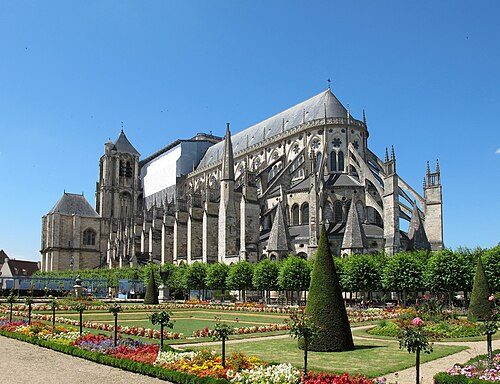
A Gothic cathedral with no transept and five great portals, a merchant’s palace, and market gardens on the marshes at the edge of town.
 1h21
City · Pays de la Loire
Angers
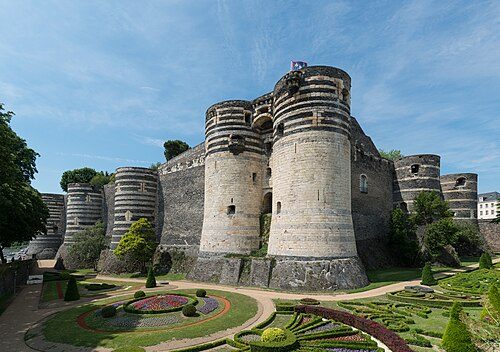
The old capital of Anjou: a striped fortress of seventeen towers guarding the greatest medieval tapestry in the world.
Sources
- Wikipedia (fr) – Amboise
- Wikipedia (en) – Amboise
- Wikipedia (fr) – Château d’Amboise
- Wikipedia (en) – Château d’Amboise
- Wikipedia (en) – Loire Valley
Original text. Train times computed from SNCF timetables (ODbL); climate Météo-France; products INAO; festivals Ministry of Culture. Methodology.