

City · Pays de la Loire · Altitude 42 m
Angers
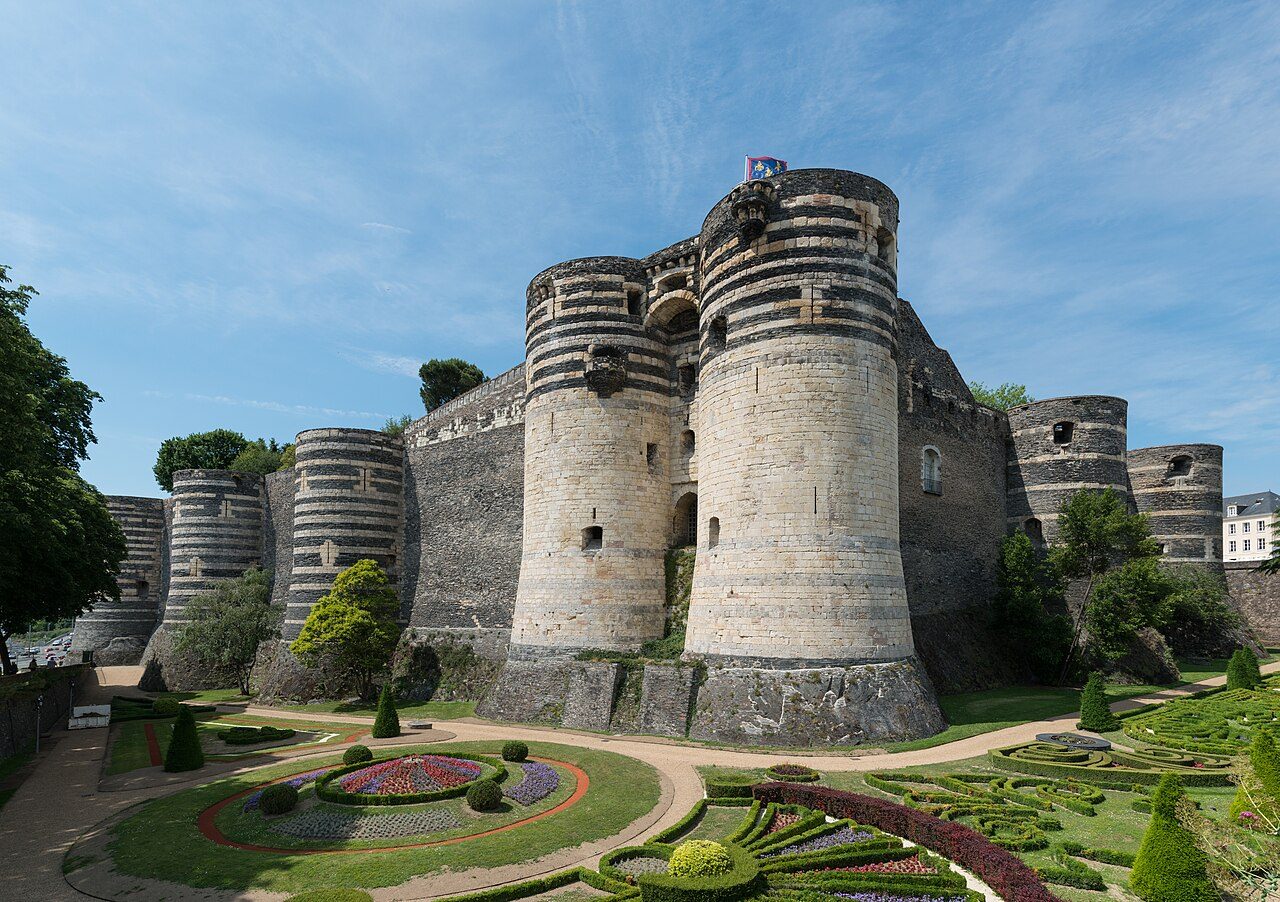
The old capital of Anjou: a striped fortress of seventeen towers guarding the greatest medieval tapestry in the world.
Why go
Angers is a real, lively university city that happens to hold one of the wonders of medieval Europe. Inside its black-and-white striped castle hangs the Apocalypse Tapestry, more than a hundred metres of fourteenth-century weaving; across the river, Jean Lurçat’s twentieth-century answer fills a twelfth-century hospital ward. In between are slate roofs, half-timbered houses, gardens and the gentle Maine river. Fewer visitors than the Loire châteaux, more everyday French life: a fine place to stay rather than just pass through.
History
Angers sits on the Maine a few kilometres before it joins the Loire, and it was the capital of Anjou for most of a thousand years. Its counts were formidable: Fulk III, called Nerra, who died in 1040, built castles across the region, and his descendant Geoffrey, nicknamed Plantagenet, married the heiress of England and Normandy. Their son became Henry II of England in 1154, and for half a century Angers sat at the heart of an empire stretching from Scotland’s border to the Pyrenees.
When the French crown took Anjou back in the early thirteenth century, it built the present castle during the minority of Louis IX, under the regency of his mother Blanche of Castile. Its curtain wall, some 660 metres long, is set with seventeen massive round towers striped with dark schist and pale limestone. Under Henry III, in the late sixteenth century, the towers were cut down for artillery; only one keeps its original height.
Anjou was given to princes of the royal family. Duke Louis I commissioned the Apocalypse Tapestry around 1373, designed by the Flemish painter Jean Bondol and woven in Paris by about 1382; originally about 140 metres long, it was bequeathed to the cathedral by his grandson, King René, in 1480. René, poet, painter and patron, is remembered here as ‘good King René'.
During the Revolution the tapestry was cut up and used as floor mats and horse blankets; its surviving pieces were recovered in the nineteenth century and since 1954 have hung in a purpose-built gallery inside the castle. The artist Jean Lurçat, deeply struck by it in the late 1930s, began ‘Le Chant du Monde’ in 1957 as a ten-piece modern reply; the city acquired it in 1967.
What to see
Château d’Angers and the Apocalypse Tapestry
Walk the ramparts and the gardens planted in the old moat, then enter the long, dim gallery where the tapestry hangs: 71 surviving scenes of the Book of Revelation, with the many-headed beast, the angels and the fall of Babylon. Take your time; the details, a dragon here, a sleepy city there, reward slow looking.
Jean Lurçat Museum and ‘Le Chant du Monde'
Across the Maine, in the great ward of the twelfth-century hospital of Saint-Jean, Lurçat’s ten huge tapestries, left unfinished at his death in 1966, cover the walls: atomic bombs and human folly, then the joys of the world, in deep colours on black. Seeing them after the Apocalypse is one of the best pairings in any French city.
Saint-Maurice cathedral and the Maison d’Adam
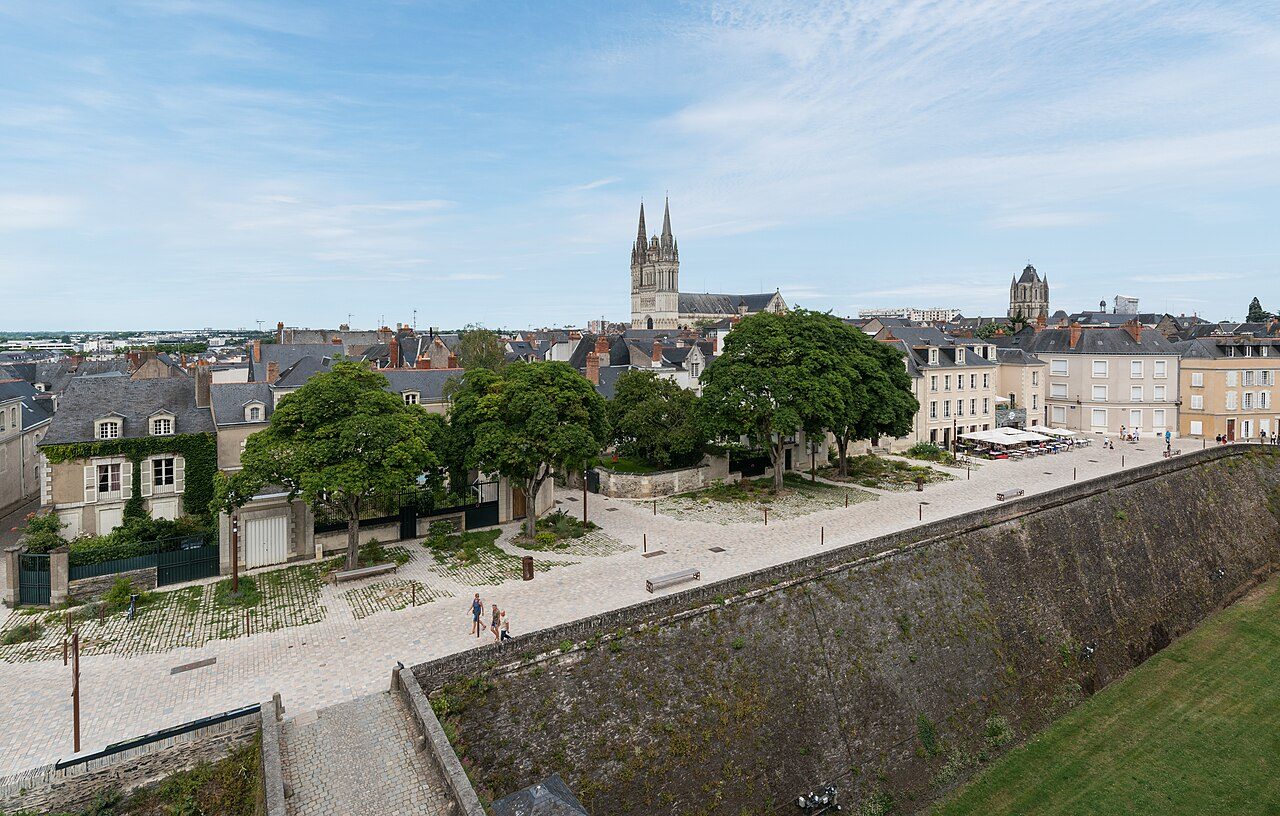
The cathedral is an early example of the domed ‘Angevin’ Gothic vault, with fine medieval stained glass and a façade of statues above the steps that climb from the river. Just behind its east end, the Maison d’Adam, a tall half-timbered house of the late Middle Ages, takes its name from the carved figures of Adam and Eve on one of its posts.
Galerie David d’Angers
The plaster models of the nineteenth-century sculptor David d’Angers, who made portraits of the great figures of his age and the pediment of the Panthéon in Paris, displayed in the restored shell of the Toussaint abbey church, lit from above. An unexpectedly beautiful space.
Climate
Météo-France normals 1991-2020, station Beaucouze (50 m, 5.1 km away). Sunshine: Beaucouze station (5.1 km).
| Jan | Feb | Mar | Apr | May | Jun | Jul | Aug | Sep | Oct | Nov | Dec | |
|---|---|---|---|---|---|---|---|---|---|---|---|---|
| High °C | 8.8 | 9.9 | 13.3 | 16.4 | 19.9 | 23.5 | 25.8 | 25.9 | 22.4 | 17.4 | 12.3 | 9.2 |
| Low °C | 3.3 | 2.9 | 4.6 | 6.3 | 9.6 | 12.6 | 14.3 | 14.3 | 11.4 | 9.3 | 5.9 | 3.5 |
| Rain (mm) | 70 | 54 | 53 | 55 | 59 | 49 | 45 | 48 | 56 | 72 | 73 | 75 |
| Rain days | 11 | 10 | 9 | 10 | 9 | 7 | 6 | 7 | 8 | 11 | 12 | 12 |
| Sunshine (h) | 68 | 98 | 142 | 180 | 205 | 224 | 235 | 225 | 192 | 121 | 84 | 71 |
Timeline
- 1040 Death of Fulk Nerra, builder of castles across Anjou
- 1154 Henry Plantagenet, Count of Anjou, becomes King Henry II of England
- 1230s? The present castle is built under the regency of Blanche of Castile
- 1373 Louis I of Anjou commissions the Apocalypse Tapestry
- 1480 King René bequeaths the tapestry to the cathedral
- 1954 The tapestry moves to a new gallery in the castle
- 1967 The city acquires Lurçat’s ‘Le Chant du Monde'
Uncertain or disputed
- The castle is usually dated to the 1230s, during the minority of Louis IX; sources differ on the exact start and end of the works.
- The completion date of the Apocalypse Tapestry is given as 1380 or 1382; the designer Jean Bondol also appears in sources as Hennequin (or Jean) de Bruges.
Crowds: Rarely crowded. The castle is busiest on summer afternoons and weekends, but Angers itself rarely feels crowded; weekday mornings are the calmest time for the tapestry gallery. (editorial judgement)
Protected food & drink from here
AOP and IGP products whose official area includes this commune (INAO). Regional food: AOP & IGP →
Meat & charcuterie
- Bœuf du Maine IGP · beef
- Maine-Anjou AOP · beef
- Oie d'Anjou IGP · poultry
- Volailles du Maine IGP · poultry
- Volailles d’Ancenis IGP · poultry
Butter, oil, honey & more
- Œufs de Loué IGP · eggs
Wine
- Anjou AOP
- Cabernet d'Anjou AOP
- Crémant de Loire AOP
- Rosé d'Anjou AOP
- Rosé de Loire AOP
- Val de Loire IGP
Festivals within 15 km
From the Ministry of Culture’s national list; it gives a season, not dates.
| Festival | Discipline | Season |
|---|---|---|
| Angers BD Angers | Books & comics | 6 Sep – 31 Dec |
| Bouche à Oreille Bouchemaine | Music | 1 Jan – 20 Jun |
| Cinémas d'Afrique Angers | Film | 1 Jan – 20 Jun |
| Couleurs Chanson Mûrs-Erigné | Music | 1 Jan – 20 Jun |
| Festival d'Anjou Longuenée-en-Anjou | Theatre, dance & street arts | 21 Jun – 5 Sep |
| Festival de Trélazé Trélazé | Music | 21 Jun – 5 Sep |
| Fête du Jau Mûrs-Erigné | Music | 1 Jan – 20 Jun |
| Imaj'nère Angers | Books & comics | 1 Jan – 20 Jun |
| Jazz à l'heure d'été Angers | Music | 6 Sep – 31 Dec |
| Les Accroche-coeurs Angers | Theatre, dance & street arts | 6 Sep – 31 Dec |
| Les Hivernales d'Anjou Angers | Theatre, dance & street arts | 6 Sep – 31 Dec |
| Les P'tits Loups en fête Verrières-en-Anjou | Theatre, dance & street arts | 21 Jun – 5 Sep |
| Les Traver'ce Musicales Les Ponts-de-Cé | Music | 21 Jun – 5 Sep |
| Levitation Angers | Music | 6 Sep – 31 Dec |
| Musique dans les Vignes Savennières | Music | 21 Jun – 5 Sep |
| Premiers Plans Angers | Film | 1 Jan – 20 Jun |
+ 8 — Festivals →
Also in this part of France
 1h40
Town · Pays de la Loire
Saumur
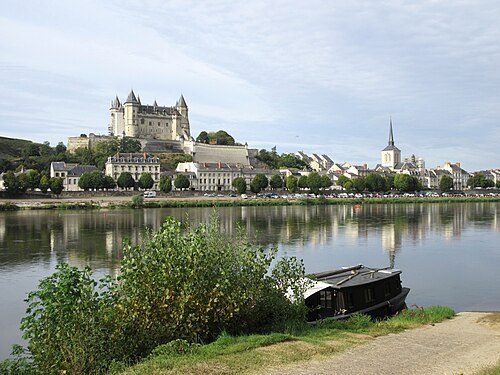
A white-stone town on the Loire, crowned by a fairy-tale château, home of the Cadre Noir riders and sparkling wine aged in caves.
 2h29
Town · Centre–Val de Loire
Chinon
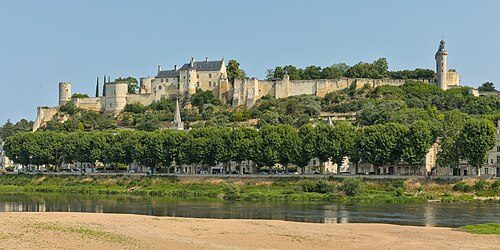
A long royal fortress above the Vienne where Henry II died and Joan of Arc met her king, a slate-roofed old town and red wine from cabernet franc.
 1h30
Town · Centre–Val de Loire
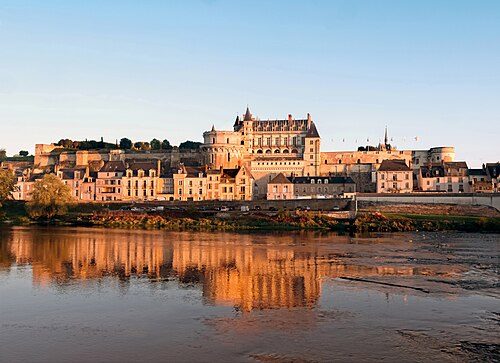
Amboise
A royal château over the Loire, the manor where Leonardo da Vinci spent his last three years, and a chapel that holds what may be his bones.
 3h02
Town · Pays de la Loire
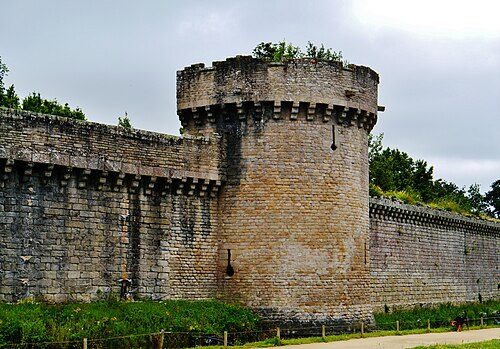
Guérande
A walled Breton town of grey granite overlooking a chequerboard of salt marshes, where paludiers still rake salt by hand.
Sources
- Wikipedia (en) – Apocalypse Tapestry
- Wikipedia (en) – Château d’Angers
- Destination Angers – The top 10 heritage sites in Angers
- Destination Angers – Jean Lurçat and Contemporary Tapestry Museum
- Ville d’Angers – dossier de presse Lurçat
Original text. Train times computed from SNCF timetables (ODbL); climate Météo-France; products INAO; festivals Ministry of Culture. Methodology.