
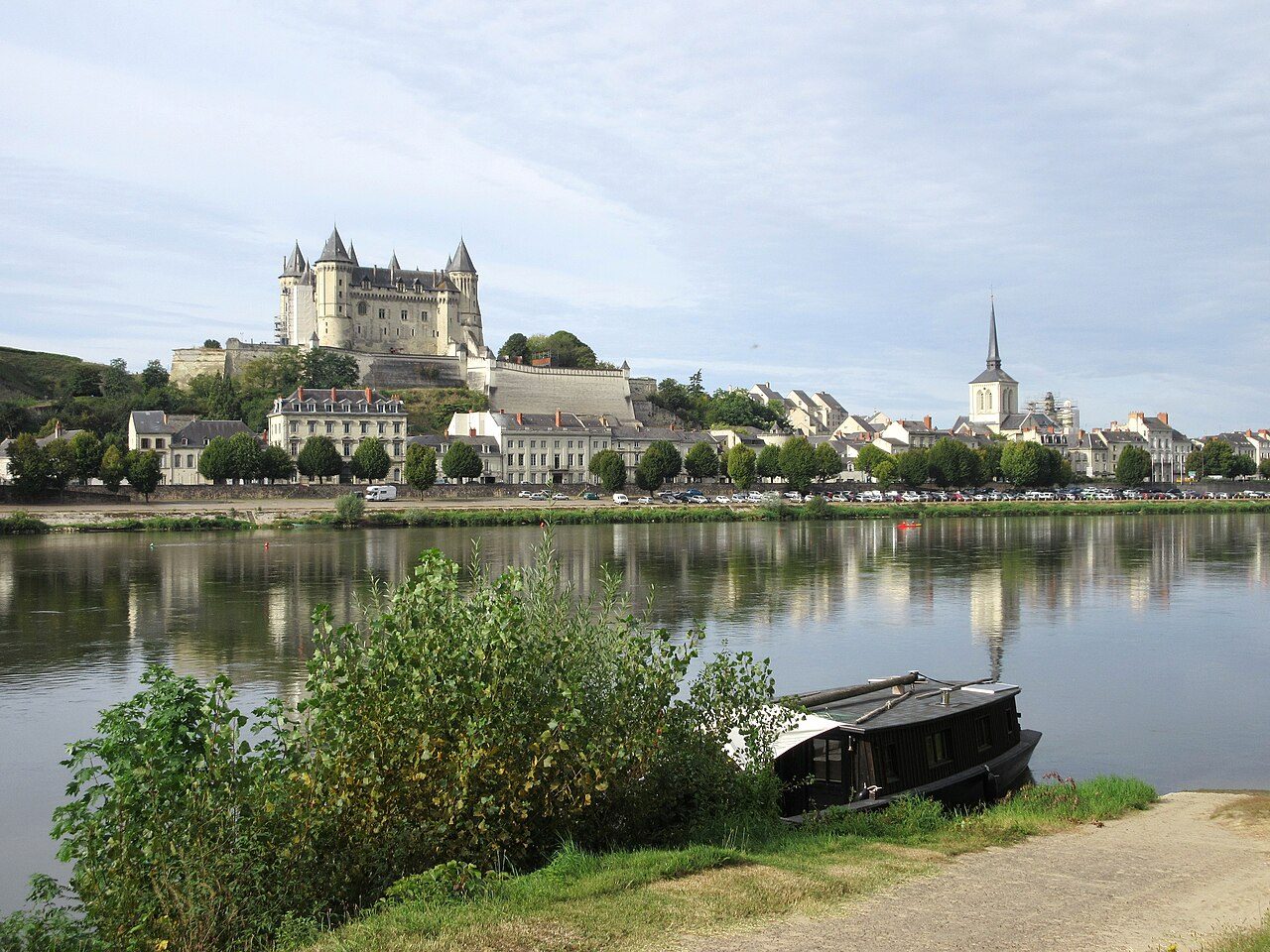

Town · Pays de la Loire · Altitude 44 m
Saumur
A white-stone town on the Loire, crowned by a fairy-tale château, home of the Cadre Noir riders and sparkling wine aged in caves.
Why go
Saumur gives you the Loire without the crowds of Chambord. The town is built of tuffeau, a soft white limestone, and the holes left by quarrying it have become wine cellars, mushroom farms and even houses carved into the cliffs. Add horses, from the Cadre Noir’s ballet-like displays to the cavalry traditions of the town, and a château that looks lifted from a medieval manuscript, and you have a rich, varied weekend at a gentle Loire pace.
History
A fortress stood on the ridge above the Loire by the tenth century, guarding the river crossing against Norman raids. Saumur passed to the counts of Anjou and then to their Plantagenet heirs, who also became kings of England; Henry II rebuilt the castle in the later twelfth century, after an earlier one had been destroyed in 1067, and the great abbey of Fontevraud nearby became the family’s burial place.
In the late fourteenth century Duke Louis I of Anjou turned the fortress into an elegant palace of white towers and gilded weathervanes. That is the château shown, above the grape harvest, in the September page of the ‘Très Riches Heures’ of the Duke of Berry, one of the most famous images of medieval France.
In the sixteenth century Saumur became a Protestant stronghold. Its governor Philippe Duplessis-Mornay, adviser to Henry IV, founded a Protestant academy here in the 1590s that drew students from across Europe until Louis XIV closed it in 1685. The revocation of the Edict of Nantes the same year drove many families into exile.
Saumur found another identity in horses. A cavalry school was established in the eighteenth century, and its instructors in black uniforms, the Cadre Noir, became the guardians of French classical riding. In June 1940 the officer cadets of the cavalry school held the Loire bridges for two days against far larger German forces, an episode remembered as the stand of the ‘Cadets de Saumur'. Since 2000 the town has been part of the Loire Valley UNESCO World Heritage site.
UNESCO World Heritage: The Loire Valley between Sully-sur-Loire and Chalonnes (2000)
What to see
Château de Saumur
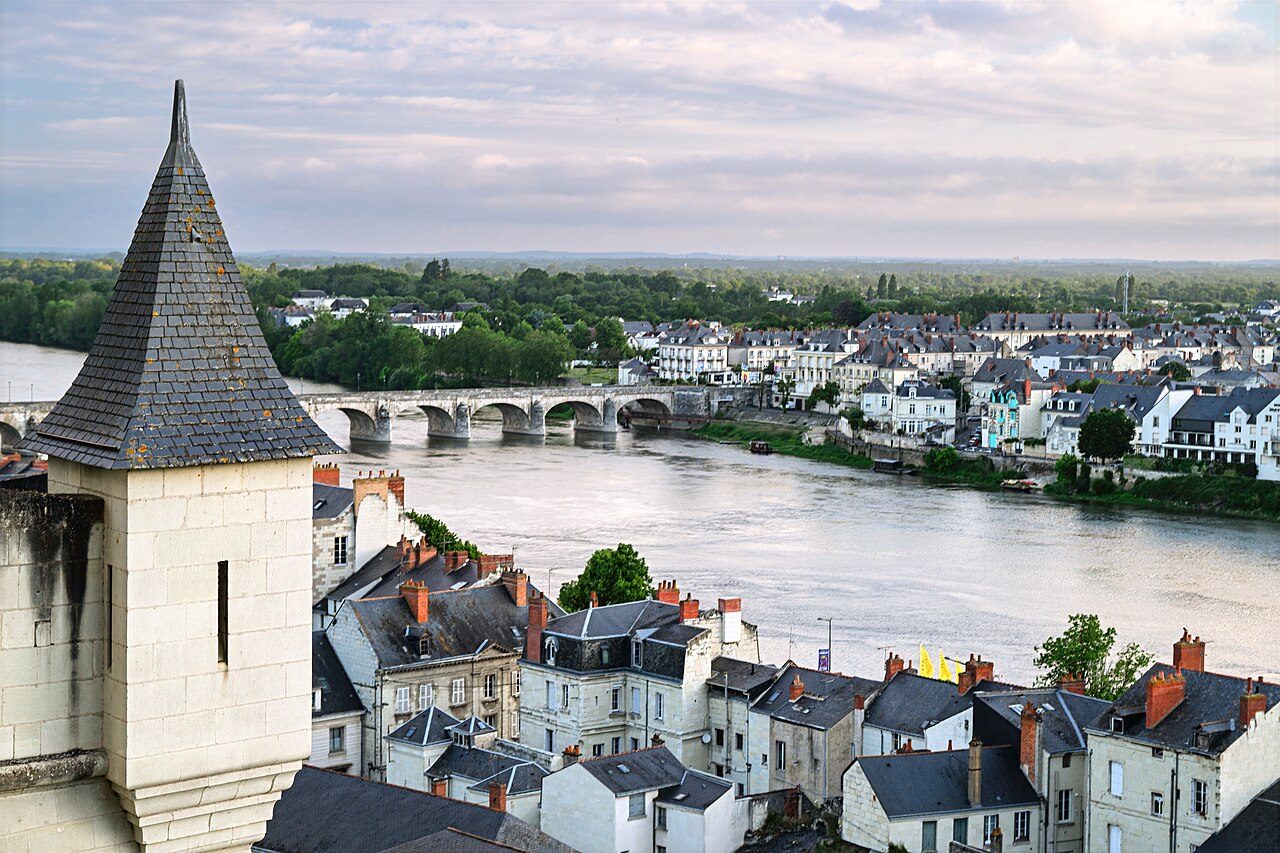
The white castle on its spur above the river, now home to a museum of decorative arts and a museum of the horse. Walk round the ramparts for the view over the Loire, the bridges and the slate roofs, then compare it with the September page of the ‘Très Riches Heures': the silhouette has barely changed.
The Cadre Noir and the École nationale d’équitation
Just outside town, the national riding school is the home of the Cadre Noir, whose riders perform the ‘airs above the ground', leaps and kicks inherited from the riding masters of the past. Guided tours show the stables and the training; check the school’s calendar for the public galas and morning presentations.
Sparkling wine cellars in the tuffeau
In Saint-Hilaire-Saint-Florent, just west of the centre, the sparkling-wine houses age their bottles in kilometres of galleries dug into the limestone. The oldest of them was founded in 1811 by Jean-Baptiste Ackerman, who brought the traditional method of second fermentation in the bottle to Saumur. Most offer cellar tours.
Troglodyte villages
Upstream along the Loire and on the plateau towards Doué-la-Fontaine, people lived and worked in the rock for centuries: houses, chapels, dovecotes and farms cut into the cliffs or dug into the ground around sunken courtyards. Several sites can be visited, some still used to grow mushrooms.
Fontevraud Abbey
A short drive south, one of the largest monastic complexes in Europe, where the painted tomb effigies of Henry II, Eleanor of Aquitaine and Richard the Lionheart lie in the abbey church. Look for the Romanesque kitchen with its forest of chimneys.
Climate
Météo-France normals 1991-2020, station Mont-Bellay-Inrae (58 m, 15.3 km away).
| Jan | Feb | Mar | Apr | May | Jun | Jul | Aug | Sep | Oct | Nov | Dec | |
|---|---|---|---|---|---|---|---|---|---|---|---|---|
| High °C | 8.8 | 10.2 | 13.8 | 16.9 | 20.6 | 24.3 | 26.4 | 26.6 | 23.0 | 17.9 | 12.5 | 9.3 |
| Low °C | 2.9 | 2.5 | 4.4 | 6.2 | 9.8 | 12.8 | 14.4 | 14.3 | 11.4 | 9.0 | 5.5 | 3.2 |
| Rain (mm) | 56 | 44 | 44 | 51 | 54 | 43 | 44 | 41 | 47 | 68 | 66 | 60 |
| Rain days | 11 | 9 | 9 | 9 | 9 | 7 | 6 | 7 | 7 | 10 | 12 | 12 |
Timeline
- 10th c. A fortress guards the Loire crossing
- late 14th c. Louis I of Anjou rebuilds the château as a palace
- 1593? Duplessis-Mornay founds the Protestant academy
- 1685 The academy is closed; revocation of the Edict of Nantes
- 1811 Jean-Baptiste Ackerman founds the first sparkling-wine house in Saumur
- 1940 The ‘Cadets de Saumur’ defend the Loire bridges, 19-20 June
- 2000 The Loire Valley, including Saumur, is inscribed by UNESCO
Uncertain or disputed
- The Protestant academy’s founding is dated 1593 by some sources, while teaching seems to have begun around 1599-1600; another source gives 1606.
- The cavalry school’s founding date varies with what is counted (a carabiniers’ riding school in the 1760s, a cavalry school dated 1783 by some sources, refounded after the Revolution).
- Some sources date the Saumur battle 18-20 June 1940, most French sources 19-20 June.
Crowds: Rarely crowded. Summer weekends and the big equestrian events bring the most visitors, but Saumur rarely feels crowded; spring and early autumn, around the harvest, are ideal. (editorial judgement)
Protected food & drink from here
AOP and IGP products whose official area includes this commune (INAO). Regional food: AOP & IGP →
Meat & charcuterie
- Agneau du Poitou-Charentes IGP · lamb
- Bœuf du Maine IGP · beef
- Oie d'Anjou IGP · poultry
- Rillettes de Tours IGP · charcuterie
Fruit, vegetables & nuts
- Echalote d'Anjou IGP · onion, garlic or shallot
Butter, oil, honey & more
- Brioche vendéenne IGP · pastry
- Gâche vendéenne IGP · pastry
Wine
- Anjou AOP
- Cabernet d'Anjou AOP
- Coteaux de Saumur AOP
- Crémant de Loire AOP
- Rosé d'Anjou AOP
- Rosé de Loire AOP
- Saumur AOP
- Saumur-Champigny AOP
- Val de Loire IGP
Festivals within 15 km
From the Ministry of Culture’s national list; it gives a season, not dates.
| Festival | Discipline | Season |
|---|---|---|
| Journées du livre et du vin Saumur | Books & comics | 1 Jan – 20 Jun |
| Mômes en folies Saumur | Music | 1 Jan – 20 Jun |
| Night'n Bulles Saumur | Music | 21 Jun – 5 Sep |
Also in this part of France
 2h29
Town · Centre–Val de Loire
Chinon
A long royal fortress above the Vienne where Henry II died and Joan of Arc met her king, a slate-roofed old town and red wine from cabernet franc.
 1h21
City · Pays de la Loire
Angers
The old capital of Anjou: a striped fortress of seventeen towers guarding the greatest medieval tapestry in the world.
 1h30
Town · Centre–Val de Loire
Amboise
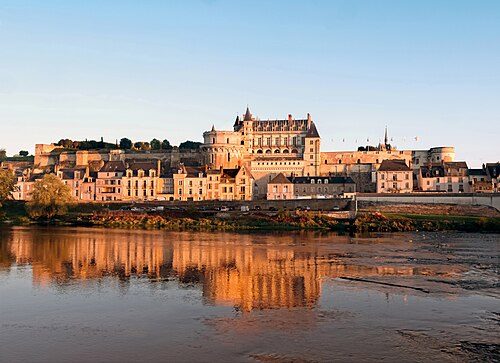
A royal château over the Loire, the manor where Leonardo da Vinci spent his last three years, and a chapel that holds what may be his bones.
 2h33
Coast · Nouvelle-Aquitaine
La Rochelle
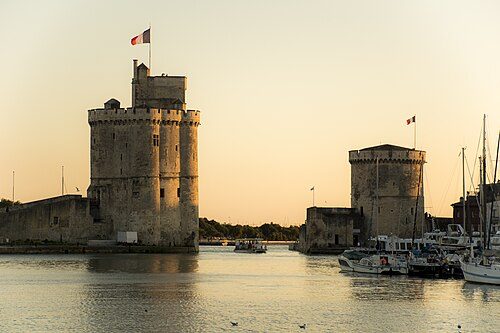
An Atlantic port guarded by medieval towers, with arcaded streets, a stubborn Protestant past and a long tradition of doing things by bike.
Sources
- Wikipedia (en) – Saumur
- Wikipedia (en) – Château de Saumur
- Wikipedia (en) – Academy of Saumur
- Ministère des Armées – 19-20 juin 1940, les combats de Saumur
- Ackerman – la Maison
- UNESCO World Heritage Centre – The Loire Valley between Sully-sur-Loire and Chalonnes
Original text. Train times computed from SNCF timetables (ODbL); climate Météo-France; products INAO; festivals Ministry of Culture. Methodology.