

Coast · Corsica
Bonifacio
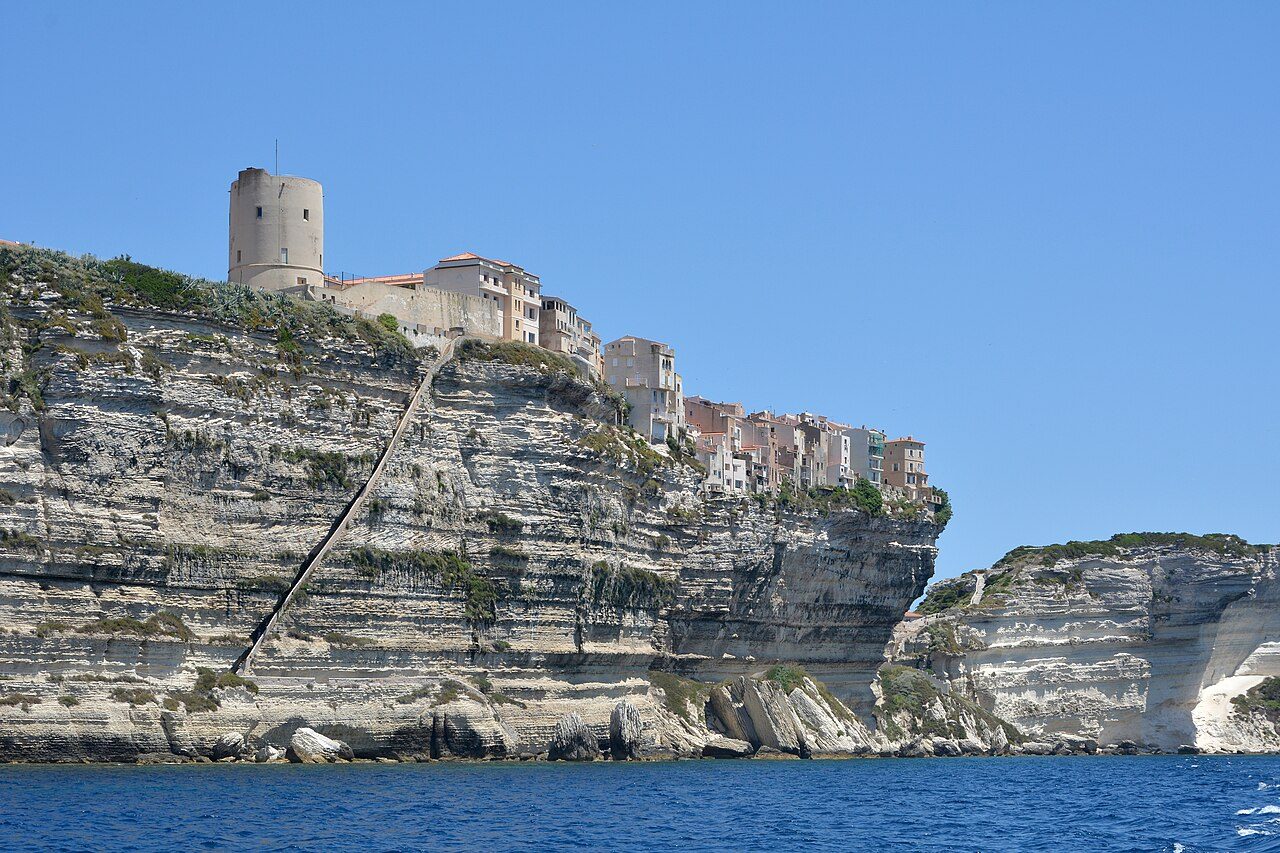
A Genoese citadel perched on white limestone cliffs at the southern tip of Corsica, staring across the strait at Sardinia.
Why go
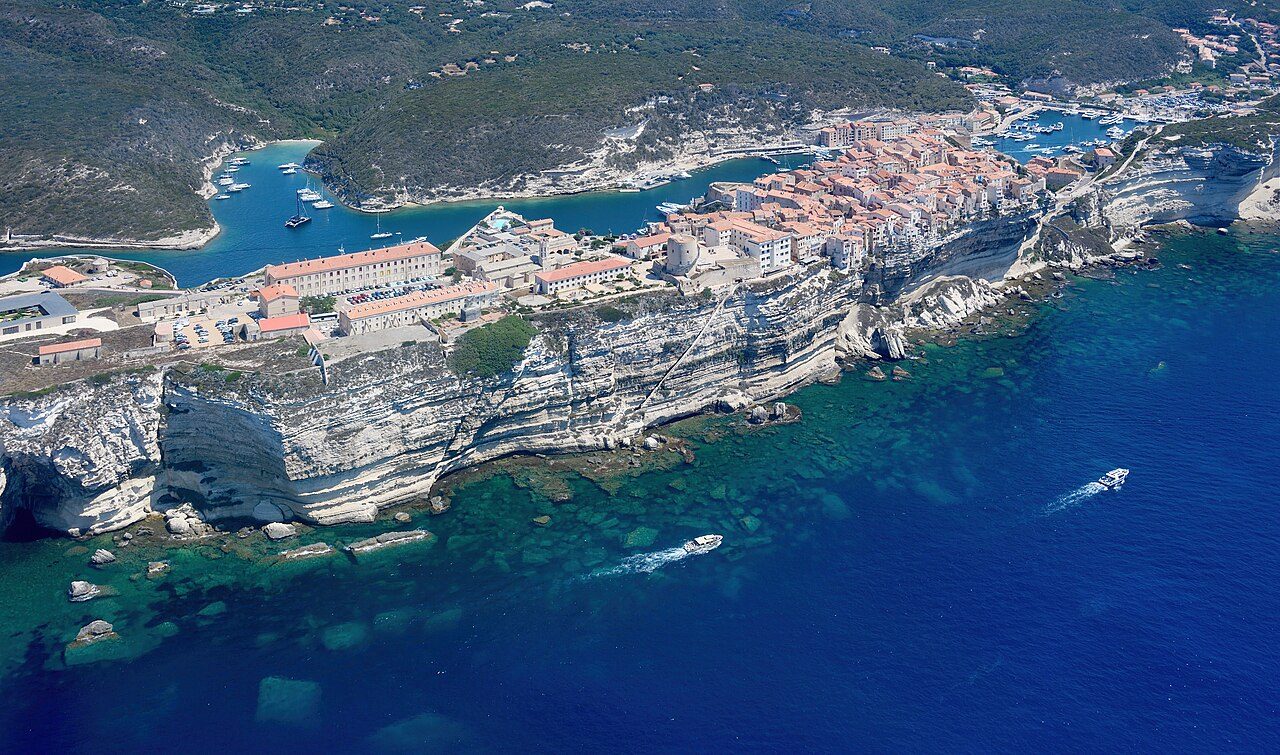
Nothing in mainland France prepares you for Bonifacio. The old town sits on a narrow blade of white limestone, its houses built right to the edge of cliffs that the sea has hollowed out beneath them. Below lies a long, fjord-like harbour; across the strait, on a clear day, you can see Sardinia. It feels more Ligurian than French, with its Genoese walls and Italianate churches, and the turquoise coves and islands around it are among the most beautiful in the Mediterranean.
History
Tradition holds that the town was founded or refounded around 828–833 by Boniface II, margrave of Tuscany, who had been charged with defending Corsica against Saracen raids and gave the place his name. Its documented history begins in 1195, when the Genoese took it and began turning the cliff-top into a fortress. Genoa and Pisa fought hard over this citadel, a key link in their sea routes.
Under Genoa, Bonifacio became a colony repopulated with Genoese and Ligurian families, whose dialect still survives, and it resisted repeated attacks. In 1420 King Alfonso V of Aragon besieged it for five months and then gave up. Legend credits his troops with cutting a staircase of 189 steps into the cliff face in a single night; the steps are real, the night is not.
In 1553, still weakened by plague, the town fell to the Ottoman corsair Dragut, said to have been acting for the French commander, the Marshal de Termes, in a war against Genoa; it was sacked. It returned to Genoese rule, and like the rest of Corsica became French only in the eighteenth century; French royal artillerymen took possession of the town in April 1769. In January 1793 a young Napoleon Bonaparte lodged here while preparing an expedition against Sardinia.
In 1855 the French frigate La Sémillante was wrecked on the Lavezzi islands with the loss of hundreds of soldiers and sailors; two military cemeteries remain on the islands. Today Bonifacio is the southernmost commune of mainland France, and its strait is protected as a marine nature reserve.
What to see
The upper town and the citadel
Climb from the harbour through the fortified gates into a maze of tall, narrow houses and steep lanes. Look for the church of Sainte-Marie-Majeure with its loggia, and Saint-Dominique, built on the ruins of a Templar church, then walk out to the end of the promontory.
Escalier du Roi d’Aragon
189 steps cut straight into the limestone cliff lead down from the upper town to the sea. Legend says the Aragonese dug them in a single night during the siege of 1420. The climb back is steep and exposed, but the view along the striped white rock face is unforgettable.
The cliff-top path to Capo Pertusato
A coastal path heads east along the cliff tops past the Grain de Sable, a block of limestone fallen into the sea, towards the lighthouse at Capo Pertusato. Look back for the classic view of the town on its overhanging cliffs; take water and a hat.
Boat trip to the cliffs and the Lavezzi
Boats leave the harbour to run beneath the cliffs, into sea caves, and out to the granite Lavezzi islands in the marine reserve, where the water is astonishingly clear. Choose a calm day: the strait is known for its strong winds.
Climate
Météo-France normals 1991-2020, station Cap Pertusato (107 m, 2.3 km away).
| Jan | Feb | Mar | Apr | May | Jun | Jul | Aug | Sep | Oct | Nov | Dec | |
|---|---|---|---|---|---|---|---|---|---|---|---|---|
| High °C | 13.0 | 12.9 | 14.5 | 16.9 | 20.4 | 24.2 | 27.0 | 28.0 | 24.9 | 21.3 | 17.1 | 14.1 |
| Low °C | 8.4 | 8.0 | 9.4 | 11.2 | 14.5 | 18.1 | 20.9 | 21.7 | 18.9 | 16.1 | 12.3 | 9.5 |
| Rain (mm) | 61 | 49 | 52 | 54 | 40 | 18 | 7 | 12 | 56 | 74 | 89 | 70 |
| Rain days | 8 | 7 | 7 | 7 | 5 | 2 | 1 | 2 | 5 | 7 | 10 | 9 |
Timeline
- c. 828? Tradition: Boniface II of Tuscany founds the town
- 1195 The Genoese take Bonifacio
- 1420 Alfonso V of Aragon besieges the town for five months, in vain
- 1553 The town surrenders to Dragut
- 1793 Napoleon Bonaparte stays while preparing the Sardinian expedition
- 1855 Wreck of La Sémillante on the Lavezzi islands
Uncertain or disputed
- The founding by Boniface II of Tuscany rests on tradition; dates between 828 and 833 are given.
- That Aragonese troops cut the 189-step stair in one night during the 1420 siege is a legend.
- The number of dead in the Sémillante wreck is given as 773 by one source; other accounts differ slightly.
Crowds: Very busy in season. July and August are very crowded, with day-trippers and boats filling the harbour by late morning; June and September give warm sea, long light and far more space. (editorial judgement)
Protected food & drink from here
AOP and IGP products whose official area includes this commune (INAO). Regional food: AOP & IGP →
Cheese
- Brocciu ou Brocciu Corse AOP · fresh cheese
Meat & charcuterie
- Bulagna de l’Ile de Beauté IGP · cured meat
- Figatelli de l’Ile de Beauté ou Figatellu de l’Ile de Beauté IGP · meat product
- Pancetta de l’Ile de Beauté / Panzetta de l’Ile de Beauté IGP · cured meat
- Saucisson sec de l’Ile de Beauté ou Salciccia de l’Ile de Beauté IGP · meat product
Fruit, vegetables & nuts
- Pomelo de Corse IGP · citrus
Butter, oil, honey & more
- Miel de Corse - Mele di Corsica AOP · honey
Wine
- Ile de Beauté IGP
- Méditerranée IGP
- Vin de Corse ou Corse AOP
Festivals within 15 km
From the Ministry of Culture’s national list; it gives a season, not dates.
| Festival | Discipline | Season |
|---|---|---|
| Nautic & music Bonifacio | Music | 6 Sep – 31 Dec |
Also in this part of France
 ✈ / ⛴
Mountains · Corsica
Corte
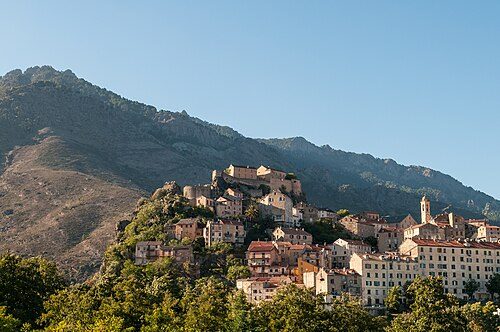
The mountain capital of Corsica’s short-lived independent republic: an eagle’s-nest citadel, a student town, and wild gorges at its door.
 6h39
Coast · Provence-Alpes-Côte d’Azur
Menton
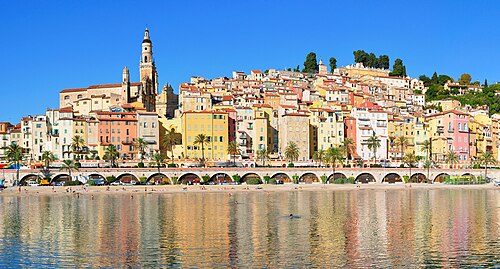
The last town on the Riviera before Italy: a Baroque old quarter in ochre and pink, lemon groves, subtropical gardens and Cocteau.
 6h56
Mountains · Provence-Alpes-Côte d’Azur
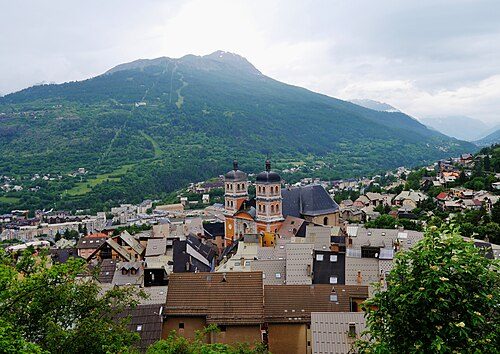
Briançon
France’s highest town, a star-shaped Vauban fortress of bright façades and rushing gutters, ringed by forts on mountain spurs.
 3h36
Town · Provence-Alpes-Côte d’Azur
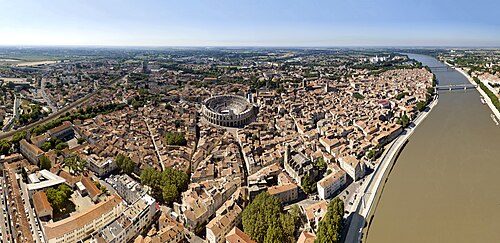
Arles
A Roman city on the Rhône where Van Gogh painted his brightest year, with an arena still in use and the Camargue at its gates.
Sources
Original text. Train times computed from SNCF timetables (ODbL); climate Météo-France; products INAO; festivals Ministry of Culture. Methodology.