
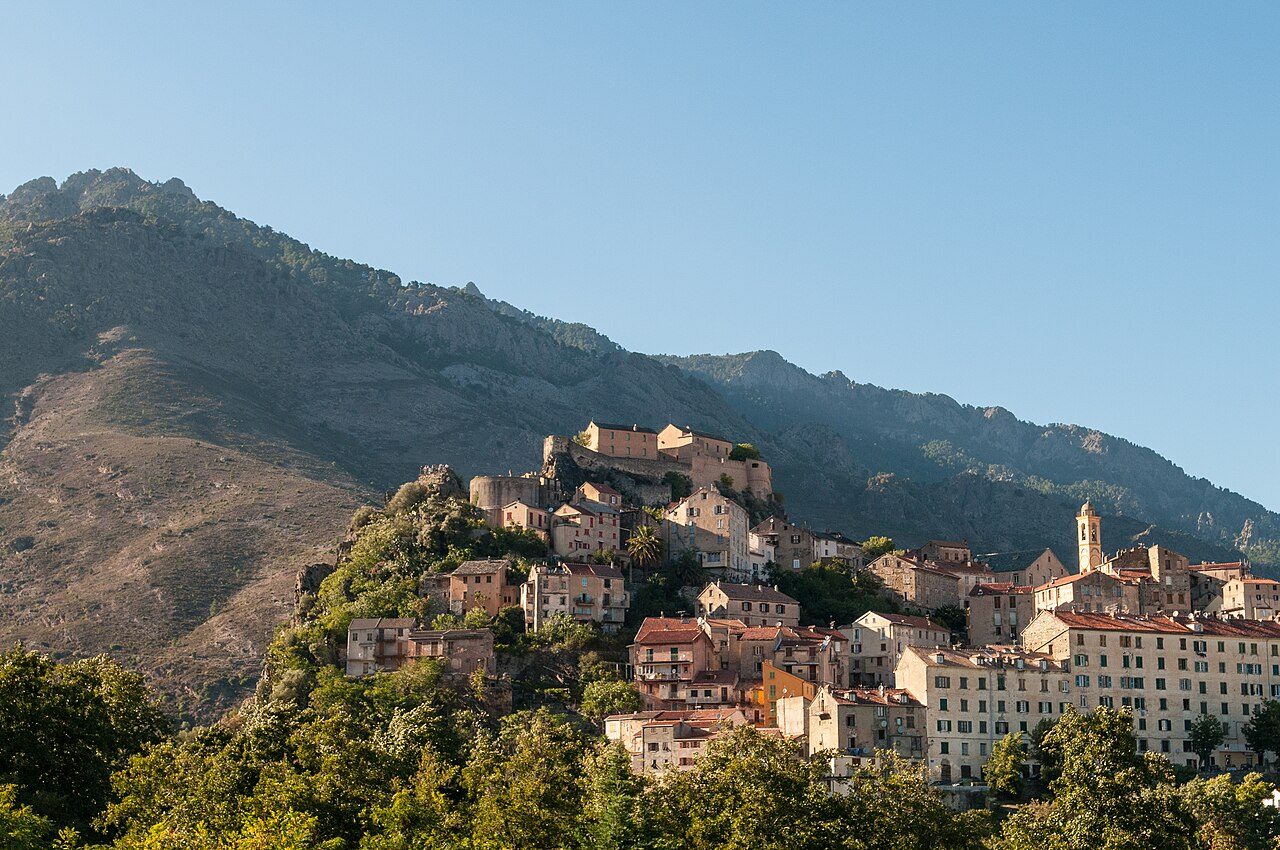

Mountains · Corsica · Altitude 491 m
Corte
The mountain capital of Corsica’s short-lived independent republic: an eagle’s-nest citadel, a student town, and wild gorges at its door.
Why go
Most visitors see Corsica from its beaches. Corte shows you the island’s heart: a granite town in the middle of the mountains, crowned by a citadel on a sheer rock, where Pasquale Paoli ran an independent Corsican state in the eighteenth century and where the island’s university still gives the streets a young, political energy. Walk out of town and you are in the gorges of the Restonica and the Tavignano, with pine forests, pools and high peaks.
History
Corte grew where the valleys of the Tavignano and the Restonica meet, almost exactly in the centre of Corsica, a natural crossroads between the north and south of the island. Its rock was fought over by Corsican lords and by the Genoese who held the coast. In 1419 Vincentello d’Istria, count and viceroy of Corsica for the king of Aragon, built a castle on the summit of the rock.
In the eighteenth century Corsica rose against Genoa, and Corte became the political centre of the revolt. Jean-Pierre Gaffory, one of the patriot leaders, was killed in 1753; two years later Pasquale Paoli was chosen to lead the Corsican nation and made Corte the capital of an independent Corsican republic, with a constitution written in 1755 and a government seated in the Palazzu Naziunale. In 1765 he founded a university here, teaching in Italian, and in 1768 Joseph Bonaparte, Napoleon’s elder brother, was born in the town.
The republic did not last. By the Treaty of Versailles of 15 May 1768 Genoa ceded its rights over Corsica to France, and on 9 May 1769 Paoli’s forces were defeated by the troops of Louis XV at Ponte Novu, north of Corte. Paoli went into exile in Britain, the university closed and the citadel became a French garrison, enlarged in the eighteenth century.
The citadel stayed military for two centuries; from 1962 to 1983 it was a training base of the Foreign Legion. In 1981 the University of Corsica reopened in Corte, bearing Paoli’s name, and in 1997 the Musée de la Corse opened inside the citadel walls. Corte today is a small town of students and mountain walkers, and the historic heart of Corsican identity.
What to see
The citadel and the Nid d’Aigle
The only one of Corsica’s six citadels built inland rises on a rock above the confluence. Climb to the fifteenth-century keep known as the eagle’s nest for a sweeping view down the valleys and up to the mountains; the ramparts also house temporary exhibitions.
Musée de la Corse
The regional museum of anthropology, built into the foot of the citadel and named after Jean-Charles Colonna, is devoted to the people of Corsica, their ways of life, beliefs and history. Visit it before you head into the mountains: it is the best introduction to the island you will find anywhere.
The upper town and place Gaffory
Steep lanes and stairways climb from the cours Paoli to the old town, where a statue of General Gaffory stands in the square named after him, near the Palazzu Naziunale, the seat of Paoli’s government. Stop at the Belvédère for the classic view of the citadel on its rock.
The Restonica and Tavignano gorges
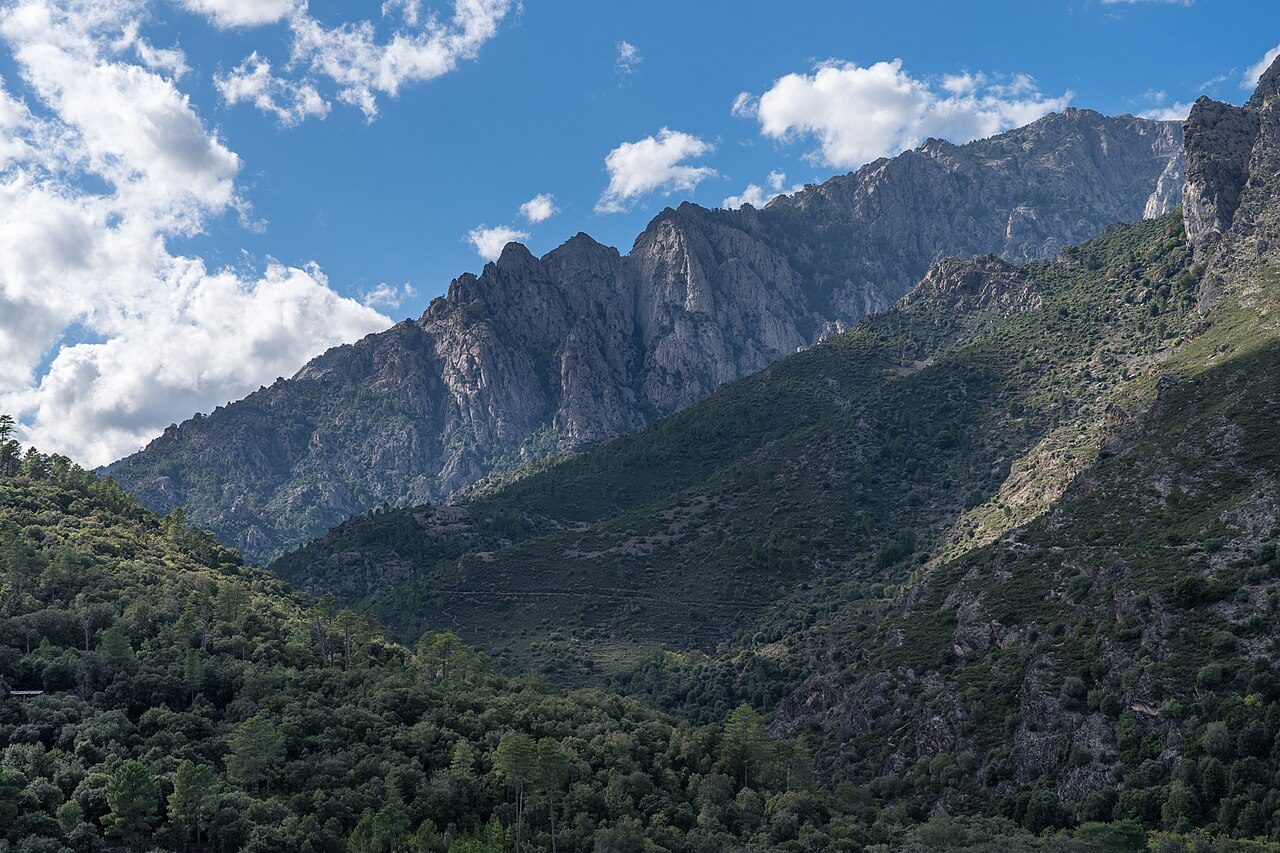
Two valleys open right from town. A narrow road follows the Restonica up between granite walls and pine forest, and paths continue to glacial lakes such as Melo and Capitello, where the river rises; a footpath climbs the wilder Tavignano gorge. The Restonica is famous for its clear pools. These are real mountains: check conditions and start early.
Climate
Météo-France normals 1991-2020, station Corte (350 m, 4.3 km away).
| Jan | Feb | Mar | Apr | May | Jun | Jul | Aug | Sep | Oct | Nov | Dec | |
|---|---|---|---|---|---|---|---|---|---|---|---|---|
| High °C | 12.2 | 13.0 | 15.8 | 18.6 | 23.2 | 27.8 | 31.2 | 31.5 | 26.4 | 21.6 | 16.1 | 12.7 |
| Low °C | 0.4 | 0.4 | 2.7 | 5.0 | 8.6 | 12.2 | 14.6 | 14.9 | 11.8 | 8.8 | 4.7 | 1.5 |
| Rain (mm) | 71 | 65 | 66 | 72 | 59 | 32 | 36 | 26 | 51 | 99 | 138 | 108 |
| Rain days | 8 | 7 | 7 | 9 | 7 | 4 | 3 | 3 | 6 | 8 | 10 | 9 |
Timeline
- 1419 Vincentello d’Istria builds the castle on the rock
- 1753 Patriot leader Jean-Pierre Gaffory is killed
- 1755 Pasquale Paoli makes Corte capital of independent Corsica
- 1765 Paoli founds the University of Corsica
- 1768 Treaty of Versailles: Genoa cedes Corsica to France; Joseph Bonaparte born in Corte
- 1769 Defeat at Ponte Novu; Corsica becomes French
- 1981 The University of Corsica reopens in Corte
- 1997 Musée de la Corse opens in the citadel
Uncertain or disputed
- Sources differ on when the citadel became a museum site: one gives 1984 for its opening to the public as the ‘Musée de la Corse', another 1997 for the museum itself.
- The circumstances of Gaffory’s death in 1753 are told differently in different accounts; we say only that he was killed.
Crowds: Rarely crowded. July and August bring visitors and traffic to the Restonica road; in June and September the town is lively with students and walkers but rarely crowded. (editorial judgement)
Protected food & drink from here
AOP and IGP products whose official area includes this commune (INAO). Regional food: AOP & IGP →
Cheese
- Brocciu ou Brocciu Corse AOP · fresh cheese
Meat & charcuterie
- Bulagna de l’Ile de Beauté IGP · cured meat
- Coppa de Corse ou Coppa de Corse - Coppa di Corsica AOP · cured meat
- Figatelli de l’Ile de Beauté ou Figatellu de l’Ile de Beauté IGP · meat product
- Jambon sec de Corse ou Jambon sec de Corse - Prisuttu AOP · cured meat
- Lonzo de Corse ou Lonzo de Corse - Lonzu AOP · cured meat
- Pancetta de l’Ile de Beauté / Panzetta de l’Ile de Beauté IGP · cured meat
- Saucisson sec de l’Ile de Beauté ou Salciccia de l’Ile de Beauté IGP · meat product
Fruit, vegetables & nuts
- Farine de châtaigne corse - Farina castagnina corsa AOP · nuts
Butter, oil, honey & more
- Miel de Corse - Mele di Corsica AOP · honey
Wine
- Ile de Beauté IGP
- Méditerranée IGP
Also in this part of France
 ✈ / ⛴
Coast · Corsica
Bonifacio
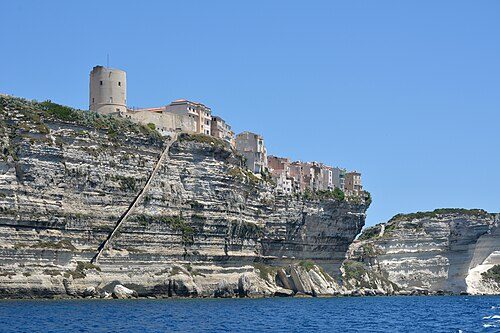
A Genoese citadel perched on white limestone cliffs at the southern tip of Corsica, staring across the strait at Sardinia.
 6h39
Coast · Provence-Alpes-Côte d’Azur
Menton
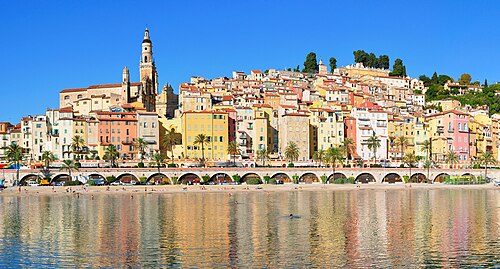
The last town on the Riviera before Italy: a Baroque old quarter in ochre and pink, lemon groves, subtropical gardens and Cocteau.
 6h56
Mountains · Provence-Alpes-Côte d’Azur
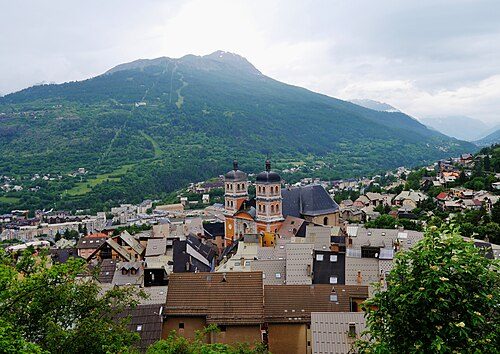
Briançon
France’s highest town, a star-shaped Vauban fortress of bright façades and rushing gutters, ringed by forts on mountain spurs.
 3h36
Town · Provence-Alpes-Côte d’Azur
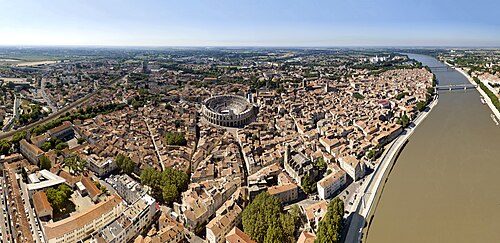
Arles
A Roman city on the Rhône where Van Gogh painted his brightest year, with an arena still in use and the Camargue at its gates.
Sources
- Wikipedia (fr) – Corte
- Wikipedia (en) – Corte, Haute-Corse
- Wikipedia (fr) – Citadelle de Corte
- Wikipedia (en) – Pasquale Paoli
Original text. Train times computed from SNCF timetables (ODbL); climate Météo-France; products INAO; festivals Ministry of Culture. Methodology.