
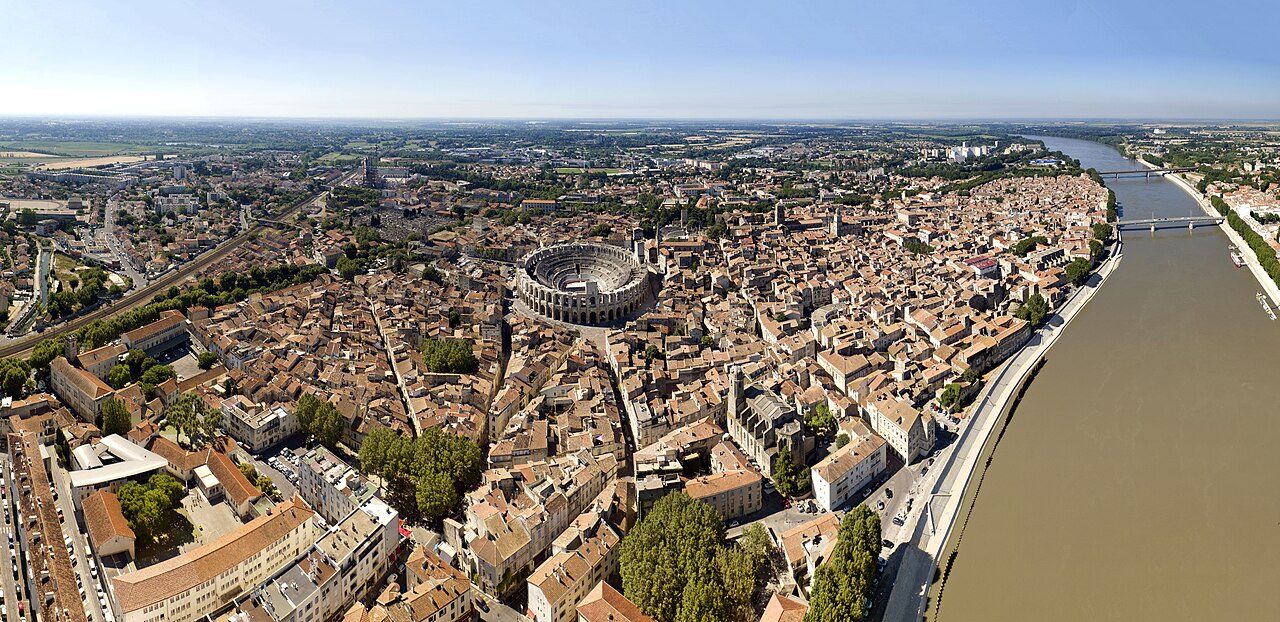

Town · Provence-Alpes-Côte d’Azur · Altitude 9 m
Arles
A Roman city on the Rhône where Van Gogh painted his brightest year, with an arena still in use and the Camargue at its gates.
Why go
Arles layers two thousand years into a town you can cross on foot in twenty minutes: a Roman arena and theatre, a Romanesque portal among the finest in Europe, the cafés and gardens Van Gogh painted, and now a bold contemporary art campus. It has the slow, sun-baked rhythm of Provence, a summer photography festival of world rank, and beyond the river the wild flatlands of the Camargue. Paris has more of everything; Arles has it all closer together.
History
Arles grew where the Rhône splits into its delta, the last place a road could cross before the sea. Greek traders from Marseille knew it, but its fortune came from Rome: having backed Julius Caesar in his war against Marseille, Arles was rewarded in the 40s BC with a colony of veterans and much of its rival’s trade.
Over the next century and a half the Romans gave it a theatre under Augustus, a forum with underground galleries, and, at the end of the first century AD, an amphitheatre for some twenty thousand spectators. In the fourth century the emperor Constantine lived here at times, built baths by the river, and his son Constantine II was born in the city. Arles was one of the capitals of the late Roman West, and its Alyscamps necropolis was famous across Christendom.
In the Middle Ages the arena was turned into a fortified village, with houses and chapels inside its arches and towers on top, and the cathedral of Saint-Trophime received a carved portal and cloister that rank among the masterpieces of Provençal Romanesque. Clearing the houses from the arena in the nineteenth century revealed the Roman monument again; UNESCO inscribed the Roman and Romanesque monuments in 1981.
On 21 February 1888 Vincent van Gogh stepped off the train into snow. Over the next fifteen months he produced more than three hundred paintings and drawings here, the sunflowers, the night café, the starry Rhône, before the crisis of December 1888, during Paul Gauguin’s visit, and his departure for the asylum at Saint-Rémy in May 1889. Since 1970 Arles has hosted the Rencontres de la photographie each summer, and in 2021 Frank Gehry’s shimmering tower opened at the LUMA arts campus.
UNESCO World Heritage: Arles, Roman and Romanesque Monuments (1981)
What to see
The amphitheatre (Arènes)
Two tiers of arches, about 136 by 107 metres, still used for bullfights and shows. Climb one of the medieval towers added when the arena was a fortified village for a view over the roofs to the Rhône; then walk around the outside to see how the arches were once walled in.
Saint-Trophime portal and cloister
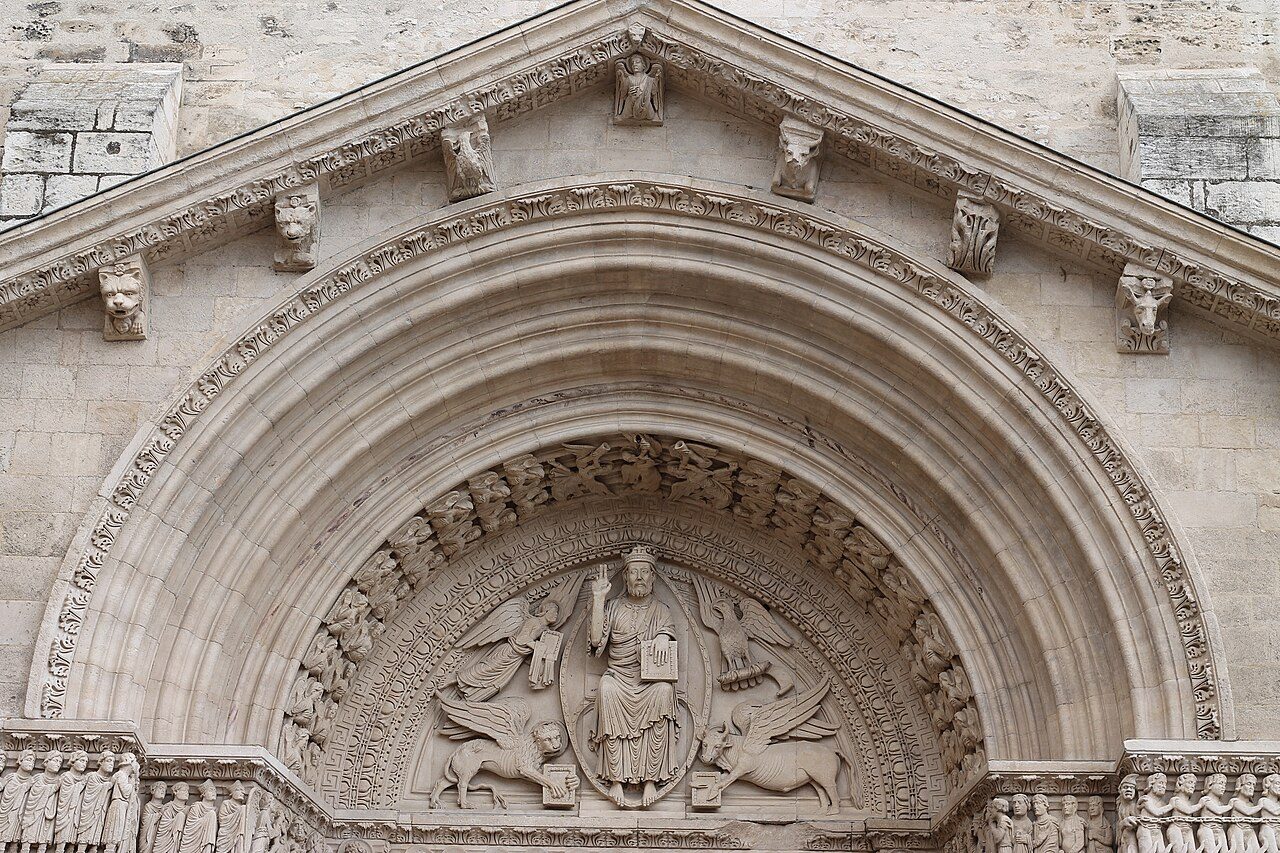
On the Place de la République, the twelfth-century portal shows Christ in majesty surrounded by the symbols of the Evangelists, above a frieze of the saved and the damned and tall statues of saints. Next door, the cloister pairs Romanesque and Gothic galleries; look closely at the carved capitals telling Bible stories.
The Roman theatre and the cryptoporticus
Of the Augustan theatre, two Corinthian columns still stand above the ruined stage, a favourite image of the Romantic travellers. Nearby, the underground galleries that supported the forum, cool and echoing, are one of the strangest Roman survivals in France.
In Van Gogh’s footsteps
Van Gogh’s Arles canvases are scattered across the world’s museums, but the places remain: the café on the Place du Forum, the courtyard garden of the old hospital where he was treated, now the Espace Van Gogh, and the Rhône quays. The Fondation Vincent van Gogh shows changing exhibitions linking his work to living artists.
The Alyscamps
A long avenue of stone sarcophagi under poplars, leading to a ruined Romanesque church: what remains of one of the most famous cemeteries of the ancient and medieval world. Van Gogh and Gauguin both painted it in the autumn of 1888.
LUMA Arles
On the site of old railway workshops, an arts campus dominated by Frank Gehry’s 56-metre tower, clad in thousands of stainless steel panels that echo the rocks of the Alpilles. Exhibitions inside, a park outside, and from the top a view over the whole city.
Climate
Météo-France normals 1991-2020, station Arles (1 m, 19.3 km away). Sunshine: Nimes-Courbessac station (26.8 km).
| Jan | Feb | Mar | Apr | May | Jun | Jul | Aug | Sep | Oct | Nov | Dec | |
|---|---|---|---|---|---|---|---|---|---|---|---|---|
| High °C | 11.3 | 12.5 | 16.2 | 18.9 | 22.8 | 27.1 | 29.8 | 29.6 | 25.3 | 20.7 | 15.2 | 11.9 |
| Low °C | 3.4 | 3.4 | 6.1 | 8.7 | 12.4 | 16.0 | 18.0 | 17.7 | 14.4 | 11.6 | 7.3 | 4.0 |
| Rain (mm) | 54 | 33 | 34 | 57 | 40 | 27 | 13 | 27 | 84 | 81 | 76 | 44 |
| Rain days | 5 | 4 | 4 | 6 | 5 | 3 | 2 | 2 | 5 | 6 | 7 | 5 |
| Sunshine (h) | 142 | 165 | 220 | 229 | 268 | 313 | 346 | 307 | 245 | 171 | 142 | 132 |
Timeline
- c. 46 BC? A colony of Roman veterans is founded at Arles on Caesar’s orders
- late 1st c. The amphitheatre is built
- 4th c. Constantine resides in Arles; his son Constantine II is born there
- 12th c. The carved portal and cloister of Saint-Trophime
- 1888 Van Gogh arrives on 21 February; Gauguin joins him in the autumn
- 1970 First Rencontres de la photographie
- 1981 Roman and Romanesque monuments inscribed by UNESCO
- 2021 Frank Gehry’s tower opens at LUMA Arles
Uncertain or disputed
- The date and founder of the Roman colony are debated: it is often given as 46 BC under Julius Caesar, while some historians attribute the founding to Tiberius Claudius Nero acting on Caesar’s orders.
- The amphitheatre’s capacity is given as about 20,000 or about 21,000 depending on the source; we say ‘some twenty thousand'.
Crowds: Busy at peaks. July, with the photography festival, and the Easter and September feria weekends are the busiest and liveliest times; for calm, come in late spring or autumn on a weekday. (editorial judgement)
Protected food & drink from here
AOP and IGP products whose official area includes this commune (INAO). Regional food: AOP & IGP →
Meat & charcuterie
- Agneau de Sisteron IGP · lamb
- Taureau de Camargue AOP · beef
- Volailles du Languedoc IGP · poultry
Fruit, vegetables & nuts
- Melon de Cavaillon IGP · apples or pears
- Riz de Camargue IGP · cereal
Butter, oil, honey & more
- Huile d'olive de Provence AOP · oil
- Miel de Provence IGP · honey
Cider & spirits
- Marc de Provence ou Eau-de-vie de marc de Provence IG
Wine
- Méditerranée IGP
- Pays des Bouches-du-Rhône IGP
Festivals within 15 km
From the Ministry of Culture’s national list; it gives a season, not dates.
| Festival | Discipline | Season |
|---|---|---|
| Arelate, journées romaines d'arles Arles | Theatre, dance & street arts | 21 Jun – 5 Sep |
| Arles se livre Arles | Books & comics | 1 Jan – 20 Jun |
| Assises de la traduction littéraire Arles | Books & comics | 6 Sep – 31 Dec |
| Conversations arts sciences Arles | Mixed | 6 Sep – 31 Dec |
| Cosmos Arles books Arles | Visual & digital arts | 21 Jun – 5 Sep |
| Des cirques indisciplinés Arles | Theatre, dance & street arts | 6 Sep – 31 Dec |
| Drôles de noëls Arles | Theatre, dance & street arts | 6 Sep – 31 Dec |
| Festiv'arles Arles | Theatre, dance & street arts | 21 Jun – 5 Sep |
| Festival bande-dessinée Fontvieille | Books & comics | 6 Sep – 31 Dec |
| Festival Databit.Me Arles | Music | 6 Sep – 31 Dec |
| Festival de la marionnette et des formes animées Fourques | Theatre, dance & street arts | 6 Sep – 31 Dec |
| Festival européen de la photo de nu Arles | Visual & digital arts | 1 Jan – 20 Jun |
| In situ, rencontre de création street art, land art, arles/camargue Arles | Visual & digital arts | 21 Jun – 5 Sep |
| Jazz in arles Arles | Music | 1 Jan – 20 Jun |
| La semaine de convivència Arles | Music | 21 Jun – 5 Sep |
| Lectures en arles Arles | Books & comics | 1 Jan – 20 Jun |
+ 14 — Festivals →
Also in this part of France
 4h27
Town · Auvergne-Rhône-Alpes
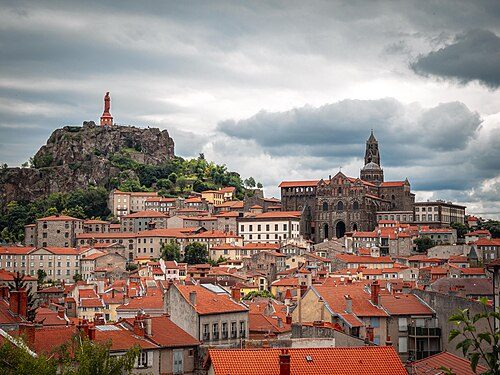
Le Puy-en-Velay
A cathedral town built on volcanic plugs, where a chapel crowns a ‘needle’ of rock and pilgrims set off for Santiago every morning.
 6h18
Coast · Occitanie
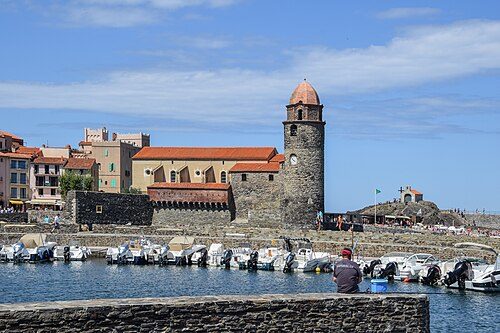
Collioure
A Catalan fishing port where the Pyrenees meet the Mediterranean, with a sea-washed church tower and the light that gave birth to Fauvism.
 5h24
Town · Occitanie
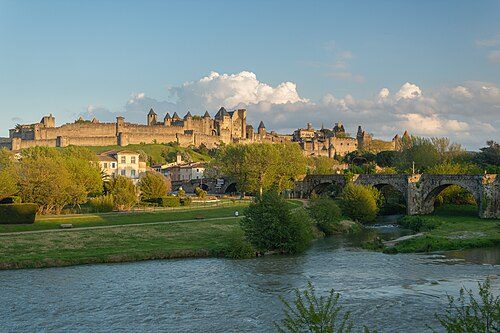
Carcassonne
A medieval fortress city with two rings of walls and dozens of towers on a hill above the Aude, rescued from demolition in the 1850s.
 6h02
City · Occitanie
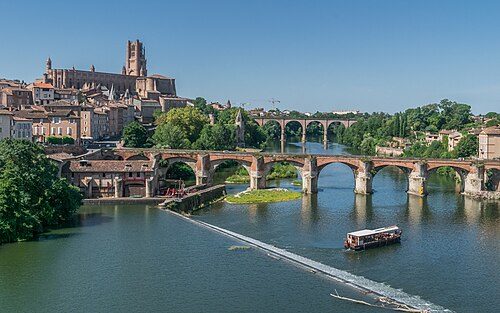
Albi
A red-brick episcopal city on the Tarn: a fortress-cathedral painted inside from floor to vault, and the world’s largest Toulouse-Lautrec collection.
Sources
- Wikipedia (en) – Arles
- Provence-Alpes-Côte d’Azur Tourisme – Les plus beaux monuments d’Arles
- Provence Camargue Tourisme – Arles, les incontournables
- Wikipedia (en) – LUMA Arles
- Smithsonian Magazine – A Gehry tower over Arles
- UNESCO World Heritage Centre – Arles, Roman and Romanesque Monuments
Original text. Train times computed from SNCF timetables (ODbL); climate Météo-France; products INAO; festivals Ministry of Culture. Methodology.