

Town · Île-de-France (beyond Paris) · Altitude 105 m
Provins
The great medieval fair town of Champagne, still walled, with a twelfth-century keep, merchants’ cellars and tunnels under the streets.
Why go
Provins was a trading capital of medieval Europe when Paris was still catching up, then fell asleep for seven centuries. That long sleep is the point: the upper town kept its walls, its keep and its vaulted merchants’ halls because nobody had the money to replace them. It is the easiest escape from Paris on this site and it does fill up, but come on a weekday, climb the Tour César, and you have the Middle Ages almost to yourself.
History
From the twelfth century Provins belonged to the counts of Champagne, who turned their lands into the crossroads of European trade. Merchants from Flanders, Italy and beyond met at a cycle of fairs held in a handful of Champagne towns, and Provins hosted some of the biggest: one in May and another, the Saint-Ayoul fair, in the autumn. The counts guaranteed safe conduct, policed weights and measures and took their cut.
The money shows. Count Henry the Liberal, who ruled in the second half of the twelfth century, endowed churches and a hospital, and the collegiate church of Saint-Quiriace rose next to the counts’ palace. The Tour César, an octagonal keep on a square base set on an artificial mound, was built in the same century as a symbol of comital power. Below ground, merchants stored goods in vaulted cellars and in galleries dug for stone.
The walls of the upper town, about 1,200 metres of them with some twenty towers, were built between 1226 and 1314. By then the tide had turned. Champagne passed to the French crown through the marriage of its heiress to Philip the Fair, royal taxes weighed on the town, and trade moved to other routes. War finished the job: Provins was besieged, taken and retaken during the Hundred Years’ War.
What decline left behind, UNESCO recognised in 2001 as a rare surviving example of a medieval fair town. Tradition also credits a count of Champagne with bringing a rose back from the Crusades; the Provins rose and its sweets and preserves are still the local speciality.
UNESCO World Heritage: Provins, Town of Medieval Fairs (2001)
What to see
Tour César
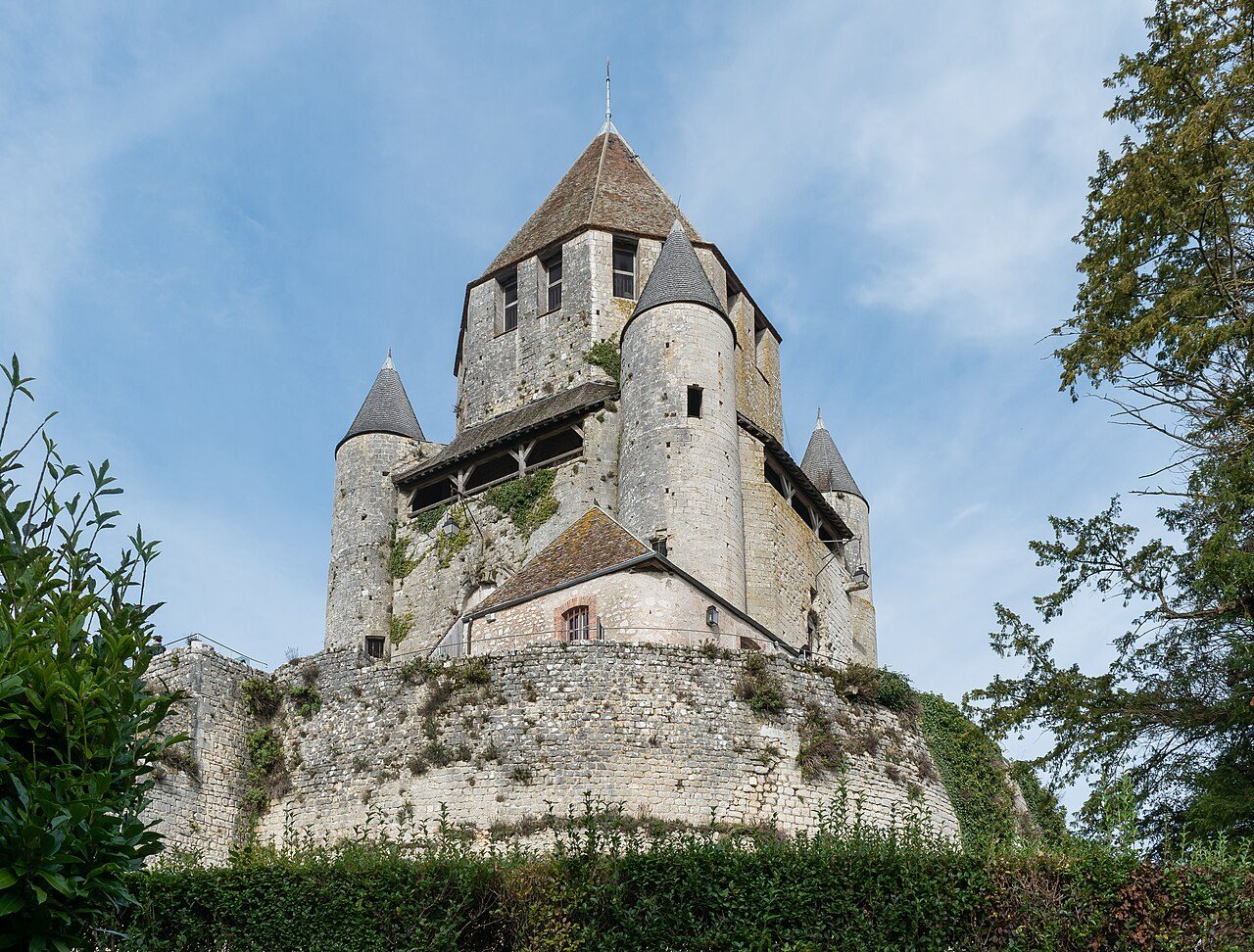
The twelfth-century keep, octagonal on a square base, rising from its mound above the upper town. It served over the centuries as watchtower, prison and bell tower. Inside, narrow stairs lead up through the thick walls to a roof walk with the whole walled town and the Brie plateau spread below.
The ramparts and Porte Saint-Jean
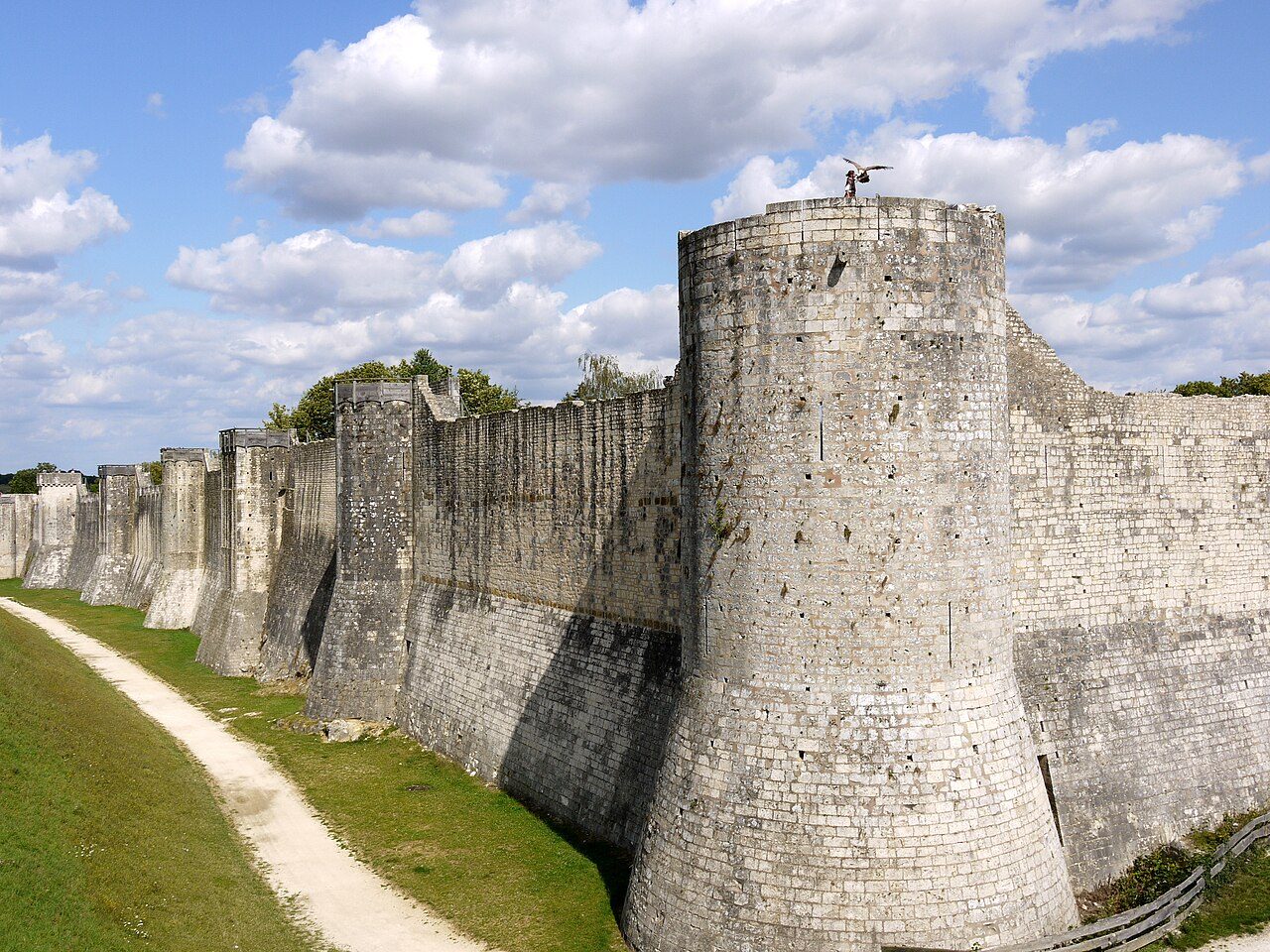
The western stretch of wall, between the Porte Saint-Jean and the Porte de Jouy, is the most complete: towers of many shapes, a dry ditch and a walkway you can follow on foot. The walls were built between 1226 and 1314, at the very moment the fairs began to fade.
Grange aux Dîmes
Despite its name ('tithe barn'), this twelfth-century stone building was a merchants’ house, with vaulted halls where goods were stored and sold during the fairs. It now explains how the fairs worked, which makes the rest of the town far easier to read.
Underground passages
A network of galleries runs beneath the town, first dug as quarries and then used to store goods during the fairs. Part of it can be visited with a guide; the graffiti and niches tell the story of centuries of use. A good choice on a hot afternoon.
Saint-Quiriace collegiate church
The counts’ church, begun in the twelfth century and never finished as planned: the nave stops short, and a later dome sits over the crossing. Its size, out of all proportion to today’s town, is the clearest sign of how rich Provins once was.
Climate
Météo-France normals 1991-2020, station Voulton_sapc (175 m, 6.9 km away).
| Jan | Feb | Mar | Apr | May | Jun | Jul | Aug | Sep | Oct | Nov | Dec | |
|---|---|---|---|---|---|---|---|---|---|---|---|---|
| High °C | 6.0 | 7.4 | 11.7 | 15.6 | 19.2 | 22.8 | 25.6 | 25.6 | 21.2 | 15.8 | 9.9 | 6.6 |
| Low °C | 1.2 | 1.3 | 3.3 | 5.4 | 8.7 | 11.7 | 13.7 | 13.6 | 10.7 | 8.1 | 4.4 | 2.0 |
| Rain (mm) | 64 | 57 | 56 | 52 | 65 | 57 | 59 | 55 | 57 | 70 | 67 | 83 |
| Rain days | 12 | 11 | 10 | 9 | 10 | 9 | 9 | 8 | 9 | 10 | 11 | 13 |
Timeline
- 12th c. Under the counts of Champagne, Provins becomes one of the great fair towns of Europe
- 12th c. The Tour César is built
- 1226 Work begins on the walls of the upper town (completed 1314)
- 1284 Joan, heiress of Champagne, marries the future Philip IV; the county later passes to the crown
- 1429 Charles VII hears mass at Saint-Quiriace on 3 August
- 2001 Inscribed on the UNESCO World Heritage List
Uncertain or disputed
- The rose of Provins is traditionally said to have been brought back from the Crusades by a count of Champagne, often named as Thibaut IV; this is a legend, and sources disagree on which count and which rose.
- The exact start and end dates of the fairs’ heyday vary between sources; we keep to ‘from the twelfth century'.
Crowds: Very busy in season. Summer weekends and the medieval festival in early summer are the busiest times, with day-trippers from Paris arriving late morning; a weekday, or the early morning and evening, is far calmer. (editorial judgement)
Protected food & drink from here
AOP and IGP products whose official area includes this commune (INAO). Regional food: AOP & IGP →
Cheese
- Brie de Meaux AOP · soft bloomy-rind cheese
- Brie de Melun AOP · soft bloomy-rind cheese
- Brillat-Savarin IGP · soft bloomy-rind cheese
Wine
- Île-de-France IGP
Festivals within 15 km
From the Ministry of Culture’s national list; it gives a season, not dates.
| Festival | Discipline | Season |
|---|---|---|
| Contes et Légendes à la Ferme Provins | Mixed | 21 Jun – 5 Sep |
| INVENTIO Provins | Music | 21 Jun – 5 Sep |
Also in this part of France
 0h40
Town · Île-de-France (beyond Paris)
Fontainebleau
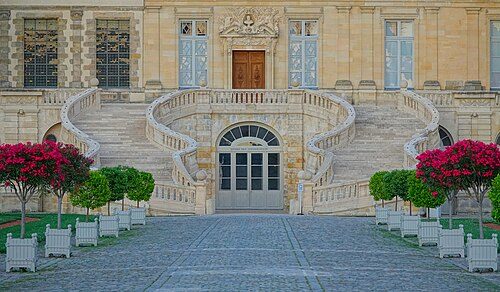
Seven centuries of French kings in one palace, wrapped in a vast forest of sandstone boulders, oaks and painters’ viewpoints.
 1h32
Town · Hauts-de-France
Laon
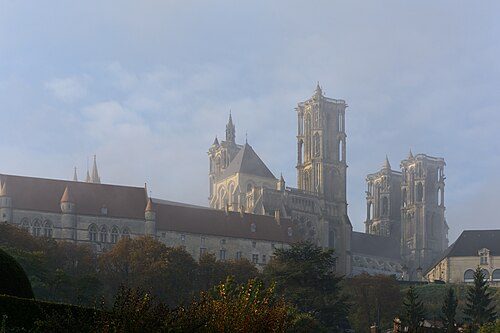
A medieval town on a ridge above the Picardy plain, with a Gothic cathedral whose towers are guarded by sixteen stone oxen.
 2h17
Village · Burgundy–Franche-Comté
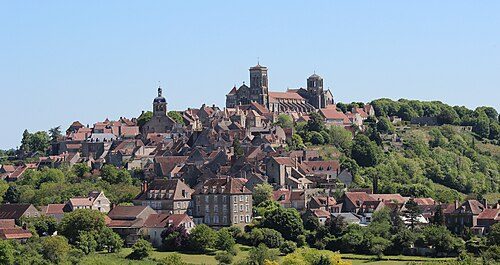
Vézelay
One street climbing a Burgundian hill to a Romanesque basilica where, on the summer solstice, sunlight lays a path of light down the nave.
 1h06
City · Hauts-de-France
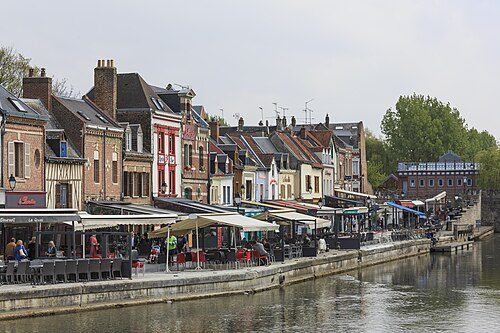
Amiens
France’s largest Gothic cathedral, floating market gardens reached by flat-bottomed boat, and the town where Jules Verne spent his last thirty years.
Sources
- Wikipédia (fr) – Provins
- Wikipedia (en) – Provins
- UNESCO World Heritage Centre – Provins, Town of Medieval Fairs
- UNESCO – Provins nomination file (archived)
- Provins tourist office – visitor guide (EN)
Original text. Train times computed from SNCF timetables (ODbL); climate Météo-France; products INAO; festivals Ministry of Culture. Methodology.