

Île-de-France (beyond Paris)
Beyond the périphérique: royal forests, palaces, painters’ villages on the Seine and medieval fair towns, all within a train ride.
Île-de-France is the region around Paris, and most visitors never leave the city at its centre. That is a mistake, because the ‘island of France’ was for centuries a royal hunting ground, and the kings left it covered in forests, palaces and gardens that are still there. Its borders were untouched by the 2016 reform. Beyond the suburbs, nearly a quarter of its land is forest and about half is farmland, much of it wheat and sugar beet on the great plateaus of the Brie and the Beauce.
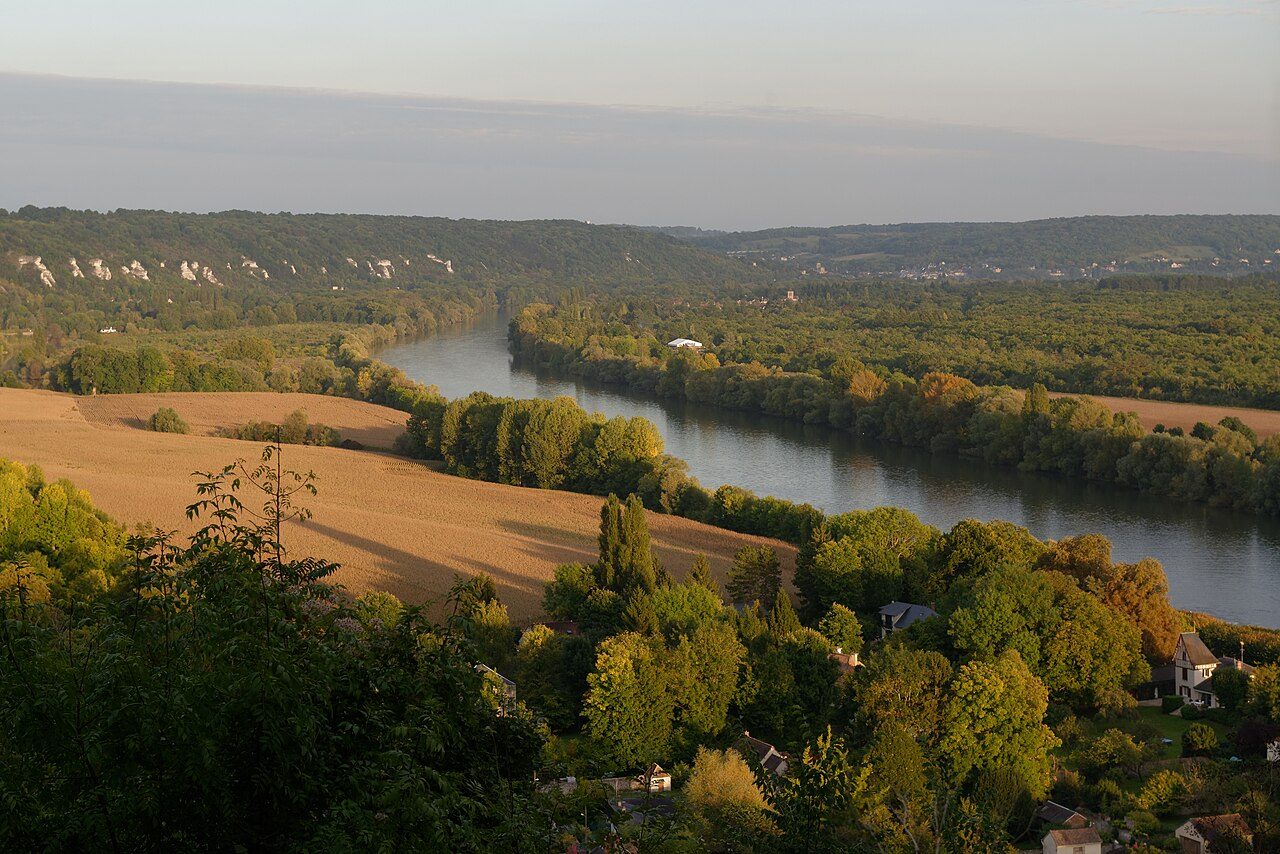
Fontainebleau, Rambouillet, Saint-Germain-en-Laye and dozens of smaller woods ring the capital. Versailles is the famous palace, but Vaux-le-Vicomte, whose splendour is said to have hastened its owner’s arrest by Louis XIV in 1661, is often more enjoyable, and Provins, a walled town of medieval trade fairs, feels a world away from the boulevards. Along the Seine and the Oise, villages such as Giverny, Auvers-sur-Oise and La Roche-Guyon kept the light and riverbanks that drew Monet, Van Gogh and the Impressionists.
For someone tired of Paris, this is the easiest escape of all. Suburban trains and regional lines put you in a forest, a château park or a riverside village within an hour, and on a weekday you may have the paths to yourself. Climbers come to Fontainebleau’s sandstone boulders, cyclists follow the Seine, and walkers can link villages along marked trails without ever seeing a tower block.
Facts
- The region’s borders were not changed by the 2016 territorial reform.
- The Palace and Park of Fontainebleau were inscribed on UNESCO’s World Heritage List in 1981.
- Provins, Town of Medieval Fairs, has been a UNESCO World Heritage site since 2001.
- The Palace and Park of Versailles were among France’s first World Heritage inscriptions, in 1979.
Places in Île-de-France (beyond Paris)
 0h40
Town · Île-de-France (beyond Paris)
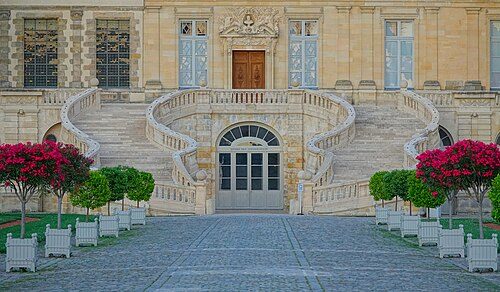
Fontainebleau
Seven centuries of French kings in one palace, wrapped in a vast forest of sandstone boulders, oaks and painters’ viewpoints.
 1h21
Town · Île-de-France (beyond Paris)
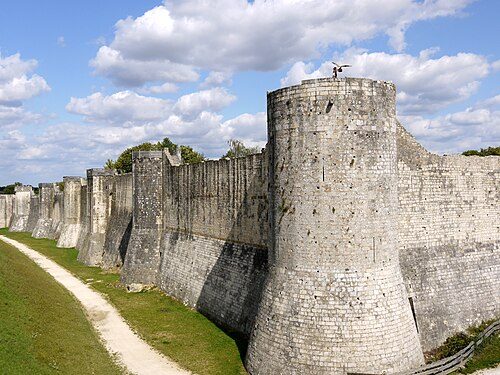
Provins
The great medieval fair town of Champagne, still walled, with a twelfth-century keep, merchants’ cellars and tunnels under the streets.
Climate
Reference station: Melun (91 m). Météo-France, 1991–2020 normals.
| Jan | Feb | Mar | Apr | May | Jun | Jul | Aug | Sep | Oct | Nov | Dec | |
|---|---|---|---|---|---|---|---|---|---|---|---|---|
| High °C | 6.9 | 8.3 | 12.5 | 16.2 | 19.7 | 23.0 | 25.6 | 25.5 | 21.4 | 16.3 | 10.6 | 7.3 |
| Low °C | 1.6 | 1.4 | 3.4 | 5.4 | 9.0 | 12.1 | 13.9 | 13.7 | 10.7 | 8.1 | 4.5 | 2.2 |
| Rain (mm) | 51 | 46 | 47 | 49 | 62 | 58 | 59 | 54 | 54 | 58 | 56 | 63 |
| Rain days | 11 | 10 | 9 | 9 | 10 | 9 | 8 | 8 | 8 | 10 | 11 | 12 |
| Sunshine (h) | 60 | 83 | 143 | 188 | 216 | 226 | 235 | 225 | 180 | 118 | 68 | 54 |
| High Jan | Low Jan | High Jul | Rain / year | Station | |
|---|---|---|---|---|---|
| Provins | 6.0 | 1.2 | 25.6 | 741 mm | Voulton_sapc, 6.9 km |
| Fontainebleau | 7.2 | 0.5 | 26.3 | 740 mm | Fontainebleau_sapc, 1.7 km |
Food and drink
The countryside around Paris fed the capital for centuries, and some of its produce still carries a place name: Brie de Meaux and Brie de Melun, mustard from Meaux, honey from the Gâtinais and mint from Milly-la-Forêt. Market gardens once gave their names to Argenteuil asparagus and Montmorency cherries. Provins grows roses and makes jam and sweets from them. Vines are returning to the Seine’s slopes, and farm breweries have multiplied across the region in recent years.
AOP and IGP products whose official area lies mostly in this region (INAO). Regional food: AOP & IGP →
Cheese 1
- Brie de Melun AOP
Wine 1
- Île-de-France IGP
Festivals
The Ministry of Culture lists 357 festivals in the region: 159 1 Jan – 20 Jun · 78 21 Jun – 5 Sep · 114 6 Sep – 31 Dec.
Signature festivals
- Festival international de films de femmes de Créteil — Créteil, usually in March. One of the oldest festivals in the world devoted to films directed by women, founded in 1979 and based at the Maison des Arts in Créteil, just south-east of Paris. It usually takes place in March, occasionally running into early April.
- Rock en Seine — Saint-Cloud, usually in August. A large rock and pop festival held at the end of August in the Domaine national de Saint-Cloud, the former royal park laid out by Le Nôtre just west of Paris. The first edition, in 2003, lasted one day.
Plus Beaux Villages de France in the region (1)
| Village | Nearest railway station | Time from Paris |
|---|---|---|
| La Roche-Guyon | Bonnières 6.2 km away | 0h51 |
“Les Plus Beaux Villages de France” is a registered trademark of the association of the same name (INPI no. 1 659 572, according to its charter). This site is independent and not affiliated with the association; the list of members is shown as a fact.
Sources
Photo: Le Vau as architect, Jebulon as photographer, Public domain, Wikimedia Commons
