

Village · Nouvelle-Aquitaine · Altitude 72 m
Saint-Émilion
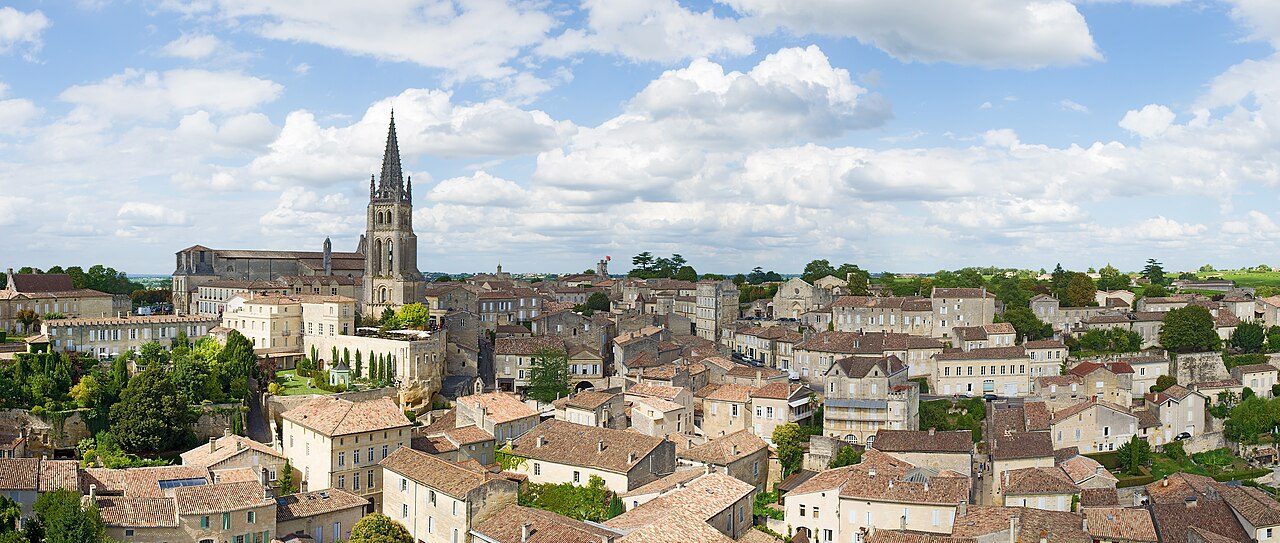
A honey-stone wine town tumbling into a hollow of the limestone, with a church carved out of the rock beneath its steep lanes.
Why go
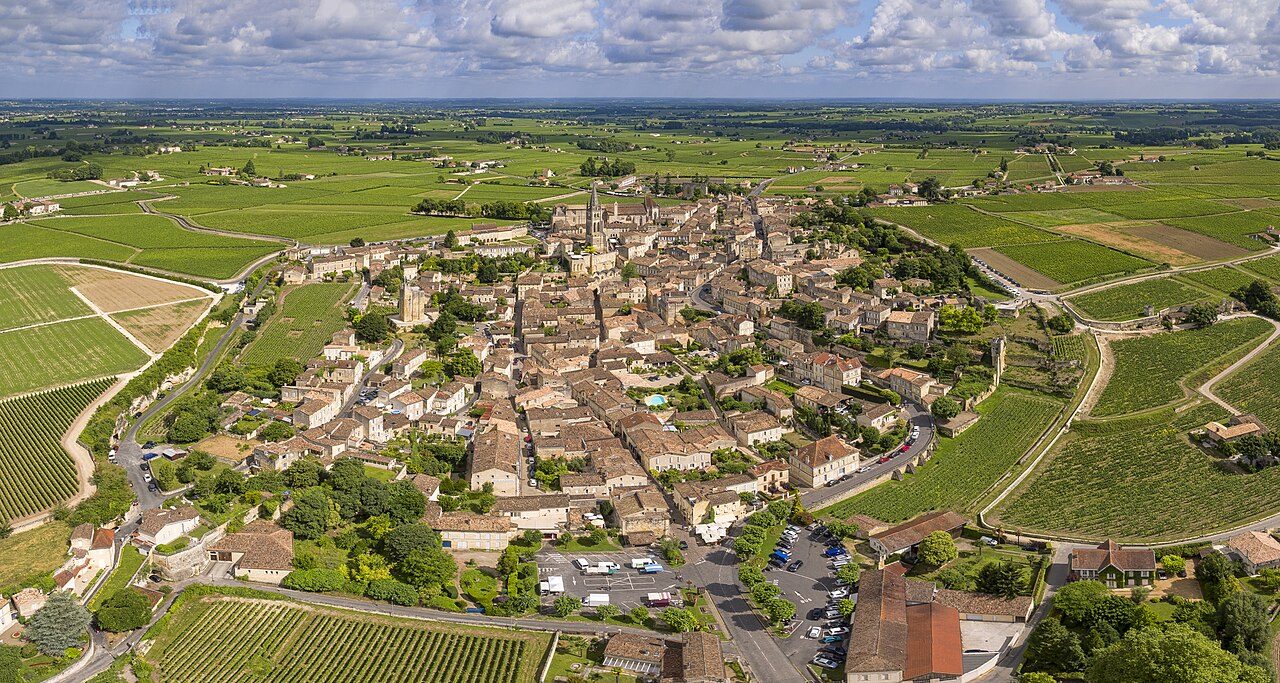
Paris has wine bars; Saint-Émilion has the vineyards themselves, running right up to the town walls. The town is built of the same limestone its cellars are dug into, so a walk here is half above ground and half below, through quarries, catacombs and a church hollowed out of a cliff. Climb the King’s Tower at the end of the day, look over the roofs to the rows of vines, and you understand why this whole landscape is protected.
History
Vines grew on these slopes in Roman times; the fourth-century poet Ausonius, a native of Bordeaux, wrote in praise of the region’s wine, and local tradition links him to an estate here. The town takes its name from Émilion, a Breton monk who, according to tradition, came here in the eighth century to live as a hermit in a cave in the rock and died in 767. Monks gathered around his memory, and a town grew up around the monks.
Between the late eleventh and the early twelfth century, builders dug the monolithic church directly out of the limestone cliff: rather than raising walls, they removed thousands of cubic metres of rock to leave a nave and aisles inside the hill. No document records the work, so its exact date is a matter of deduction. A tall bell tower was later built above it, on the plateau.
Saint-Émilion lay in Aquitaine, and so under the English crown for three centuries. In 1199 King John of England granted the town a charter, and its governing body, the Jurade, received the right to oversee the quality of the wine. The Tour du Roy, a square keep that dominates the town, is dated to the thirteenth century, and walls, convents and cloisters followed. The wars of religion later hit the vineyards hard.
The Jurade was revived in 1948 as a robed, ceremonial wine brotherhood, and in 1955 the Saint-Émilion wines received their own classification, designed to be revised periodically. In 1999 UNESCO inscribed the town together with the surrounding villages of its historic jurisdiction as a cultural landscape, recognising the vineyards and the town together.
UNESCO World Heritage: Jurisdiction of Saint-Emilion (1999)
What to see
The monolithic church
A church hollowed out of the rock rather than built: a great hall with massive pillars, all carved from the hill, with traces of relief sculpture on the walls. It can only be visited with a guide from the tourist office, together with Émilion’s hermitage cave and the catacombs next to it.
The Tour du Roy
The thirteenth-century keep that stands over the town. From the top you see the whole layout: the hollow where the town sits, the bell tower above the monolithic church and the vineyards in every direction. In June and September the Jurade proclaims the summer judgement and the start of the harvest from here.
The collegiate church and its cloister
Above the town, a large church mixing a Romanesque nave with a Gothic choir, and beside it a quiet cloister. It is a calm counterpoint to the busy lanes and the place to see the town’s medieval stonework in daylight rather than underground.
The Cordeliers cloister
The ruined cloister of the Franciscan friars, open to the sky, with slender twin columns and ivy. Its old quarries below now age sparkling wine, a reminder that in Saint-Émilion almost every hole in the ground has been put to use.
The vineyard landscape
Leave the town on foot or by bike and within minutes you are among the vines, past small châteaux, old stone walls and lone ruins such as the Grande Muraille, a surviving wall of a medieval convent church. Marked trails from the tourist office lead through the protected landscape.
Climate
Météo-France normals 1995-2020, station St Emilion (38 m, 3.6 km away).
| Jan | Feb | Mar | Apr | May | Jun | Jul | Aug | Sep | Oct | Nov | Dec | |
|---|---|---|---|---|---|---|---|---|---|---|---|---|
| High °C | 9.9 | 11.6 | 15.4 | 18.6 | 22.2 | 25.9 | 27.8 | 28.0 | 24.7 | 20.1 | 13.8 | 10.5 |
| Low °C | 3.3 | 3.1 | 5.2 | 7.6 | 11.0 | 13.8 | 15.1 | 14.9 | 11.8 | 9.6 | 5.8 | 3.6 |
| Rain (mm) | 78 | 62 | 58 | 72 | 68 | 58 | 48 | 55 | 62 | 61 | 91 | 84 |
| Rain days | 12 | 10 | 11 | 11 | 10 | 8 | 7 | 8 | 8 | 10 | 13 | 12 |
Timeline
- 4th c. The poet Ausonius praises the wines of the Bordeaux region
- 767? Traditional date of the death of the hermit Émilion
- c. 1100? The monolithic church is carved from the rock
- 1199 King John of England grants a charter; the Jurade is established
- 1948 The Jurade is revived as a wine brotherhood
- 1955 First official classification of Saint-Émilion wines
- 1999 The Jurisdiction of Saint-Émilion is inscribed by UNESCO
Uncertain or disputed
- The life of the hermit Émilion is known from tradition, not contemporary records; 767 is the traditional date of his death.
- The monolithic church is undocumented; scholars date it to the late 11th or early 12th century, while some tourism sources speak of work from the 9th to the 12th century.
- The Tour du Roy is usually dated to 1237, but some sources dispute that it was built by or for a king.
Crowds: Very busy in season. The lanes are packed on summer afternoons and around the harvest; visit early in the morning or in late autumn and winter, when the vines are bare but the town is your own. (editorial judgement)
Protected food & drink from here
AOP and IGP products whose official area includes this commune (INAO). Regional food: AOP & IGP →
Meat & charcuterie
- Agneau de Pauillac IGP · lamb
- Bœuf de Bazas IGP · beef
- Canard à foie gras du Sud-Ouest IGP · meat product
- Jambon de Bayonne IGP · cured meat
- Porc du Sud-Ouest IGP · pork
Butter, oil, honey & more
- Caviar d'Aquitaine IGP · eggs
Cider & spirits
- Fine Bordeaux IG · grape brandy
Wine
- Atlantique IGP
- Bordeaux AOP
- Bordeaux supérieur AOP
- Crémant de Bordeaux AOP
- Saint-Emilion AOP
- Saint-Emilion grand cru AOP
Festivals within 15 km
From the Ministry of Culture’s national list; it gives a season, not dates.
| Festival | Discipline | Season |
|---|---|---|
| Appellation Musique Contrôlée – AMC Montagne | Music | 1 Jan – 20 Jun |
| Confluent d'arts La Rivière | Music | 21 Jun – 5 Sep |
| Faites du Livre ! Saint-Germain-du-Puch | Books & comics | 1 Jan – 20 Jun |
| Fest' Arts Libourne | Theatre, dance & street arts | 21 Jun – 5 Sep |
| Festival d'ici Danse Saint-Germain-du-Puch | Theatre, dance & street arts | 6 Sep – 31 Dec |
| Festival Philosophia Saint-Émilion | Books & comics | 1 Jan – 20 Jun |
| Invasion de Lucanes Libourne | Music | 1 Jan – 20 Jun |
| La Bataille de Castillon Castillon-la-Bataille | Theatre, dance & street arts | 21 Jun – 5 Sep |
| Le Club Éphémère Saint-Émilion | Music | 1 Jan – 20 Jun |
| Mascarock Vayres | Music | 21 Jun – 5 Sep |
| Musik À Pile Saint-Denis-de-Pile | Music | 1 Jan – 20 Jun |
| Saint-Émilion Jazz Festival Saint-Émilion | Music | 21 Jun – 5 Sep |
| Vino Voce Saint-Émilion | Music | 6 Sep – 31 Dec |
Also in this part of France
 4h53
Town · Nouvelle-Aquitaine
Sarlat-la-Canéda
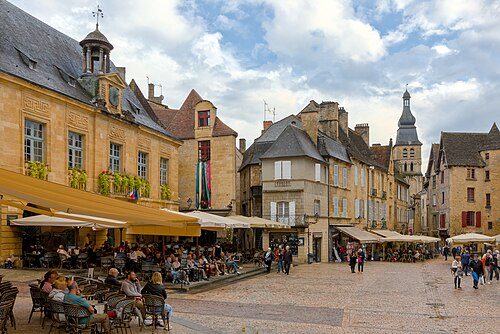
The golden-stone capital of the Périgord Noir: Gothic and Renaissance mansions, stone-slab roofs and one of France’s great food markets.
 2h33
Coast · Nouvelle-Aquitaine
La Rochelle
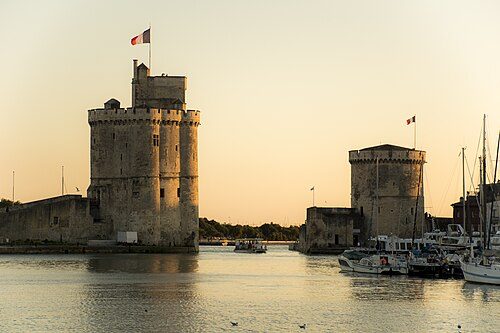
An Atlantic port guarded by medieval towers, with arcaded streets, a stubborn Protestant past and a long tradition of doing things by bike.
 6h37
Village · Occitanie
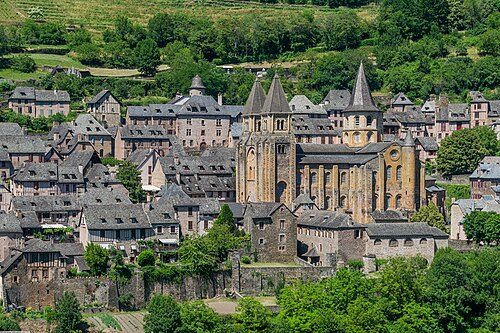
Conques
A slate-roofed village hidden in a wooded gorge, built around a Romanesque abbey church, a famous Last Judgement and a golden reliquary.
 5h15
Mountains · Nouvelle-Aquitaine
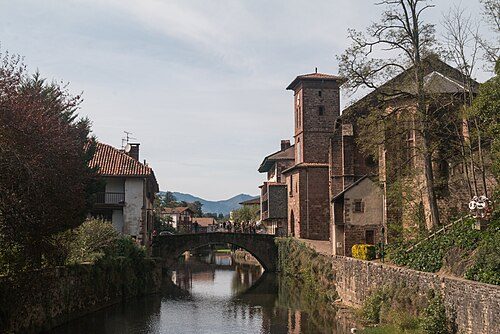
Saint-Jean-Pied-de-Port
A walled Basque town of red sandstone on the river Nive, where pilgrims to Santiago set off over the Pyrenees.
Sources
- Wikipedia (en) – Saint-Émilion
- Saint-Émilion tourist office – history
- Gironde Tourisme – Medieval city of Saint-Émilion
- Musée du Patrimoine – Église monolithe de Saint-Émilion
- UNESCO World Heritage Centre – Jurisdiction of Saint-Emilion
- Guide Tourisme France – Tour du Roy, Saint-Émilion
Original text. Train times computed from SNCF timetables (ODbL); climate Météo-France; products INAO; festivals Ministry of Culture. Methodology.