

Coast · Occitanie · Altitude 33 m
Collioure
A Catalan fishing port where the Pyrenees meet the Mediterranean, with a sea-washed church tower and the light that gave birth to Fauvism.
Why go
Collioure is France with a Catalan accent: flags with red and gold stripes, anchovies salted the old way, and terraced vineyards climbing straight up from the sea. In 1905 Matisse and Derain came for a summer and went home having invented a new way to paint, and once you see the colours here, the pink and ochre houses against a blue that hardly seems real, you understand why. It is small, so come early, swim off the little beaches and climb to the forts above.
History
Collioure was a port long before it was a postcard; it is mentioned in the seventh century, and its sheltered coves made it the natural harbour of Roussillon. The Knights Templar had a house here, and in the thirteenth century the castle by the sea was rebuilt at its expense. From 1276 to 1343 Roussillon belonged to the kings of Majorca, whose capital was Perpignan, and Collioure was their port and one of their residences.
The town then passed to the Crown of Aragon and later to Spain, and the Emperor Charles V had the star-shaped Fort Saint-Elme built on the hill above to guard the coast. Only in 1659, with the Treaty of the Pyrenees, did Roussillon and Collioure become French. Vauban reworked the royal castle and had part of the old upper town razed to give the fortress room, which pushed the townspeople down to the shore.
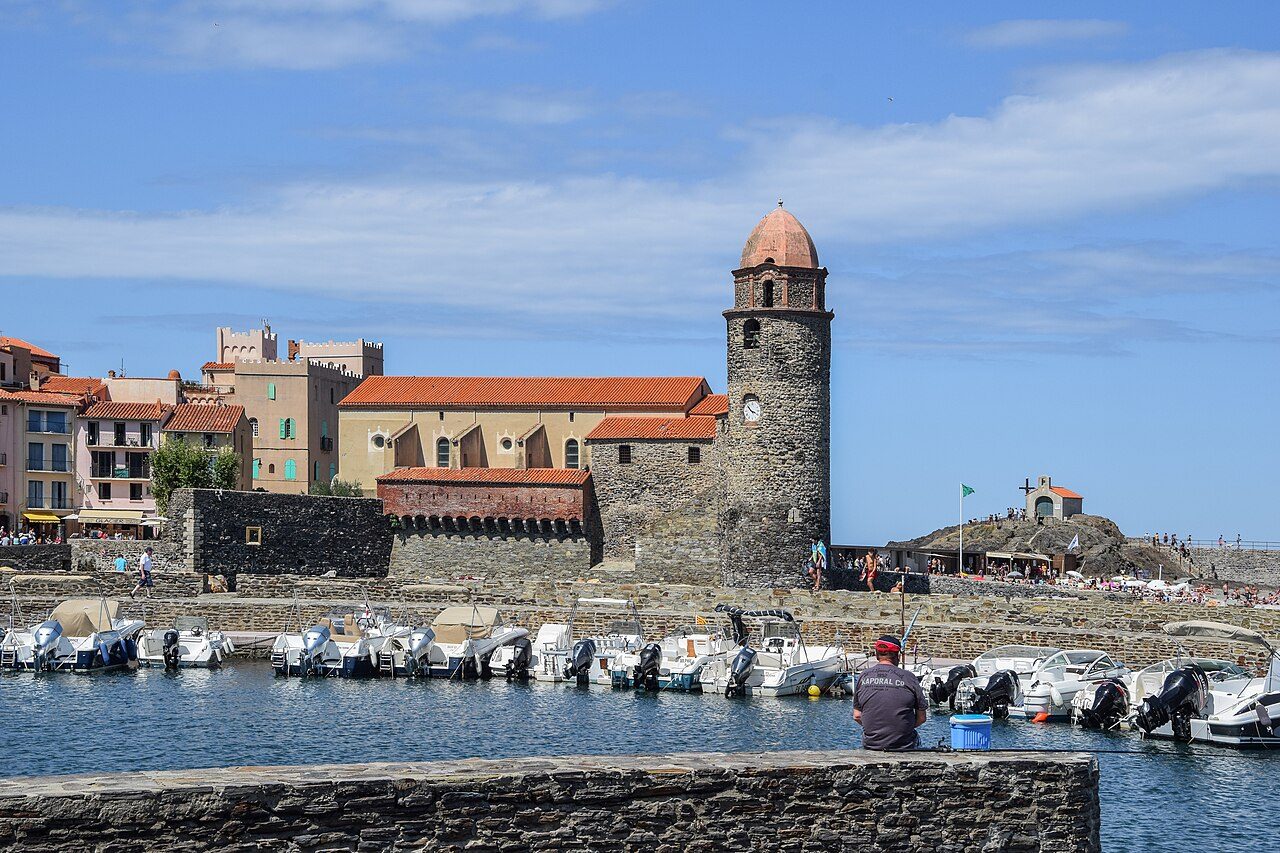
There, at the water’s edge, the church of Notre-Dame-des-Anges was built at the end of the seventeenth century; its round bell tower, once a medieval watchtower, stands with its feet in the sea. Fishing, especially for anchovies, kept the town alive into the twentieth century.
In May 1905 Henri Matisse came to Collioure, and André Derain joined him in July. Painting side by side in pure, unmixed colour, they produced the canvases that scandalised the Salon d’Automne that autumn and earned them the nickname ‘fauves', wild beasts. In February 1939 the Spanish poet Antonio Machado, fleeing the end of the Civil War with his mother, reached Collioure exhausted and ill; he died there on 22 February and lies in the town cemetery.
What to see
Notre-Dame-des-Anges and its bell tower
The church built right on the shore, its round bell tower with a pink dome rising from the rocks, is the image of Collioure that Matisse and Derain painted again and again. Inside, look for the gilded Baroque altarpieces, carved by Catalan sculptors, that fill the dim nave.
Château royal
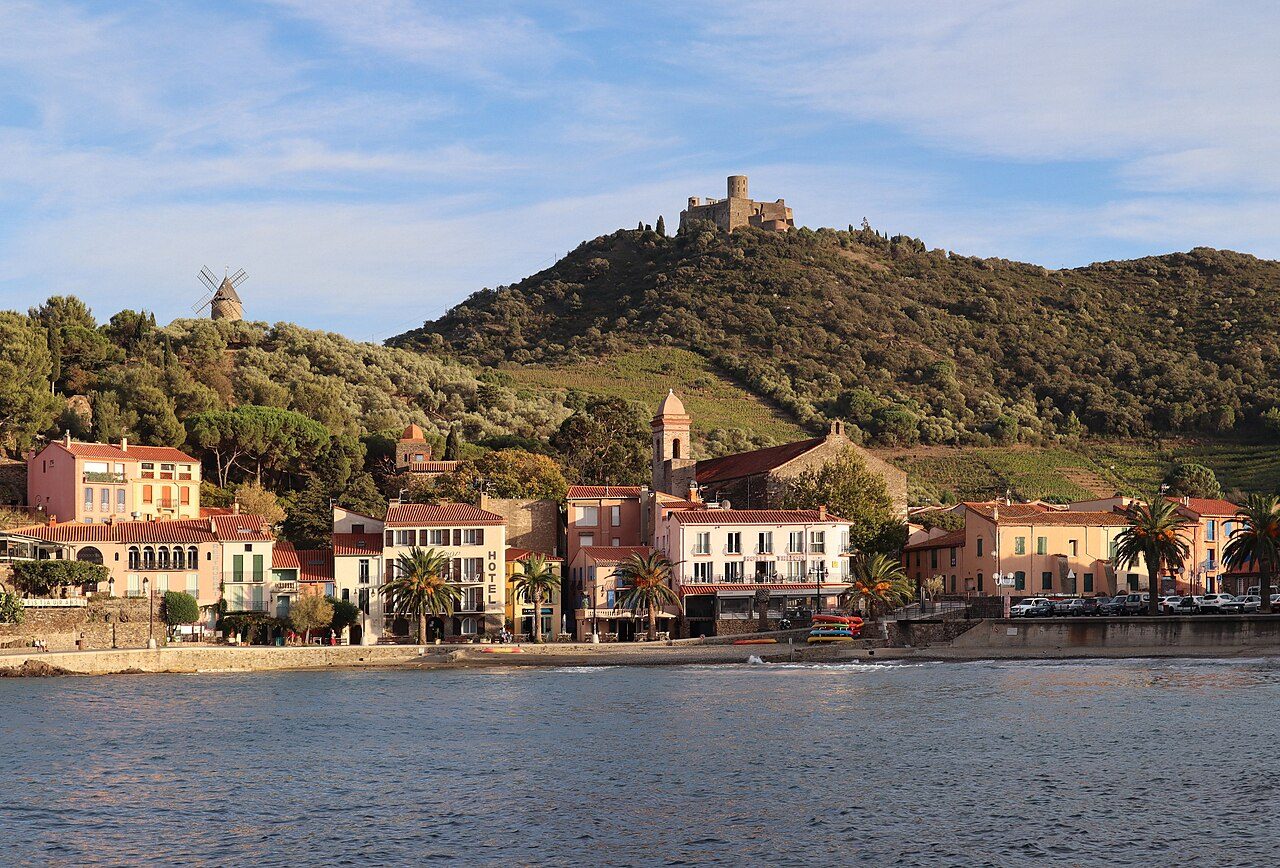
The castle that splits the bay in two, residence of the kings of Majorca and later a Vauban fortress. Its massive walls enclose medieval halls, a chapel, ramparts and terraces looking along the coast. Seen from the beach beside it, it shows how much of the town Vauban was willing to sacrifice.
The Fauvism trail
A walk through the village marked by reproductions of paintings by Matisse and Derain, each set up where the artist stood. Comparing the canvas with the view in front of you is the best lesson in what the Fauves were doing with colour.
Fort Saint-Elme and the hills
A steep path climbs past an old windmill and terraced vineyards to the sixteenth-century star fort on the ridge. The view takes in Collioure, Port-Vendres and the whole Côte Vermeille, with the Pyrenees falling into the sea. Go early in summer: the climb is exposed and hot.
Antonio Machado’s grave
In the town cemetery, the simple grave of the great Spanish poet, who died here in exile in 1939, is still covered with flowers, flags and notes left by visitors. A letterbox beside it collects the letters people write to him.
Climate
Météo-France normals 1991-2020, station Torreilles (7 m, 26.9 km away). Sunshine: Perpignan station (29.1 km).
| Jan | Feb | Mar | Apr | May | Jun | Jul | Aug | Sep | Oct | Nov | Dec | |
|---|---|---|---|---|---|---|---|---|---|---|---|---|
| High °C | 12.7 | 13.2 | 16.1 | 18.3 | 21.7 | 26.0 | 28.6 | 28.5 | 25.0 | 20.8 | 16.2 | 13.2 |
| Low °C | 4.3 | 4.5 | 7.0 | 9.1 | 12.6 | 16.5 | 18.8 | 18.7 | 15.0 | 12.1 | 7.6 | 4.7 |
| Rain (mm) | 58 | 39 | 40 | 50 | 42 | 22 | 14 | 25 | 52 | 88 | 76 | 50 |
| Rain days | 5 | 4 | 4 | 6 | 5 | 3 | 2 | 3 | 5 | 5 | 5 | 5 |
| Sunshine (h) | 141 | 164 | 207 | 220 | 241 | 268 | 300 | 273 | 224 | 175 | 147 | 131 |
Timeline
- 1276 Roussillon passes to the kings of Majorca (until 1343)
- 16th c. Fort Saint-Elme built on Charles V’s orders
- 1659 The Treaty of the Pyrenees makes Collioure French
- late 17th c.? The church of Notre-Dame-des-Anges is built on the shore
- 1905 Matisse and Derain paint together in Collioure: the birth of Fauvism
- 1939 Antonio Machado dies in Collioure on 22 February
Uncertain or disputed
- Sources date the church of Notre-Dame-des-Anges variously to 1684-1691 or say it was consecrated in the early 18th century.
- The bell tower is often described as a former lighthouse; the more reliable description is a medieval watchtower adapted as a bell tower.
Crowds: Very busy in season. July and August bring very heavy crowds and scarce parking from mid-morning; late spring and September are far more pleasant, and early morning is the time to see the harbour empty. (editorial judgement)
Protected food & drink from here
AOP and IGP products whose official area includes this commune (INAO). Regional food: AOP & IGP →
Meat & charcuterie
- Jambon de Bayonne IGP · cured meat
Seafood & salt
- Anchois de Collioure IGP · fish
Cider & spirits
- Marc du Languedoc ou Eau-de-vie de marc du Languedoc IG
Wine
- Banyuls AOP
- Banyuls grand cru AOP
- Collioure AOP
- Côte Vermeille IGP
- Côtes Catalanes IGP
- Grand Roussillon AOP
- Languedoc AOP
- Muscat de Rivesaltes AOP
- Pays d'Oc IGP
- Terres du Midi IGP
Festivals within 15 km
From the Ministry of Culture’s national list; it gives a season, not dates.
| Festival | Discipline | Season |
|---|---|---|
| Concert d'été - Visages de Méditerranée Palau-del-Vidre | Music | 21 Jun – 5 Sep |
| Festival Automne musical en Vallespir Port-Vendres | Music | 6 Sep – 31 Dec |
| Festival classique en août Saint-Andre | Theatre, dance & street arts | 21 Jun – 5 Sep |
| Festival de blues de Sorède Sorède | Music | 21 Jun – 5 Sep |
| Festival de jazz Collioure | Music | 21 Jun – 5 Sep |
| Festival de la Galline Port-Vendres | Mixed | 21 Jun – 5 Sep |
| Festival de théâtre Saint-André | Theatre, dance & street arts | 21 Jun – 5 Sep |
| Festival des abbayes en Occitanie Collioure | Music | 1 Jan – 20 Jun |
| Festival Fotolimo Cerbère | Visual & digital arts | 6 Sep – 31 Dec |
| Festival lyrique des pays catalans Saint-Génis-des-Fontaines | Music | 21 Jun – 5 Sep |
| Festival Pel-licula Argelès-sur-Mer | Film | – |
| Festival Piano passion à Collioure Collioure | Music | 21 Jun – 5 Sep |
| Festival Pignon sur mer Banyuls-sur-mer | Theatre, dance & street arts | 6 Sep – 31 Dec |
| Festival Radio Crochet Palau-del-Vidre | Music | 6 Sep – 31 Dec |
| Hors frontière Cerbère | Mixed | 21 Jun – 5 Sep |
| Jazz en Tech - Festival transfrontalier Saint-Génis-des-Fontaines | Music | 21 Jun – 5 Sep |
+ 7 — Festivals →
Also in this part of France
 5h24
Town · Occitanie
Carcassonne
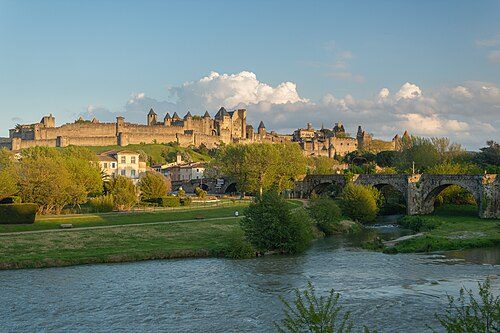
A medieval fortress city with two rings of walls and dozens of towers on a hill above the Aude, rescued from demolition in the 1850s.
 6h02
City · Occitanie
Albi
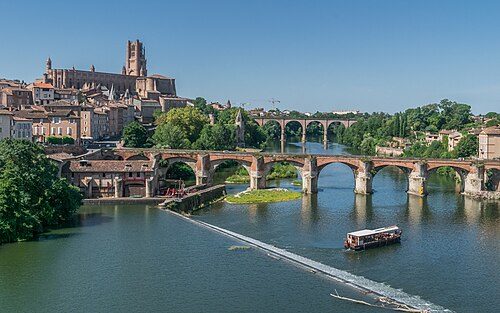
A red-brick episcopal city on the Tarn: a fortress-cathedral painted inside from floor to vault, and the world’s largest Toulouse-Lautrec collection.
 3h36
Town · Provence-Alpes-Côte d’Azur
Arles
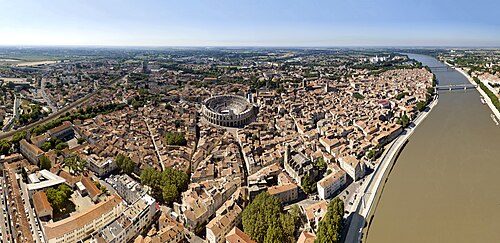
A Roman city on the Rhône where Van Gogh painted his brightest year, with an arena still in use and the Camargue at its gates.
 6h37
Village · Occitanie
Conques
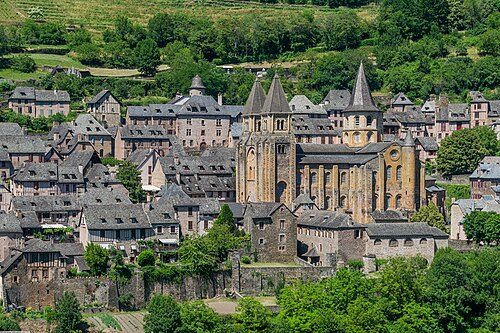
A slate-roofed village hidden in a wooded gorge, built around a Romanesque abbey church, a famous Last Judgement and a golden reliquary.
Sources
- Wikipédia (fr) – Collioure
- The Metropolitan Museum of Art – Vertigo of Color: Matisse, Derain, and the Origins of Fauvism
- Anglophone Direct – Matisse, Derain and Collioure
- Wikipedia (en) – Antonio Machado
- Unifrance – Serge Pey et la boîte aux lettres du cimetière
- Slate.fr – De Madrid à Collioure, l’itinéraire du poète Antonio Machado
Original text. Train times computed from SNCF timetables (ODbL); climate Météo-France; products INAO; festivals Ministry of Culture. Methodology.