

Town · Brittany · Altitude 74 m
Dinan
Half-timbered houses, 2.6 km of ramparts and a cobbled street plunging seventy-five metres down to a little port on the Rance.
Why go
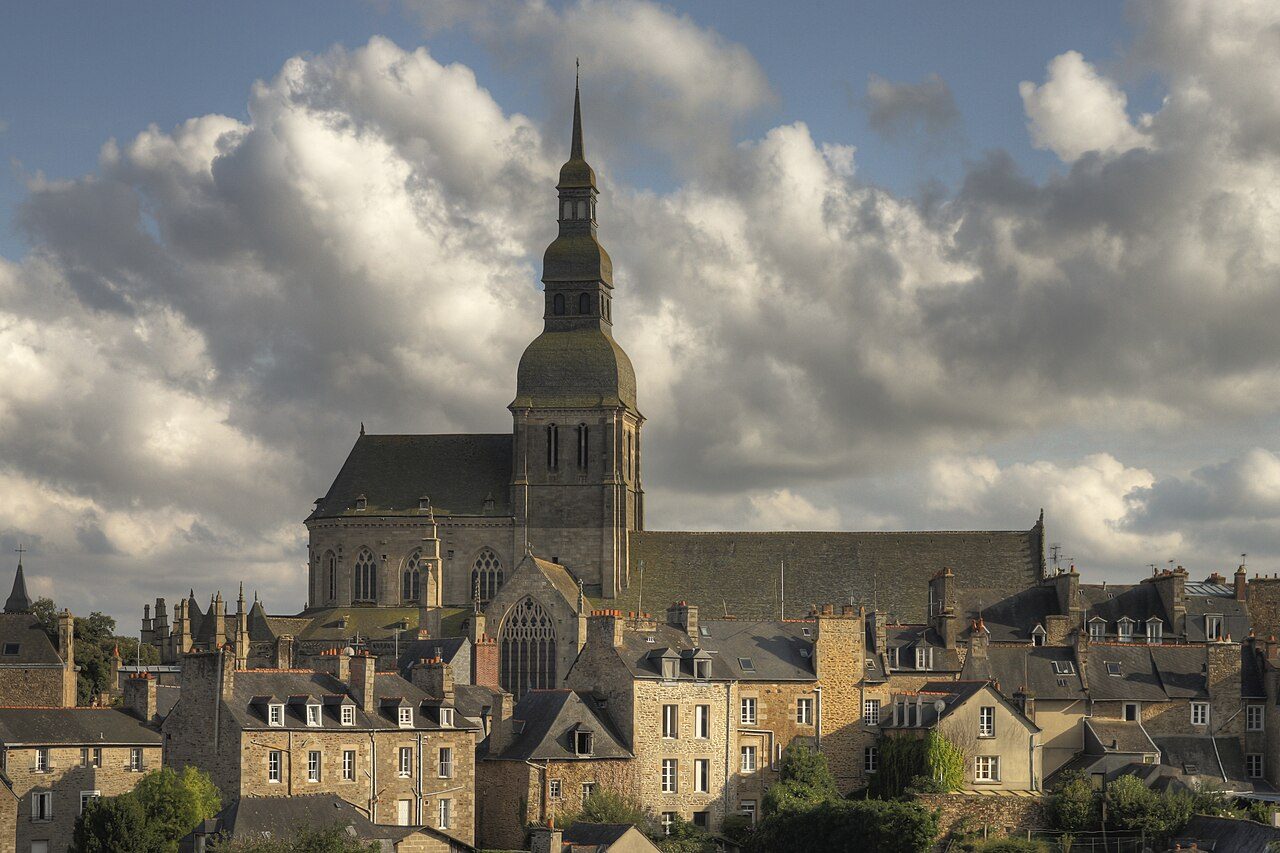
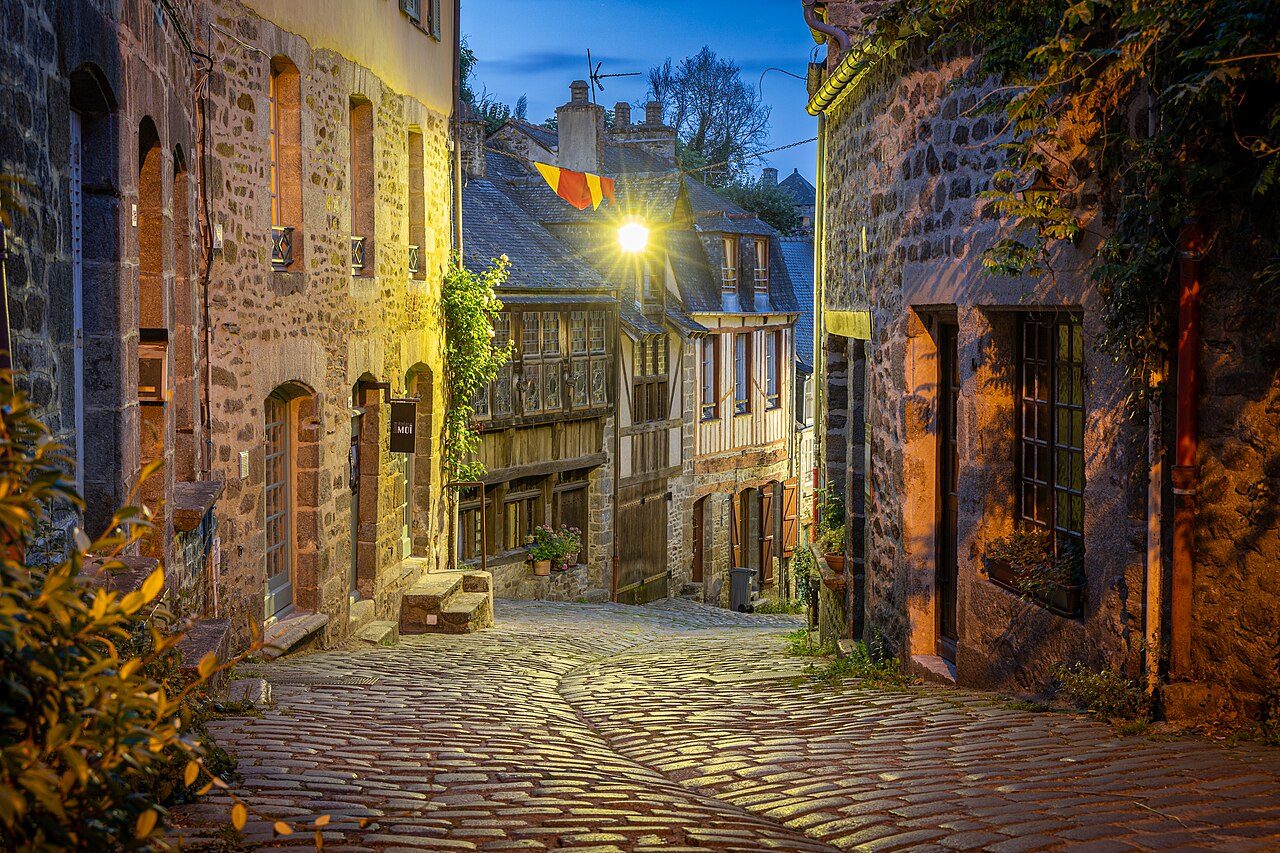
Dinan is the Brittany people picture before they get there: overhanging timber houses, granite churches, a castle keep and a ring of walls you can still walk. But the real reason to come is the slope. The town sits high above the Rance, and the rue du Jerzual and rue du Petit-Fort tumble down to a sleepy riverside port, where boats moor under a medieval bridge. Spend the day climbing up and down, then eat crêpes like a local.
History
Dinan grew on a spur seventy-five metres above the Rance, at a point where the river could be crossed on the way between Normandy and northern Brittany. In 1064 the Normans of William the Bastard, the future Conqueror, besieged its castle mound; the scene appears on the Bayeux Tapestry. In 1283 Duke John I of Brittany bought half the town, and the ring of walls that still encircles it dates from this period, with a wall-walk intact for some 2,600 metres.
During the War of the Breton Succession, in 1357, Bertrand du Guesclin and his brother Olivier held the town against English troops and the partisans of John of Montfort. Tradition has Du Guesclin defeating the English knight Thomas of Canterbury in single combat. When Duke John IV finally took Dinan in 1364, he built the great keep now known as the Duchess Anne tower. Du Guesclin, later Constable of France, is remembered here above all: a cenotaph holding his heart stands in the basilica of Saint-Sauveur.
The town’s wealth came from its markets and its river port, which controlled the waterway down the Rance to Saint-Malo; in the eighteenth century weavers settled here in numbers, making sailcloth that went downriver to the shipyards of Saint-Malo. In 1598, at the end of the Wars of Religion, Dinan sided with Henri IV against its governor, the Duke of Mercœur, and its walls slowly lost their military use.
The nineteenth century turned Dinan around. A road viaduct over the valley opened in 1852 and the railway arrived in 1879, and the old port faded as the town became a resort much loved by the British, a few of whom painted it. Today its restored timber houses and its Fête des Remparts, a medieval festival held every other summer, keep it busy without spoiling it.
What to see
Rue du Jerzual and rue du Petit-Fort
The steepest and loveliest street in town drops from the centre through the Jerzual gate to the port. Its timber-framed houses, once home to weavers, tanners and merchants, now hold workshops and galleries. Wear proper shoes: the cobbles are slippery after rain.
The ramparts and the castle
The wall-walk survives intact for some 2,600 metres, pierced by the Jerzual, Saint-Malo, Brest and Guichet gates. Long stretches can be walked on top or followed from below. Above them rises the massive fourteenth-century keep that Duke John IV built after taking the town, today called the Duchess Anne tower.
Basilica of Saint-Sauveur
Begun in the twelfth century and never quite finished, the basilica mixes a Romanesque doorway carved with strange beasts with Gothic and later work. Look for the cenotaph holding Du Guesclin’s heart, then go out to the English Garden behind it, laid out in 1852 on the old parish cemetery, for the view down to the Rance.
The port and the old bridge
Down by the river, the stone bridge, the old quays and the towpath are a world away from the town above. Walk the towpath upstream or downstream for an hour, then look up at the viaduct striding across the valley.
Tour de l’Horloge
The fifteenth-century belfry, some 45 metres tall and a listed historic monument, still houses its clock mechanism and a bell associated with Duchess Anne. Climb to the top for the best panorama of the walled town, its slate roofs, its church towers and the green countryside beyond.
Climate
Météo-France normals 1991-2020, station Le Quiou (20 m, 12.5 km away). Sunshine: Dinard station (14.7 km).
| Jan | Feb | Mar | Apr | May | Jun | Jul | Aug | Sep | Oct | Nov | Dec | |
|---|---|---|---|---|---|---|---|---|---|---|---|---|
| High °C | 9.3 | 10.4 | 13.3 | 16.2 | 19.4 | 22.5 | 24.7 | 24.6 | 21.9 | 17.3 | 12.7 | 9.7 |
| Low °C | 3.0 | 2.7 | 3.7 | 4.8 | 7.4 | 9.4 | 10.7 | 10.8 | 8.9 | 7.6 | 5.2 | 3.2 |
| Rain (mm) | 72 | 58 | 51 | 54 | 63 | 53 | 47 | 52 | 57 | 78 | 86 | 87 |
| Rain days | 13 | 12 | 10 | 10 | 9 | 8 | 8 | 8 | 8 | 12 | 14 | 14 |
| Sunshine (h) | 69 | 91 | 133 | 179 | 203 | 208 | 221 | 201 | 170 | 114 | 80 | 66 |
Timeline
- 1064 Norman siege of Dinan, shown on the Bayeux Tapestry
- 1283 Duke John I of Brittany buys half the town; the walls rise
- 1357 Du Guesclin defends Dinan against the English
- 1364 Duke John IV takes the town and builds the keep
- 1598 Dinan sides with Henri IV against the Duke of Mercœur
- 1852 Road viaduct over the Rance valley opens
- 1879 The railway reaches Dinan
Uncertain or disputed
- The single combat between Du Guesclin and Thomas of Canterbury is reported in chronicles that celebrate Du Guesclin; details are best taken as tradition.
- The keep’s popular name refers to Anne of Brittany, but it was built for Duke John IV long before her time.
Crowds: Busy at peaks. July and August, and the Fête des Remparts weekend in July of even-numbered years, are the busiest; on weekdays in May, June or September you will have the Jerzual almost to yourself early in the day. (editorial judgement)
Protected food & drink from here
AOP and IGP products whose official area includes this commune (INAO). Regional food: AOP & IGP →
Meat & charcuterie
- Pâté de Campagne Breton IGP · charcuterie
- Volailles de Bretagne IGP · poultry
- Volailles de Janzé IGP · poultry
Butter, oil, honey & more
- Farine de blé noir de Bretagne - Gwinizh du Breizh IGP · flour
Cider & spirits
- Cidre de Bretagne ou Cidre breton IGP · cider
- Eau-de-vie de cidre de Bretagne IG · cider or perry brandy
- Pommeau de Bretagne IG
- Whisky breton ou Whisky de Bretagne IG
Festivals within 15 km
From the Ministry of Culture’s national list; it gives a season, not dates.
| Festival | Discipline | Season |
|---|---|---|
| Bobital - L'Armor à Sons Bobital | Music | 21 Jun – 5 Sep |
| Café Clap Dinan | Film | 6 Sep – 31 Dec |
| Festi-Rance Saint-Samson-sur-Rance | Music | 21 Jun – 5 Sep |
| Festival des Arts Sonnés Saint-André-des-Eaux | Music | 6 Sep – 31 Dec |
| Festival Films Courts Dinan Dinan | Film | 6 Sep – 31 Dec |
| Fête des Remparts Dinan | Theatre, dance & street arts | 21 Jun – 5 Sep |
| Jazz en Place Dinan | Music | 21 Jun – 5 Sep |
| L'Art est dans les Bois Pleslin-Trigavou | Visual & digital arts | 21 Jun – 5 Sep |
| La Karavane Mesnil-Roc'h | Film | 1 Jan – 20 Jun |
| Les Breizh Planes Dinan | Music | – |
| Les Esclaffades Saint-Hélen | Theatre, dance & street arts | 21 Jun – 5 Sep |
| Les Papillonades Saint-André-des-Eaux | Theatre, dance & street arts | 1 Jan – 20 Jun |
| Pann'Art Beaussais-sur-Mer | Music | 21 Jun – 5 Sep |
| Premiers Emois Dinan | Theatre, dance & street arts | 6 Sep – 31 Dec |
| Renc'Arts sous les Remparts Dinan | Theatre, dance & street arts | 21 Jun – 5 Sep |
| Rencontres Internationales de Harpes Celtiques Dinan | Music | 21 Jun – 5 Sep |
+ 2 — Festivals →
Also in this part of France
 2h29
Coast · Brittany
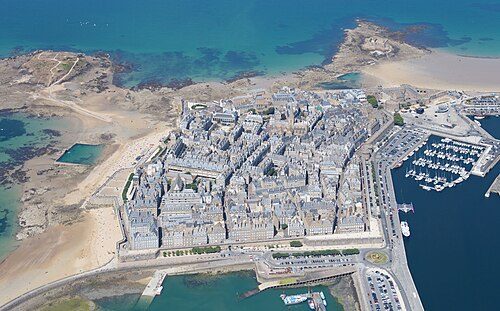
Saint-Malo
A granite corsair city ringed by ramparts, with island forts you can walk to at low tide and some of the biggest tides in Europe.
 3h02
Town · Pays de la Loire
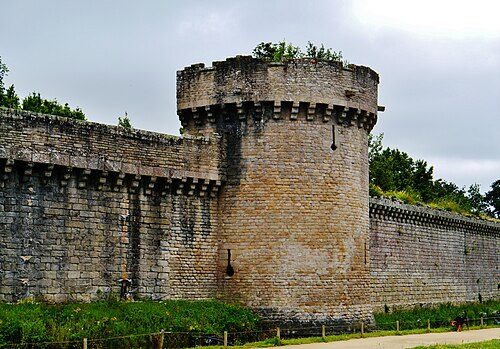
Guérande
A walled Breton town of grey granite overlooking a chequerboard of salt marshes, where paludiers still rake salt by hand.
 2h12
Town · Normandy
Bayeux
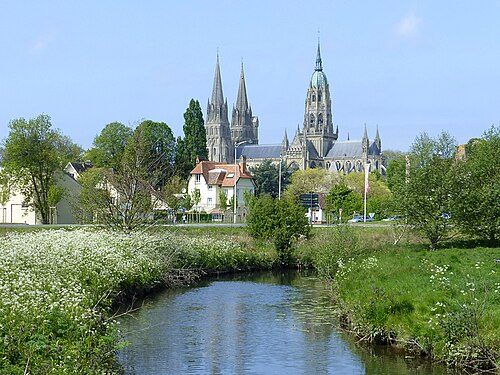
Home of the Tapestry, freed the day after D-Day: a Norman cathedral, water mills on the river Aure and the landing beaches close by.
 1h21
City · Pays de la Loire
Angers
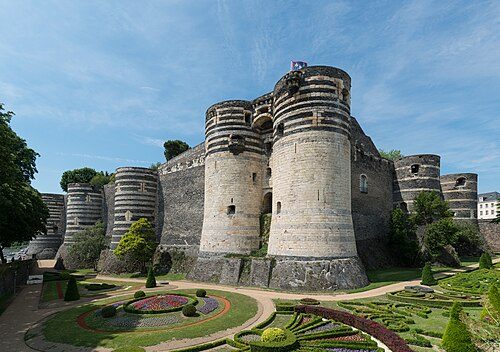
The old capital of Anjou: a striped fortress of seventeen towers guarding the greatest medieval tapestry in the world.
Sources
Original text. Train times computed from SNCF timetables (ODbL); climate Météo-France; products INAO; festivals Ministry of Culture. Methodology.