

Town · Brittany · Altitude 29 m
Quimper
Capital of Cornouaille, where rivers meet under a crooked Gothic cathedral and hand-painted faience has been made since the seventeenth century.
Why go
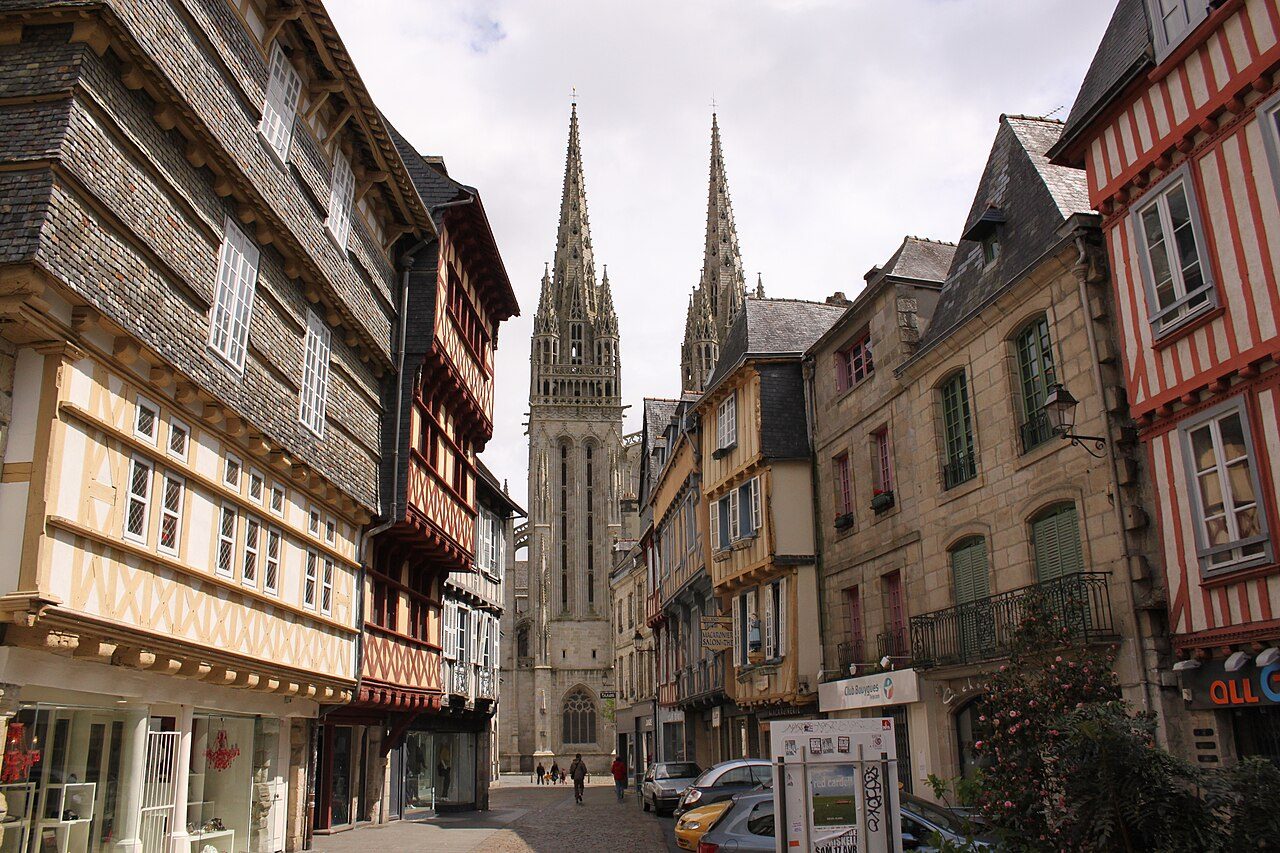
Quimper is Brittany at its most Breton without being a museum piece. Its name, Kemper, means ‘confluence', and the Odet and Steir still slide past flower-hung footbridges in the middle of town. Above the half-timbered streets rise the twin spires of Saint-Corentin, whose nave bends visibly away from its choir. Come for the faience, the excellent museums and the crêpes, and in July for a festival where Breton music fills the streets.
History
A Gallo-Roman town stood at Locmaria, a little downstream on the Odet, where later texts place a Civitas Aquilonia. The medieval city grew at the confluence, around the cathedral of its first bishop, Corentin. Legend says the saint was befriended by Gradlon, king of Cornouaille, who gave him his palace by the river; Gradlon is also the king of the drowned city of Ys in Breton legend, which tells you how far back the story goes.
Quimper became the capital of Cornouaille, one of the historic regions of Brittany, and was long known as Quimper-Corentin. Building of the Gothic cathedral began with the choir around 1239 and went on slowly for centuries and was still under way in the fifteenth, when the west front was begun in 1424 and the transept completed in 1486. During the War of the Breton Succession, Charles de Blois besieged and took the walled town in 1344, with a massacre of its inhabitants.
From the seventeenth century potters at Locmaria developed the tin-glazed faience that made the town famous; English-language sources date the start of the industry to 1690. Its painted figures of Breton men and women became a symbol of the region, and the HB-Henriot faience works still operates in the town.
In the nineteenth century the diocese paid for the cathedral’s long-missing spires through a subscription asking each inhabitant to give a sou a year; they rose between 1854 and 1856. Painters followed the Pont-Aven school to Cornouaille, and Quimper’s fine-arts museum holds many of their works. The town was largely spared during the Second World War, which is why so much of its old centre survives.
What to see
Saint-Corentin cathedral
Stand at the west door and look down the nave: the choir swings about ten degrees to the left, probably because the builders avoided wet ground near the river. Between the nineteenth-century spires, look up for the equestrian statue of King Gradlon, gazing towards his lost city of Ys.
Musée des Beaux-Arts
Next to the cathedral, one of the best fine-arts museums in western France, with works by Rubens, Boucher, Oudry and Corot, and a strong collection of the painters drawn to Brittany around Pont-Aven, from Émile Bernard to Maurice Denis and Paul Sérusier. Allow a good two hours.
Musée départemental breton
In the former bishops’ palace beside the cathedral, this museum covers Breton archaeology and ethnology, furniture, costume, prints and faience. The embroidered costumes from the different districts of Cornouaille are a revelation, and give a sense of how varied Breton dress once was from one parish to the next.
Locmaria and the faience
Walk downstream along the Odet to Locmaria, the cradle of the town, where later texts place the Roman Aquilonia. Its Romanesque church dates from the eleventh century, and the faience museum occupies the old Porquier house by the river. Seeing the brushwork done by hand changes how you look at the plates in the shop windows.
The old town and the quays
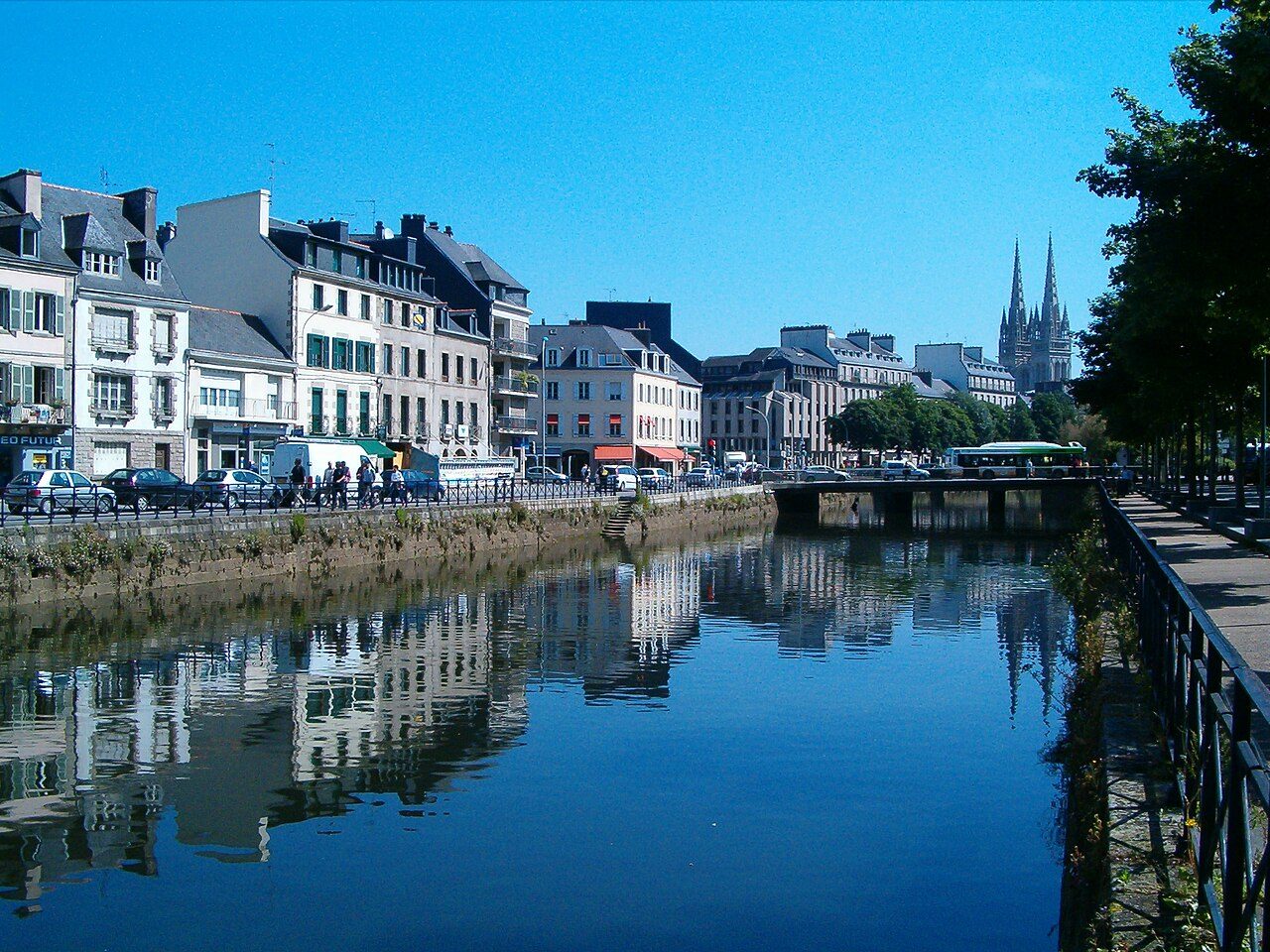
Rue Kéréon, which frames the cathedral front, and the lanes around it are lined with timber-framed houses; the quays of the Odet, crossed by small footbridges hung with flowers, are the place to watch evening fall over the spires. The town was largely spared in the Second World War, so the old fabric is genuine.
Climate
Météo-France normals 1991-2020, station Quimper (82 m, 5.1 km away). Sunshine: Quimper station (5.1 km).
| Jan | Feb | Mar | Apr | May | Jun | Jul | Aug | Sep | Oct | Nov | Dec | |
|---|---|---|---|---|---|---|---|---|---|---|---|---|
| High °C | 9.7 | 10.2 | 12.3 | 14.6 | 17.5 | 20.1 | 21.8 | 21.9 | 20.0 | 16.3 | 12.7 | 10.4 |
| Low °C | 4.5 | 4.1 | 5.4 | 6.6 | 9.3 | 11.9 | 13.6 | 13.6 | 11.7 | 9.8 | 6.9 | 5.1 |
| Rain (mm) | 144 | 115 | 84 | 88 | 77 | 64 | 70 | 70 | 78 | 123 | 148 | 153 |
| Rain days | 16 | 14 | 13 | 12 | 10 | 10 | 10 | 9 | 10 | 14 | 16 | 16 |
| Sunshine (h) | 66 | 90 | 133 | 177 | 201 | 209 | 205 | 194 | 175 | 112 | 79 | 67 |
Timeline
- c. 1239 Building of the Gothic cathedral choir begins
- 1344 Charles de Blois takes Quimper during the War of the Breton Succession
- 1424 First stone of the cathedral’s west front
- 1690? Faience production established (date given by English sources)
- 1854 The cathedral’s spires begin to rise, finished in 1856
Uncertain or disputed
- King Gradlon, the gift of his palace to Saint Corentin and the city of Ys are legends.
- The start of faience-making is dated to 1690 by English-language sources and more loosely to the seventeenth century by French ones.
- The 1344 massacre is reported with a toll of 2,000 civilians by one source; we give no figure.
- Sources disagree on the dates of the Festival de Cornouaille, mid-July in one and the last week of July in another.
Crowds: Busy at peaks. The Festival de Cornouaille in July and summer market days are the busiest; spring and early autumn are calm, with the museums to yourself on weekday mornings. (editorial judgement)
Protected food & drink from here
AOP and IGP products whose official area includes this commune (INAO). Regional food: AOP & IGP →
Meat & charcuterie
- Pâté de Campagne Breton IGP · charcuterie
- Volailles de Bretagne IGP · poultry
Butter, oil, honey & more
- Farine de blé noir de Bretagne - Gwinizh du Breizh IGP · flour
Cider & spirits
- Cidre de Bretagne ou Cidre breton IGP · cider
- Cornouaille AOP · cider
- Eau-de-vie de cidre de Bretagne IG · cider or perry brandy
- Pommeau de Bretagne IG
- Whisky breton ou Whisky de Bretagne IG
Festivals within 15 km
From the Ministry of Culture’s national list; it gives a season, not dates.
| Festival | Discipline | Season |
|---|---|---|
| Balearec'h Festival Combrit | Mixed | 21 Jun – 5 Sep |
| Bye Bye La Teufestival Briec | Music | 6 Sep – 31 Dec |
| Circonova Quimper | Music | 1 Jan – 20 Jun |
| Cornouaille Quimper | Music | 21 Jun – 5 Sep |
| Cultures Hip Hop Festival Quimper | Music | 6 Sep – 31 Dec |
| Faltazi Quimper | Film | 1 Jan – 20 Jun |
| Festidreuz Fouesnant | Music | 21 Jun – 5 Sep |
| Festival Céramique de Quimper Quimper | Visual & digital arts | 6 Sep – 31 Dec |
| La Ruée vers l'Art Quimper | Mixed | 1 Jan – 20 Jun |
| Les Enfants sont des Princes Quimper | Mixed | 21 Jun – 5 Sep |
| Les Fous Rires de la Forêt Fouesnant La Foret-Fouesnant | Music | 1 Jan – 20 Jun |
| Les Semaines de la Petite enfance Quimper | Theatre, dance & street arts | 1 Jan – 20 Jun |
| Process Quimper | Music | 1 Jan – 20 Jun |
| Salon Multilingue du Livre Jeunesse Pluguffan | Books & comics | 6 Sep – 31 Dec |
| Semaines Musicales Quimper | Music | 21 Jun – 5 Sep |
| Setu Elliant | Visual & digital arts | 21 Jun – 5 Sep |
+ 5 — Festivals →
Also in this part of France
 3h02
Town · Pays de la Loire
Guérande
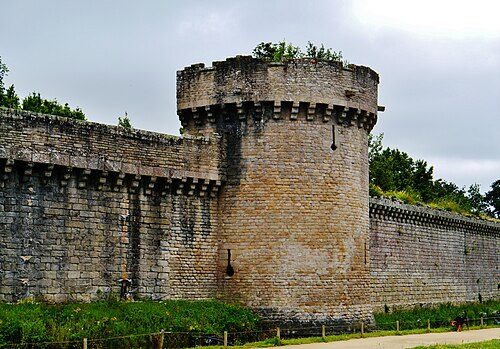
A walled Breton town of grey granite overlooking a chequerboard of salt marshes, where paludiers still rake salt by hand.
 3h02
Town · Brittany
Dinan
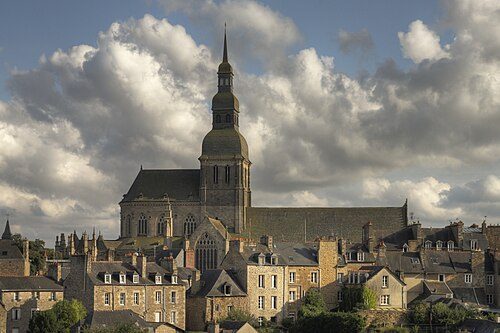
Half-timbered houses, 2.6 km of ramparts and a cobbled street plunging seventy-five metres down to a little port on the Rance.
 2h29
Coast · Brittany
Saint-Malo
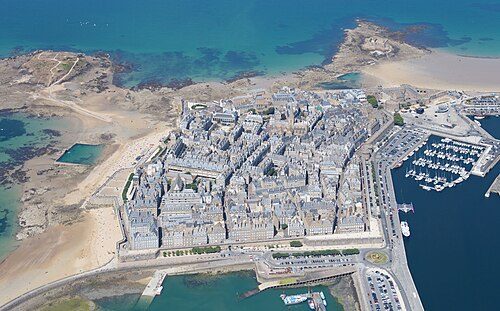
A granite corsair city ringed by ramparts, with island forts you can walk to at low tide and some of the biggest tides in Europe.
 1h21
City · Pays de la Loire
Angers
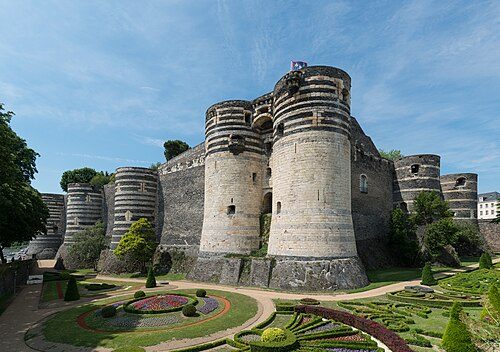
The old capital of Anjou: a striped fortress of seventeen towers guarding the greatest medieval tapestry in the world.
Sources
- Wikipedia (fr) – Quimper
- Wikipedia (en) – Quimper
- Wikipedia (fr) – Cathédrale Saint-Corentin de Quimper
- Wikipedia (en) – Quimper Cathedral
Original text. Train times computed from SNCF timetables (ODbL); climate Météo-France; products INAO; festivals Ministry of Culture. Methodology.